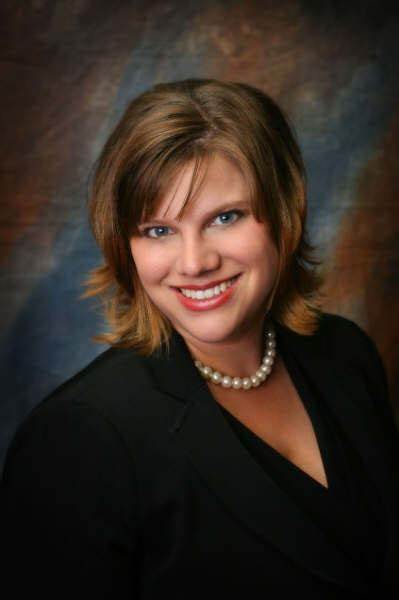
The presidential election in November has many in the country ready to go out and vote, but some are trusting in the disproven claims of former President Donald Trump that the election process is being stolen.
That doesn’t fly with Oconto County Clerk Kim Pytleski. She not only has the receipts to back up all the elections she’s overseen, but she wants anyone who has doubts to go out and see for themselves — whether it’s the testing of the voting machines coming up this month, the tabulation of the votes once the polls close at 8 p.m. on Election Day or the canvass that will be done a few days later.
Pytleski questioned how voters can believe that the 2020 election was stolen, considering that Republicans won the majority of their races at the state and national levels.
“We spoke in 2020 with people who were saying some of those things, but look further down on the ballot,” Pytleski said. “The Republicans still prevailed there. An argument I would make for 2024 is, what if Donald Trump wins? Is the system still corrupt? When you question that process, you’re putting either candidate in the arena of, ‘Well, it must have been corrupt.’”
Pytleski noted that people have told her that they trust her work in Oconto County, but they feel it’s metropolitan areas like Milwaukee that have the corruption, which she finds hard to believe, because it’s people like her who manage the elections in the bigger cities and counties.
“When you look at elections, it’s not just the county clerk who has a part in it,” Pytleski said. “It’s run at the municipal level. Wisconsin is the most decentralized election process in the U.S. It is run at your community levels.”
There are a minimum of three election workers at every polling place, Pytleski said, along with observers for both the Republicans and the Democrats, so that is just the start of thousands of eyes focusing on elections and the ballot-counting process once the polls close.
“If there was widespread corruption, people would be reporting it, and we’d be able to prove it,” Pytleski said.
One claim that was misinformed, in her view, was that a voter received seven absentee ballots. Pytleski said those were applications for ballot requests and not actual ballots, coming from both political parties, the League of Women voters and other organizations trying to encourage voter turnout.
“Lots of people are saying go out and vote, and if you’re not going to be here on Election Day, here’s another way,” Pytleski said. “Only one ballot would be issued per voter. If you send us all seven of them, we’re not going to send out seven ballots because each voter would have that record that indicates we sent one.”
Pytleski is encouraging people to visit their polling places once the polls close at 8 p.m. to watch election workers count the ballots and make sure the tabulator number matches the number in the official poll book. After that’s reconciled, the workers break the seal for the ballot box and start counting them as another check to make sure the numbers match, she said.
“That’s a big point, because 98% of Americans will cast their ballot … on a paper ballot,” Pytleski said. “All of Oconto County casts on a paper ballot.”
After that, workers will make sure all the seals are accurate and that the chain of custody for the ballots is secured. Once the municipal workers finish their canvass, the information is sent to the county level, where Pytleski and her county workers double check things. That canvass then goes to the Wisconsin Election Commission for one more check.
“If a clerk or poll worker forgets to put their initials, you’d better believe that I, as the county clerk, am going to be asking, ‘Why aren’t your initials there?’” Pytleski said. “That doesn’t automatically constitute fraud.”
Some poll workers have stated that the county is “picky,” which Pytleski said is the biggest compliment.
“We’re going to be that picky so that we are above reproach,” she said.
Pytleski has been in contact with other states considered battleground states for this presidential election, and most of the work done is similar to what Wisconsin does.
“As clerks, we’re only carrying out what our legislature is directing us to do, but we’re also using our eyes and ears and common sense,” Pytleski said. “If we see something and it doesn’t look right, we’re running it down. We’re not saying, ‘Oh, pass that through.’ That’s not how it works.”
For information about the election process, contact Pytleski at 920-834-6806 or kim.pytleski@co.oconto.wi.us.
lpulaski
Pytleski: Elections safe, secure for 2024