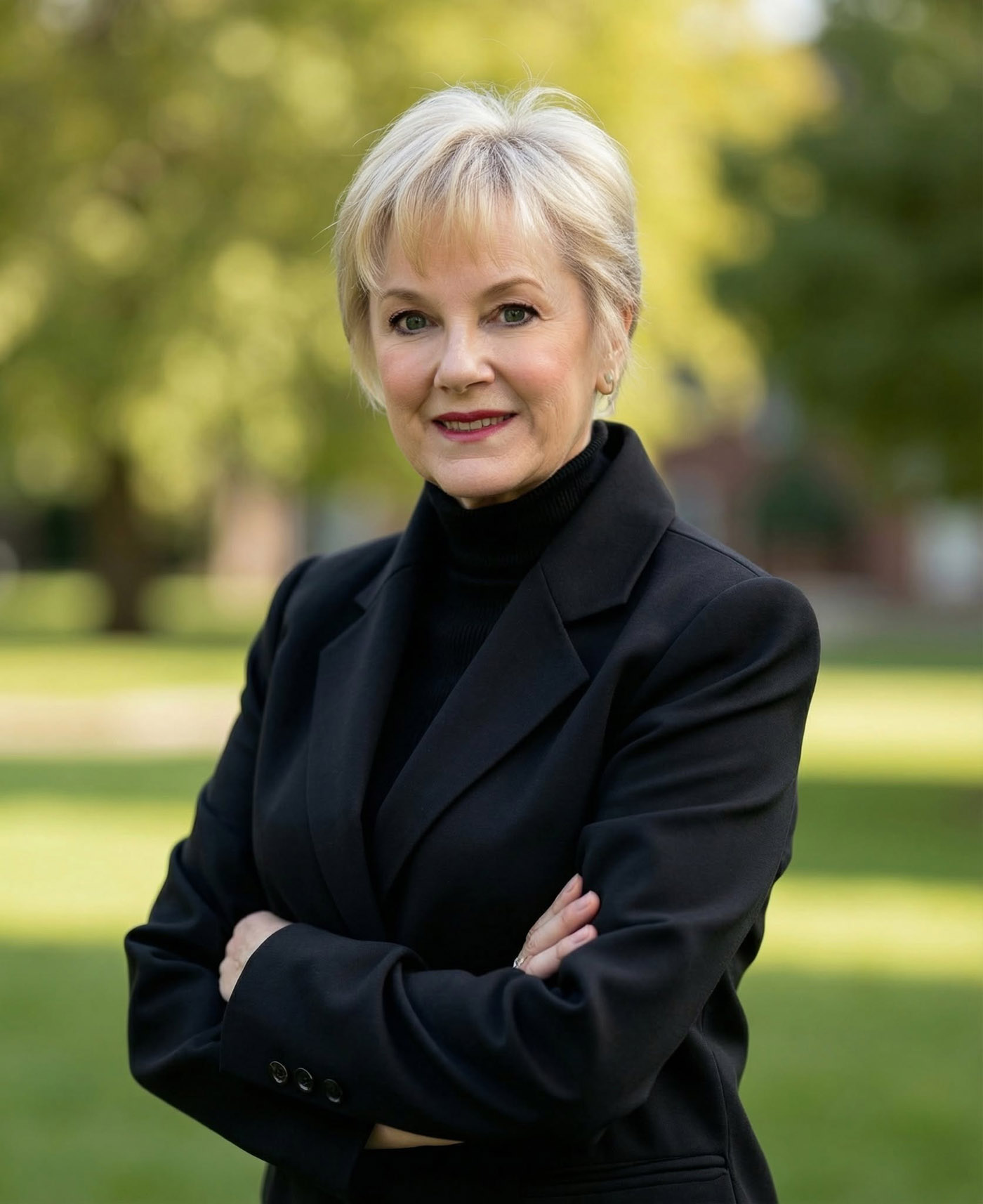
Similar to how the Peshtigo Fire is often overlooked for the Great Chicago Fire, so too are the Menominee people for their actions before and after the 1871 blaze that devastated northeast Wisconsin.
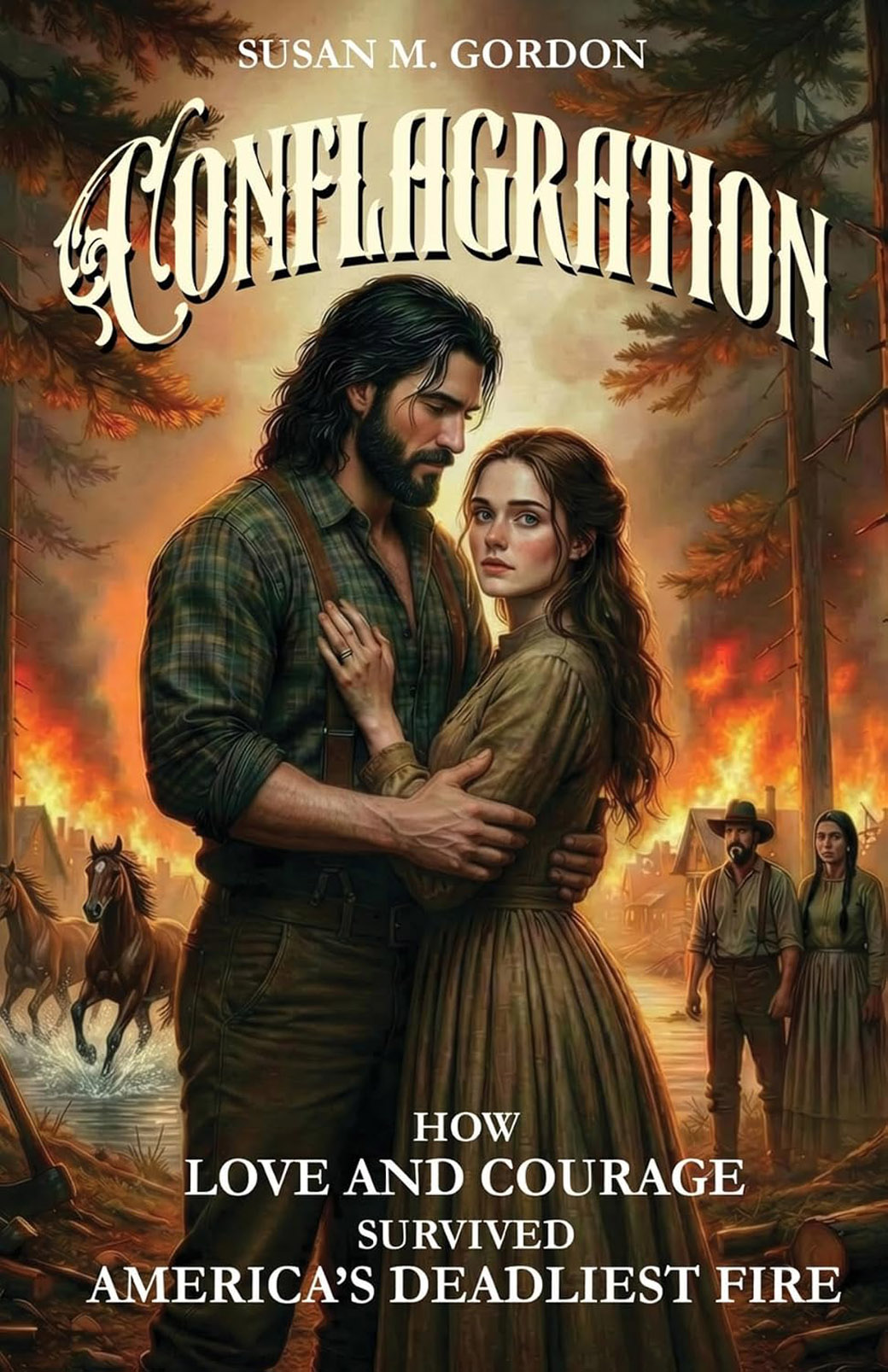
Both are given new life in Susan Gordon’s historical fiction book “Conflagration: How Love and Courage Survived America’s Deadliest Fire.”
Her research unveiled the real-life couple of John Mulligan and Jennie Lenerville, who survived the fire and are the central figures in the book.
The idea for a story about the fire percolated with her for decades. Gordon, a Shawano native, tried to get others to write it, but most said it was her story to tell.
She began writing after her oldest son died.
“I started writing a poem to let out my feelings and thoughts,” Gordon said. “I cried and cried and cried.”
That’s when she decided to gather information for the book.
“It took me three or four months to write it,” she recalled. “I hired an editor, and we worked together for another four months. She was awesome. She brought a lot more depth to the book.”
Her research gave her insights into the lives of people in northeastern Wisconsin and how they lived.
“Logging was a very interesting and dangerous life,” Gordon said.
She also learned about the Menominee people and their lives during that time.
Gordon also wrote of Abraham and Elizabeth Place, discovering the knowledge of the Menominee people.
“I didn’t realize how important they would be,” she said. “I definitely wanted to tip my hat to them.”
Her book tells of the treatment Menominee tribal members faced from white settlers for their way of life and proactive safety measures like digging trenches around their settlements.
“The book is informative and accurate, and finally acknowledges the Menominee people who tried to help others when the fire struck Peshtigo,” David Grignon of the Menominee Indian Tribe of Wisconsin wrote in praise of the book. “This area is the aboriginal territory of the Menominee people, and we are still here, close to where the fire went through.”
After 35 years of dedicating his life to revitalizing and protecting traditional Menominee language and culture, Grignon recently retired from his duties directing the tribe’s Historic Preservation Office.
Gordon recounts that even though the Menominee people faced judgment, they immediately opened their homes to fire victims who were injured and in need of shelter.
Born in Shawano, Gordon’s father, Bob Brunner, ran Brunner’s Barbershop in downtown Shawano for many years.
Gordon graduated from Shawano High School in 1975. She still has relatives in the area.
After graduation, she worked at the then-Northeast Wisconsin Technical College. She met her first husband, Bill Lemke, and the couple moved around the state before settling in Green Bay.
The couple divorced after 18 years, and Gordon went on to become a registered nurse in Green Bay.
She took a job in the medical storage field in Milwaukee, working her way into selling defibrillators. She met Reed Gordon, married and moved to the Los Angeles area, continuing to sell medical devices.
The last eight years of her career were in the Olympia area, where she was in sales for AccuVein. Her territory included Washington, Oregon, Idaho and Alaska. She retired in 2023.
Gordon now lives in Olympia, Washington.
She will return to northeast Wisconsin at the end of July to visit family and friends, and to promote her book at various events.
During her research, she discovered Jennie Lenerville is buried in Evergreen Cemetery in Manitowoc.
“When I’m back, I’m going to pay homage to her and bring flowers to her grave,” Gordon said. “She truly gave me something to write about.”
Lenerville’s husband, John Mulligan, is buried in Woodlawn Cemetery in Florence.
From 10 a.m. to 2 p.m. July 30, Gordon will be at Heather’s Beans and Books, 1235 E. Green Bay St., Shawano.
From noon to 3 p.m. Aug. 2, she’ll be at the ice cream social at the Peshtigo Fire Museum, 400 Oconto Ave., Peshtigo, where she will officially launch her book.
Gordon will also give a presentation to a book club at 11 a.m. Aug. 3 at the Peshtigo Public Library, 331 French St., Peshtigo.
“I never thought of myself as a writer,” she said. “It gave me a great sense of accomplishment when it was done.”
For now, Gordon said she will promote the book, relax and enjoy what comes next. But, thoughts of a second book are there, too.
Topics include the life of John Mulligan before the fire or the lives of Abraham and Elizabeth Place.
AT A GLANCE
The synopsis of “Conflagration: How Love and Courage Survived America’s Deadliest Fire”:
Jennie Lenerville leaves her family’s bustling Wisconsin farm after marrying Big John Mulligan, a Civil War veteran and prizefighter, determined to build a life far from the battlegrounds that shaped him. Drawn north by promise and timber, they settle in Peshtigo, where John runs a lumber camp and Jennie assists the local doctors.
Through their friendship with Abraham Place and his wife, Elizabeth, they become part of a tight‑knit community, but the land begins to warn them. Drought tightens its grip. Smoke drifts where it should not. Animals flee, and those who know the forests best begin to whisper the same unease: Something terrible is coming.
On the night of Oct. 8, 1871, Peshtigo ignites.
A firestorm hotter than iron and faster than wind tears through the town — consuming forests and homes, driving animals and people mad with terror and turning the river itself into flame. As the world burns, Jennie and John must fight not only to survive, but to hold on to each other and the life they dreamed of.
The exact number of deaths is debated, but most estimates put it between 1,500 and 2,500.
By the time it was over, between 1.2 million and 1.5 million acres of land had been burned. In addition to Peshtigo, 16 other communities were destroyed in the fire.
For readers drawn to catastrophic history, haunting beauty and romance forged under unbearable pressure, “Conflagration” brings to life the deadliest fire in American history and the overlooked heroism of the Menominee people who helped save lives when it mattered most.