Valentine’s Day has come and gone, but Feb. 14 is also known as National Donor Day, a time to focus on all types of donations – organ, eye, tissue, blood, platelets and marrow.
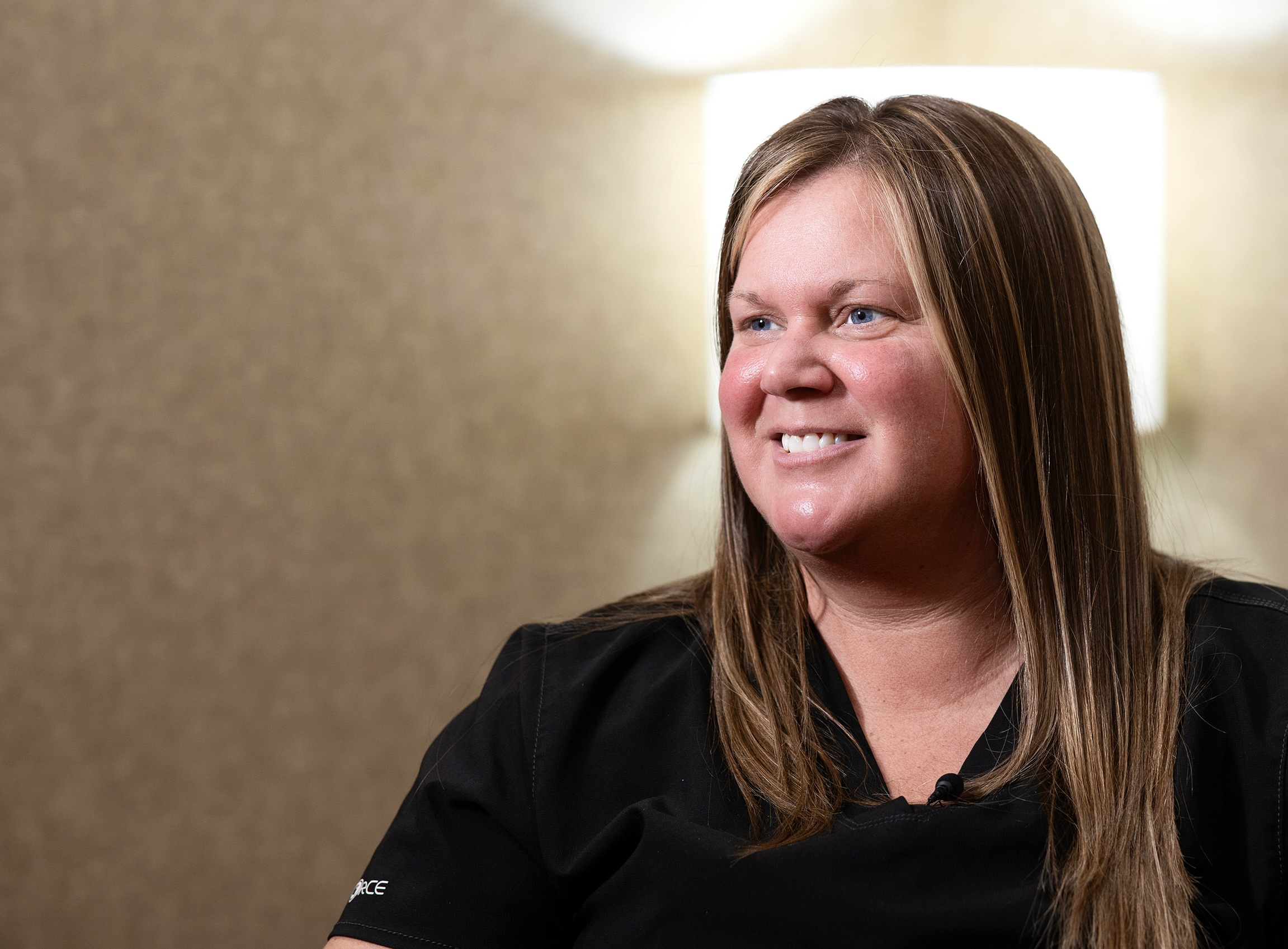
As an emergency department (ED) nurse at Aspirus Langlade Hospital, Kristie Falk exemplifies the spirit of selflessness and compassion of the nursing profession. Beyond her daily commitment to patient care, she extended her dedication to saving lives by participating in the Be The Match (BTM) program.
“We were made aware of this program seven to eight years ago when a member of my son’s hockey team was diagnosed with leukemia,” said Falk. “As they were considering treatment options, they shared information on the Be The Match program, and I signed up with the thought of possibly helping someone someday.”
BTM, operated by the National Marrow Donor Program, is a global leader in facilitating bone marrow and stem cell transplants. The organization connects patients with life-threatening blood cancers, such as leukemia and lymphoma, to potential donors. Joining the registry involves a simple cheek swab, but the decision to donate is profound, requiring both physical and emotional commitment.
What started as a desire to make a difference beyond her immediate environment of working in the ED, Falk already understood the critical need for donors, especially for patients without matching family members.
“We give blood to people daily, and it comes from people like us. If people don’t donate, patients don’t get it, and I would tell those who are on the fence about being a donor to go for it,” said Falk, who studied at the College of Menominee Nation. “You’re giving someone a second chance at life, it makes you feel really good and it’s rewarding.”
Her donor journey took another turn last August.
“I was told, ‘You’re a match for a 47-year-old female that lives in the United States. She has acute myeloid leukemia,’ and that’s all I knew,” said Falk.
After some follow-up testing and preparation, she was off to New York City to complete the donation of stem cells, which took place in a whirlwind three-day span.
“I knew if I was in the same situation, I would want someone to do this for me or my family and would be eternally grateful,” said Falk.
Her story serves as an inspiration to her colleagues and the broader community. It emphasizes the impact one individual can have through acts of kindness and generosity. Her experience also sheds light on the importance of BTM and other donor programs and the ongoing need for donors.
For those interested in following Falk’s example, joining BTM is straightforward. Potential donors can visit the organization’s website, complete a health questionnaire and provide a cheek swab sample. By doing so, they become part of a global network committed to offering hope and healing to patients battling life-threatening diseases.
Nurse gives through marrow donor program