
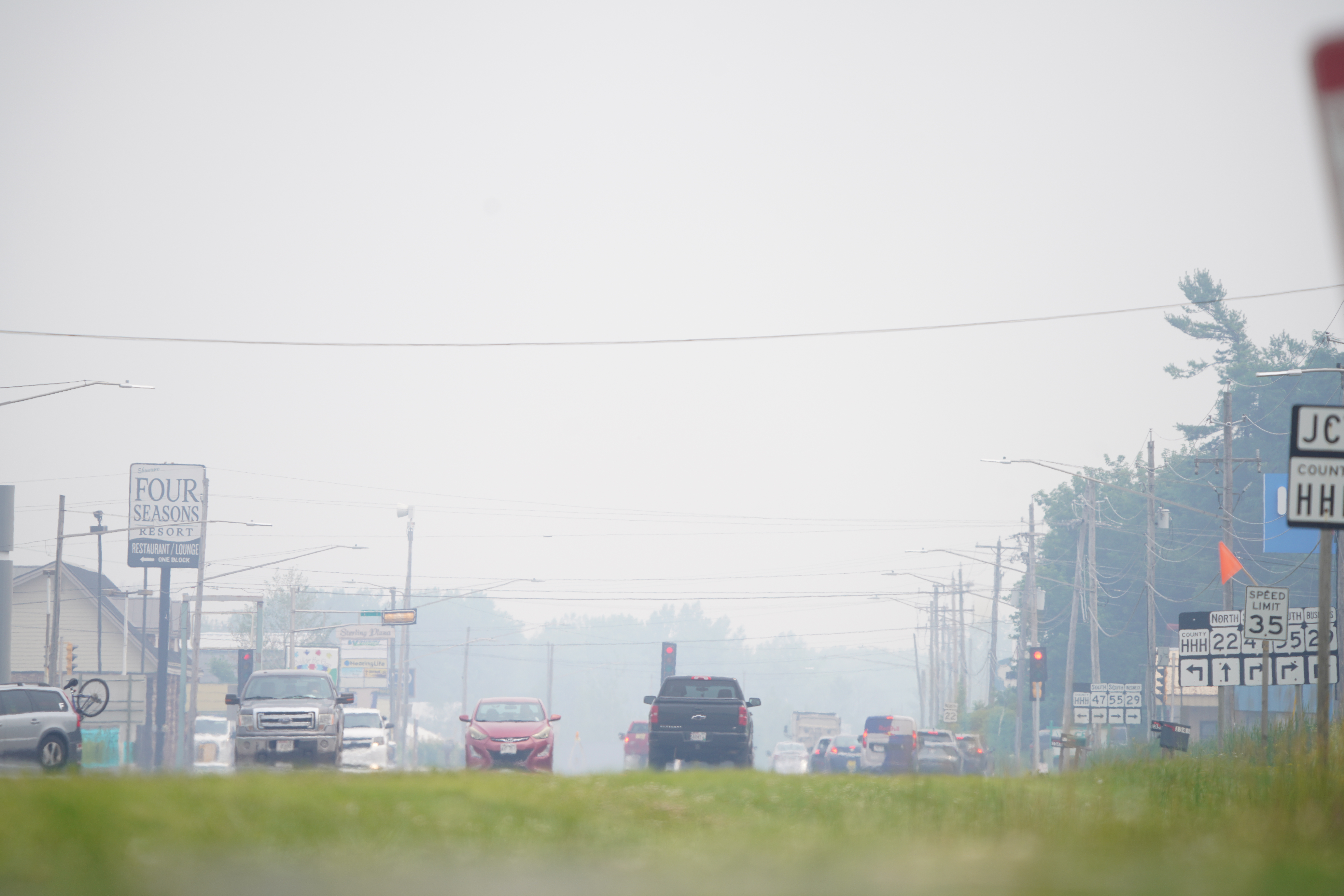
Smoke from wildfires in Minnesota and Canada has moved into the area, leaving a dim haze across the state that can be seen in every direction.
The smoke has created unsafe air quality, and prompted the Wisconsin Department of Natural Resources to issue a statewide alert, in effect until noon July 16.
Depending on where you live, the Air Quality Index is expected to reach the orange level, unhealthy for sensitive groups – red, unhealthy for everyone – or purple, very unhealthy.
The unhealthy category includes Menominee, Oconto and Shawano counties.
Sensitive groups should avoid prolonged or heavy exertion, while everyone should reduce prolonged or heavy exertion.
Smoke entered northern Wisconsin the night of July 14. Smoke will continue south-southwest, approximately reaching a La Crosse to Janesville line by midnight July 15. Statewide impacts will be possible by 6 a.m. July 16. The heaviest smoke impacts, including the potential for Hazardous Air Quality Index, are expected across northwest Wisconsin, especially in communities along Lake Superior. Lake enhanced smoke concentrations will also be possible for communities near Lake Michigan.
Wildfire smoke contains fine particulate matter, tiny particles that can travel deep into the lungs and even enter the bloodstream. Exposure can worsen asthma and other chronic lung diseases, increase the risk of heart-related complications, and irritate the eyes, nose and throat, particularly among children, older adults, pregnant women and people with underlying health conditions.
“The impact of poor air quality cannot be overstated,” said Tony Malik, MD, hospitalist for Aspirus Health, which has clinics and hospitals in Michigan’s Upper Peninsula. “Whenever we have poor air quality, it can cause exacerbation or flare-ups for people with chronic lung diseases, coronary artery diseases and other chronic diseases.”
Aspirus Health encourages residents to take steps to protect themselves whenever wildfire smoke affects the region.
- Know the Air Quality Index (AQI) where you live before spending extended time outdoors.
- Limit prolonged or strenuous outdoor activity when air quality reaches unhealthy levels.
- Keep windows and doors closed when smoke levels are elevated.
- Use a high-efficiency air filter or portable HEPA air purifier if available.
- If you must be outdoors for extended periods in heavy smoke, consider wearing a properly fitted N95 respirator.
- Avoid adding to air pollution by postponing brush burning, campfires and other outdoor burning during poor air quality events.
Residents experiencing persistent coughing, shortness of breath, chest pain, wheezing or other concerning symptoms should seek medical attention promptly.
In addition to the poor air quality, hot and humid conditions continue as well.
The National Weather Service is predicting widespread smoke, mainly after 1 p.m. July 15. It will also be partly sunny and hot, with a high near 94 and north northeast wind around 6 mph.
Expect widespread smoke, mainly after midnight and then again July 16, mainly before 11 a.m. Temperatures that day are expected to peak around 88.
A 30% chance of showers and thunderstorms is expected after 1 a.m. July 17.
kpasson@newmedia-wi.com


