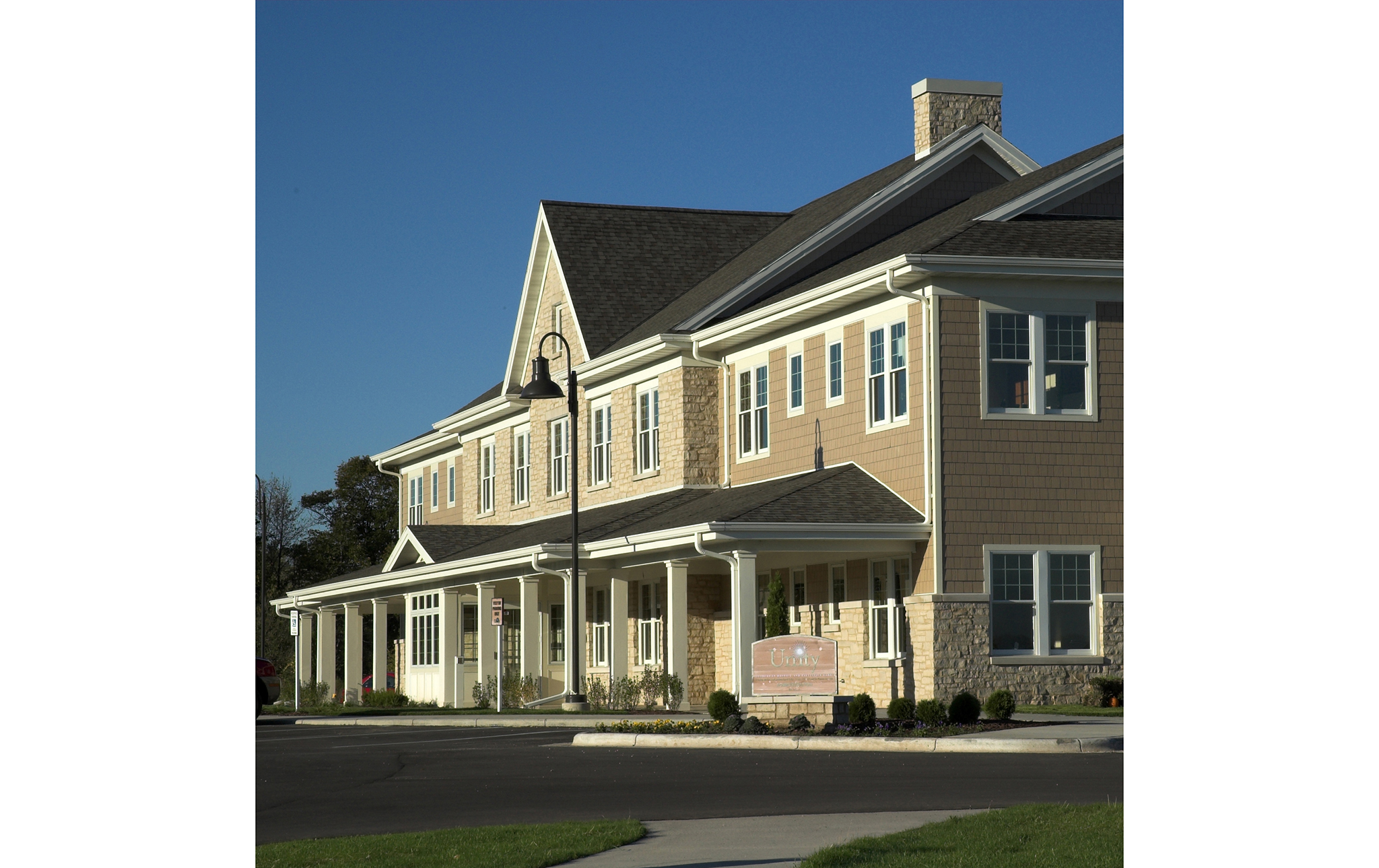
Alisa Gerke is humbled by the selection of Unity Hospice as the Service Business of the Year by the Shawano Country Chamber of Commerce.
“It’s way cool,” said Gerke, Unity’s executive director, using her favorite adage. “It’s very humbling to be honored for our mission and our values by the community. For us, our work comes at one of life’s most vulnerable times. We go about our work in a humble fashion, caring for our neighbors when they need it the most.”
Unity Hospice has an office in Shawano and headquarters in De Pere. The company has been around since 1977 and has been in Shawano the past 26 years. It employs 208 full-time and 51 part-time staff.
Unity Hospice was nominated for the award by Christy Brozak, the company’s marketing director. Gerke didn’t know about the nomination beforehand.
“I was way beyond excited,” she said. “I was not aware of being nominated until Christy told me after we were selected.”
Gerke said Unity Hospice is a mission-driven, community-focused nonprofit organization. Both she and Brozak spoke highly of employees and the company’s culture as it relates to them.
“Unity recognizes and appreciates that our people are our most valuable asset and critical to our success. Culture is therefore at the heart of day-to-day operations,” Brozak said. “It’s how to care for each other that leads to a trusting, high-quality team that’s willing to go above and beyond to give top-notch service delivery.
“As a result, many opportunities have been created for employees to share their ideas, concerns and feedback, and participate in new education/training — including nursing and CNA excellence councils, psycho-social focus group, quarterly all-staff town meetings, head heart hands engagement committee and emerging leaders program.”
Gerke has been with Unity Hospice for about 12 years.
“Working here has been a blessing,” she said. “It has grown me personally and professionally. I can’t imagine me being anywhere else.”
Shawano is one of three “work stations,” with others in Sturgeon Bay and Marinette. These sites serve as a gathering point for those local employees, as well as a place to pick up and drop off equipment.
“One thing that sets up apart from the for-profit providers is that these employees live and work in these communities,” Gerke said. “They live in Shawano, have their kids or grandkids in the schools, buy their gas there, shop there. They care for people in their own community.”
Unity Hospice employees serve patients in 13 counties in northeastern Wisconsin, and the need for its services continues to grow.
“We have an aging population of those 65 and older in northeastern Wisconsin and across the country,” Gerke said. “That, combined with a longer life expectancy, means there is a growing need for palliative (specialized medical care that focuses on providing relief from pain and other symptoms of a serious illness) and hospice services.
“Also, more individuals are embracing and understanding what hospice is all about and what we can offer.”
Brozak said the number of our family, friends and neighbors who received hospice care was 2,205 in 2021, which increased to 2,298 in 2022.
The number of virtual and in-person visits made to hospice patients by a member of Unity’s care team increased from 78,914 in 2021 to 99,085 in 2022.
Palliative care patient numbers rose from 81 in 2021 to 166 in 2022.
And, the number of individuals who benefited from Unity’s grief support services climbed from 6,379 in 2021 to 7,281 in 2022.
That growing demand for services is also of the biggest challenges facing Unity.
“Our most significant issue continues to be significant competition from for-profit hospice providers entering northeast Wisconsin with services because they identify the profit they can make,” Brozak said. “Unity is the only locally owned nonprofit in northeastern Wisconsin. We address the issue by regularly gathering feedback from our Patient and Advisory Council as well as community partners to develop creative solutions for program development and proactively discuss opportunities for improvement.”
Unity’s grief services are also important to families who have suffered the death of a loved one.
“What does life look like now? We work with families, and we partner with schools and businesses when children or co-workers are struggling to deal with a death,” Gerke said.
Pediatric hospice care is another unique service. To serve in that capacity requires specialized training.
“In addition to the physiological differences between children and adults, there are medications, family support and more to deal with,” she said.
Brozak said Unity not only improves the lives of patents and their families but also provides excellent value for the taxpayer.
She said key findings from the most comprehensive analysis of administrative and enrollment claims data for patients in Medicare and Medicare Advantage include:
• Hospice care is associated with increased satisfaction and quality of life, improved pain control and reduced physical and emotional distress.
• Medicare spending for those who received hospice care was $3.5 billion less than it would have been had they not received hospice care.
• Hospice is associated with lower Medicare end-of-life expenditures when hospice lengths of stays are longer than 10 days.
• Hospice stays of six months or more result in savings for Medicare.
“Unity offers Community Care, a financial assistance program that ensures everyone throughout northeast Wisconsin, regardless of their financial means, has access to Unity’s compassionate hospice care, Supportive Care Management and grief support,” Brozak said.
Unity also offers a Speaker Bureau program that provides free virtual or in-person educational sessions on more than 20 end-of-life topics presented by experienced physicians, nurses, social workers, grief counselors, chaplains and administrative staff.
Regardless of the program, though, Gerke and Brozak insist Unity Hospice wouldn’t be where it is today without its employees. And to that end, Gerke said it’s vitally important staff be taken care of, too.
“Our culture is very important,” she said. “Taking care of people is our No. 1 goal, and to offer exceptional care, we need to take care of our people.”
Strategic and annual operating plan cycles are built on the foundation of Unity’s mission, vision and values, all three of which were developed from staff feedback.
“These three pillars ensure we spend time on meaningful initiatives, assign and commit to outcome measures,” Brozak said. “Specifically, Unity’s core value statements serve as our guiding principles for how we go about our work on a daily basis, how we interact with patients, families, co-workers and community partners, and which strategies we implement to fulfill our mission.
“Unity’s vision statement guides both our short- and long-term planning to create sustainable, organizational success. Our commitment is focused and intentional, resulting in engaged employees and positive quality and financial outcomes.”
Unity is the sole organization offering inpatient hospice at seven area hospitals and is a collaboration between Bellin Health, HSHS St. Mary’s Hospital Medical Center and HSHS St. Vincent Hospital.
Established as the third hospice program in the nation, Unity launched Wisconsin’s first palliative care program in 2002, the area’s first hospice residence in 2007, the region’s only Grief and Education Center in 2021 and the area’s first pediatric hospice program in 2024.
kpasson@newmedia-wi.com
Service Business of the Year: Unity Hospice cares for patients, families, employees