
The best place you never hunted is yours for the asking.
The reason you probably never went there is because the stories about public hunting probably scared you away.
“There are too many crazies out there,” the story goes. “You’ll run into squirrel hunters, hikers and maybe even anti-hunters who will scream at you.”
I’ve shot many deer on public land, including my best buck, a symmetrical 8-pointer that wouldn’t make any record book but mine. I’ve run into squirrel hunters and hikers, but never anti-hunters.
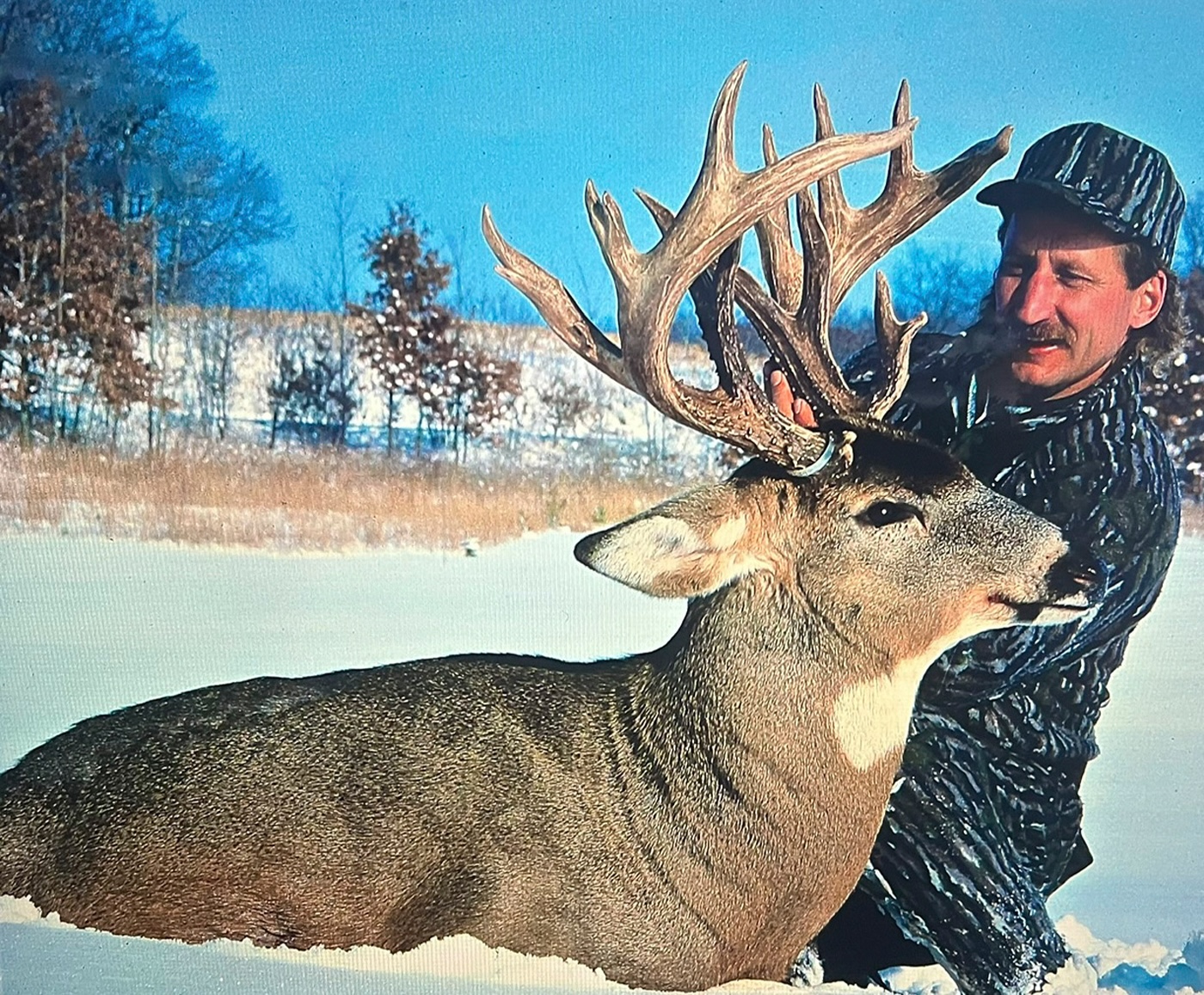
Wisconsin deer hunting legend Greg Miller never worried about these things. The man who made a living writing about and filming his trophy deer hunting adventures throughout the 1980s, 1990s and early 2000s estimates he killed 75% of his record book animals on public land.
Most of those deer came from forests in Burnett and Douglas counties forests, not the national forests as many suspected. He’s traveled to 22 states and killed deer in 19 of them. At one time, he held the record for the fourth largest non-typical buck in Wisconsin, a 17-pointer he shot with his bow in December 1990.
He has authored five books on deer hunting (all of them published through Krause Publications in Iola), and co-authored many others. His hunting articles have appeared in “Outdoor Life,” “Deer and Deer Hunting” and many other leading magazines. He also produced years of hunting videos for television.
Miller’s success is impressive, especially considering he did it before cellular trail cameras, GPS, mapping phone apps and the other technology that most hunters now take for granted.
“It’s a little easier now,” he said. “It’s developed a generation of lazy hunters, and I don’t mean that in a bad way.”
Public hunting lands offer “hundreds or thousands of acres to yourself,” but you have to be willing to scout and just walk.
“You’ve got to get adjusted to what the deer are doing,” he said.
Miller, his son, Jake, and others in his hunting posse would begin their scouting forays in early spring, just after the snow melts. All the rubs, scrapes and trails were clearly visible, providing clues on where to place tree stands or ground blinds. They’d walk miles to find the best spots.
“You better know every square inch,” he said. “Just walk it.”
Miller and other pros talk frequently about pinch points, sometimes also called funnels. He’d put marked topographic maps on his cabin walls south of Danbury in northwest Wisconsin, but today, phone apps like OnX Hunt make it much easier to find these areas where multiple trails or valleys come together, increasing the chances of a shot with bow, crossbow or gun.
Knowing where deer are traveling, feeding and bedding add up to success. Just as important is eliminating the vast acreages where deer seldom travel. If there’s no deer sign or tracks in an area, move on. If the area you currently hunt has few deer or sign, it’s probably time to find new hunting spots, he said. That’s the beauty of public land. There are dozens of places to explore and eventually hunt.
As the seasons change, deer behavior changes, too. We are all familiar with the rut, those precious few days in late October and early November when bucks throw caution to the wind in pursuit of does for breeding.
In the Northwoods, deer will yard up in circles as the snow piles up, and although fawns may starve first (they can’t reach the browse line in deep snow), rut-exhausted bucks can also die in these conditions, he said. There is a second minor rut period from about Dec. 1-15 that is triggered by does missing their first cycle.
Although Miller relied heavily on treestands in his younger days, he later discovered the effectiveness of ground blinds.
Some Wisconsin residents who don’t hunt but may enjoy hiking on public land may be oblivious to hunters. And public areas can get crowded during the gun season (not so much during the bow season). If you are willing to walk far from the parking lots, you may find paradise.
A couple that walked past me during gun season (I was on a stool with just a scrap of camo fabric for a blind) smiled and apologized. It was near sunset and I watched them walk to the parking lot west of Waupaca.
A few minutes later, a fat doe that was still looking toward the parking lot wandered within range of my 7-30 Waters Contender pistol. It was just like a mini deer drive, although the couple never knew they helped me take a deer.
Today, Miller says he no longer hunts deer, mostly blaming the growing wolf population.
“They literally wiped out the deer,” he said.
Timber cutting and an influx of out-of-state hunters have also affected his beloved haunts in northwestern Wisconsin near Danbury, as well as Chippewa County.
He believes the Wisconsin Department of Natural Resources needs to get the wolf population under control.
“It is costing us millions,” he said. “There’s no return on that.”
He’s referring to the money spent by deer hunters to pursue their beloved whitetails.
Another famous Wisconsin trophy deer hunter, Myles Keller, took dozens of bruiser record-book bucks on public land.
DID YOU KNOW?
Wisconsin trophy deer hunter Greg Miller authored dozens of hunting articles in leading outdoor magazines. He also produced videos used in TV hunting shows.
Krause Publications in Iola published five of his hunting books, which are still available online and in used book stores. Any deer hunter can benefit from his vast expertise, whether you hunt on public or private land.
• “Aggressive Whitetail Hunting (with Jeff Miller),” January 1995. 208 pages
• “Proven Whitetail Tactics,” January 1997. 218 pages
• “Rub-Line Secrets:,” September 1999. 208 pages
• “Greg Miller’s Greatest Whitetail Adventures,” January 2002. 207 pages
• “Bowhunting Forests and Deep Woods,” March 2006. 240 pages

Whitetail hunting legend Greg Miller shot this 217-pound field-dressed, hog-bodied 8-pointer in November 1980 on Burnett County public land. (Courtesy of Greg Miller)


