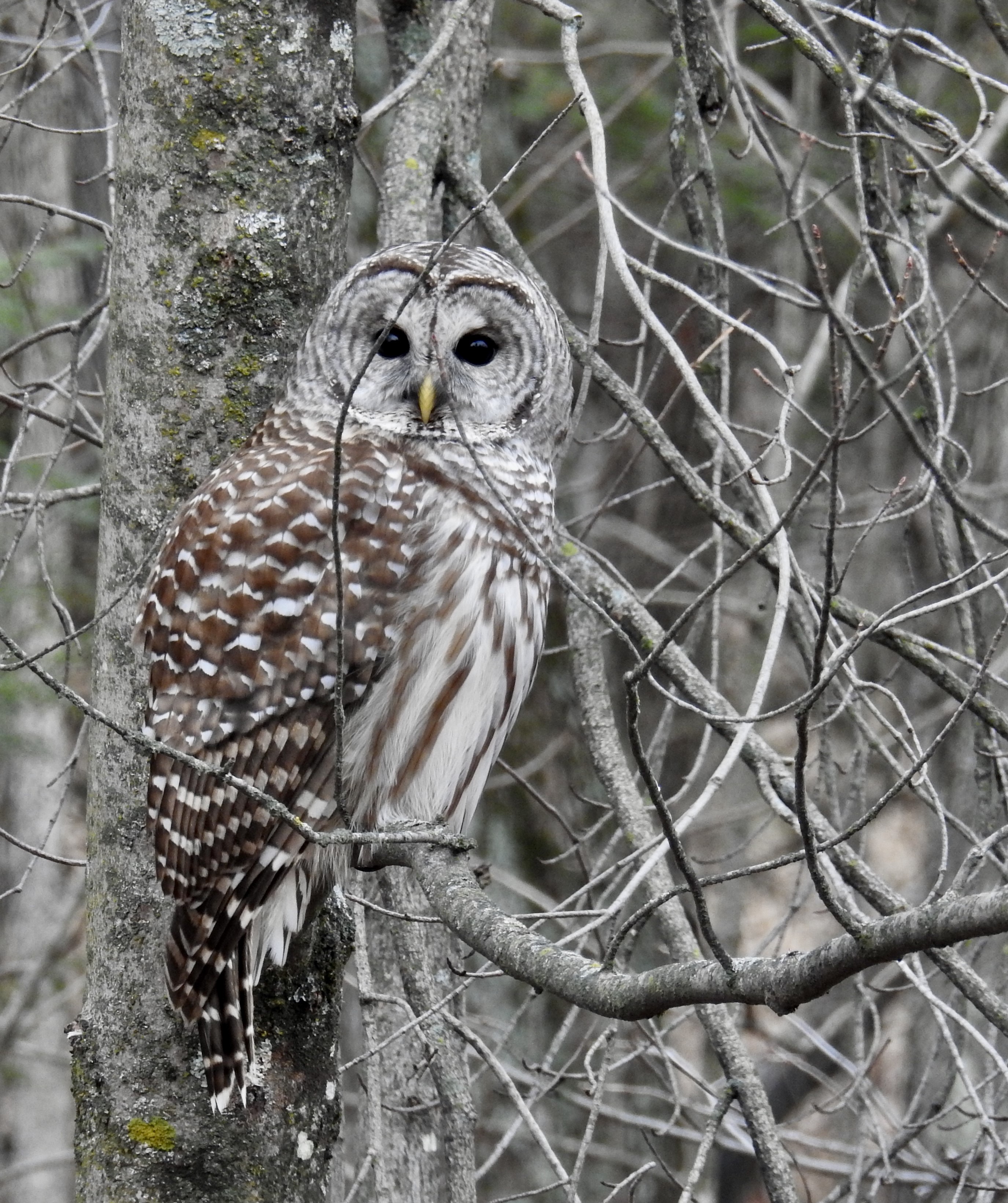
My husband and I participated in Audubon’s 124th Christmas Bird Count (CBC) this past year, joining other birders to identify and count birds in our assigned survey area. Survey areas are located within 15-mile radius circles; our survey area was just west of Peshtigo. On Dec. 16, from just after sunup to almost sundown, the group had the fun of observing a total of 40 species and 3,134 birds. An exciting find was a barred owl, up close and personal.
Our data will be combined with data from similar surveys going on in all 50 U.S. states and 20 foreign countries. Interested in what the long term CBC data set is telling us, I was not surprised to learn that it is documenting declines in bird numbers.
The 122nd CBC data recorded a total of 42,876,395 birds from the U.S., Canada, Latin American, and the Caribbean and Pacific Islands. According to Audubon.org, while this may seem a large number of birds, it is actually a dramatic decline in bird numbers when compared to the 60million to 100 million birds reported 30 years ago.
The CBC data is also revealing changes in the movement patterns of birds. According to an article by Rebecca Heisman on the American Bird Conservancy website, research is showing that migratory birds have been arriving in North America in the spring about two days earlier each decade since the 1990s.
In addition, many groups of birds, including woodpeckers and large forest birds such as hawks, are more likely to be observed farther north now than they were only a few decades ago. According to Audubon.org, a 2021 study found that populations of 16 common duck species wintering in the Southeastern U.S. have also shifted northward over the past 50 years.
Climate change is also causing impacts to bird habitats and health. Heisman discusses several of these impacts including drought and fire, both of which can destroy nesting areas and other bird habitats.
Drought can also result in the spread of diseases such as West Nile virus; a disease that threatens humans and birds alike. Corvids such as crows and jays are especially subject to this disease. Drought causes birds to gather in large numbers around remaining water sources and stresses their immune systems, making them more susceptible to mosquito-borne infections like West Nile virus.
Global warming is driving rising sea levels that flood coastal marshes. This can be devastating to marsh dwelling birds such as the saltmarsh sparrows that nest in the U.S East Coast marshes. This impact is lowered if new marshes form inland before populations decline.
Another affect of global warming is mismatches in the biological timing of natural events like flowering, hatching, nesting, etc., also termed “phenological mismatches.” Such a mismatch could occur with migratory birds and their food resources. Even though many birds are shifting their spring migrations north sooner, some are not doing it soon enough to keep up with the pace of other natural changes that are occurring due to climate change. In addition many birds start migrating northward based on day length and not temperature.
For these reasons, food resources may be inadequate when they arrive in their breeding territory. An example would be migratory songbirds arriving at their nesting sites after a spring warming spell and starting to raise young at a time when they missed the peak of the seasonal food resources that they rely on, such as caterpillars; this results in reduced breeding success. The caterpillars, due to warming weather would have peaked in numbers earlier in the spring, before the bird’s arrival.
Climate change is also resulting in new interactions among species, adversely affecting some bird species. For instance, because there is less snowpack in the mountains of Arizona, elk are staying at higher elevations over the winter than they have before. Their increased consumption of plants is resulting in the decrease of some songbird populations in these areas.
Audubon’s Survival by Degrees report indicates that “two-thirds (64%) (389 out of 604) of North American bird species are at risk of extinction from climate change.” The good news is that it also shows that if we take action now we can help improve the chances for 76% of the species at risk. You can download Audubon’s report at www.audubon.org/survival-degrees-about-study#521880bda2.
What can we do now to help birds survive the adverse effects of global warming? Keeping cats indoors, eliminating pesticides and reducing window strikes remain ever important to help keep bird populations strong.
Reducing our carbon footprint by cutting back on the use of fossil fuels remains imperative if we are to slow global warming. We bought our first hybrid car this past year and continue to plant native trees and shrubs in our yard for our, and the birds, use and enjoyment. They also help to sequester carbon.
It may appear like our individual efforts don’t amount to much in the seemingly overwhelming goal to fight global warming, but taken together, they do. Our world is changing fast, warming within our lifetimes, and we need to change with it, doing what we can to help reduce the impacts of climate change on us and the world around us.
Enjoy the birds, join a CBC in your area to learn more about our birds, and maybe plant a tree? All good.
Cathy Carnes is a retired biologist in Oconto who worked with the U.S. Fish and Wildlife Service Green Bay Field Office and prior to that with the U.S. Army Corps of Engineers Regulatory Branch in Buffalo, New York. As endangered species coordinator for the USFWS, she helped conserve and recover federally listed threatened and endangered species in Wisconsin.
Bird counts reveals impacts of climate change