Republican lawmakers will try again in the next legislative session to pass a tax-free retirement bill that reduces the state income-tax burden on retirees.
The bill authored by state Rep. David Steffen, R-Howard, would exempt payouts and disbursements from IRAs and the qualified retirement accounts up to $75,000 for individuals and $125,000 for married couple filing jointly.
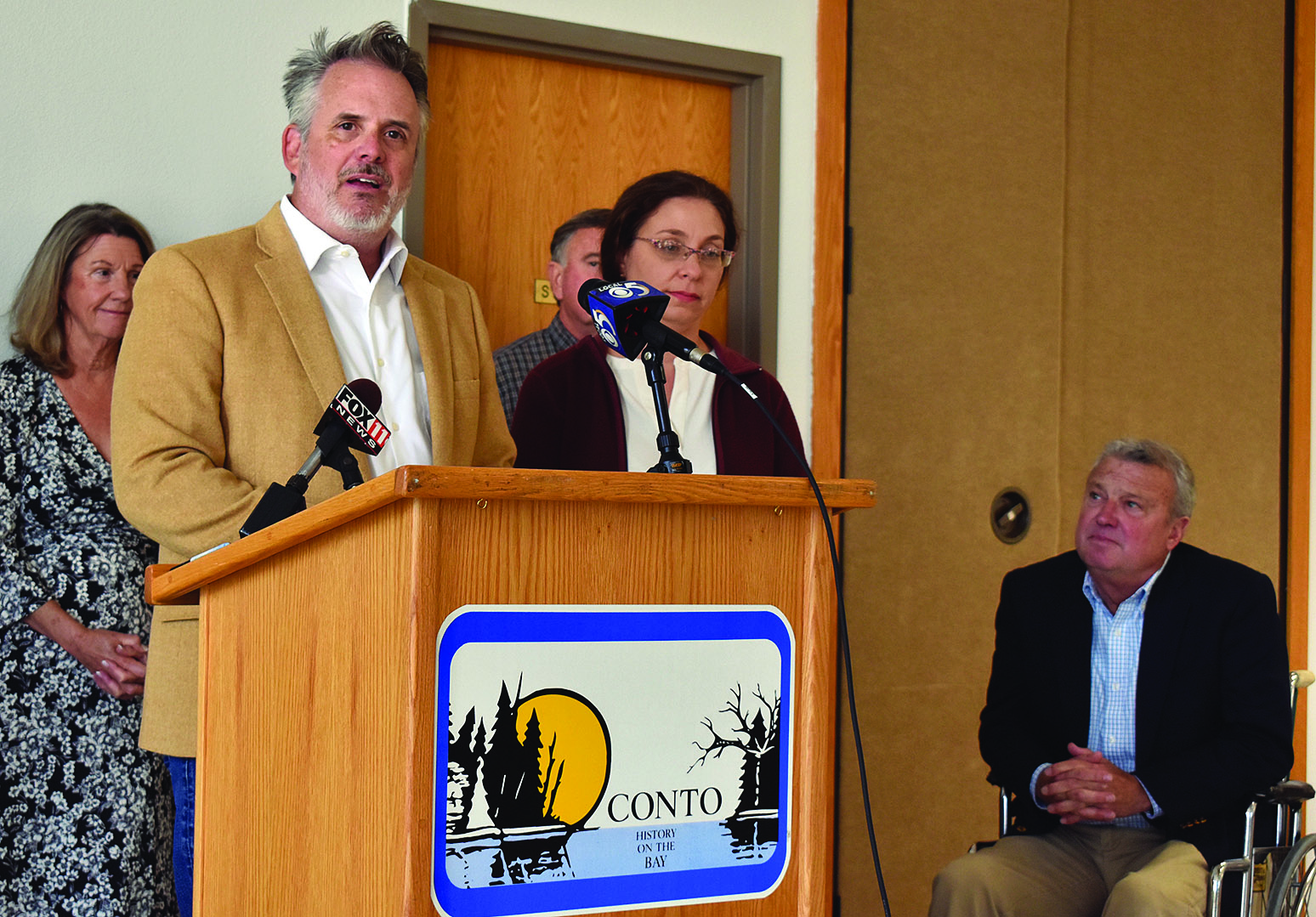
“When it comes to any demographic, there is none that is been more devastated by the doubling of fuel prices, 20-40% increases in food costs, as well as housing costs both in rent and mortgages, than our senior citizens,” Steffen said at an Oct. 2 news conference at Oconto City Hall.
Older taxpayers are least able to absorb inflationary increases in the cost of living, he said.
“By making retirement tax-free here in Wisconsin, we have an opportunity to provide tremendous financial relief so that they can enjoy and have a comfortable retirement,” Steffen said.
He added that the measure could make the state of Wisconsin more attractive to people looking to move to a state with a better tax environment. Illinois and Iowa have recently passed similar laws, he said.
“We have an opportunity to attract the best and brightest who ultimately want to retire here,” Steffen said.
The state would also get an economic benefit from lowering income tax, he said.
“Retirees spend a lot of money in our state. Two-thirds of our state economy is based on consumption, meaning individuals who take money out of their pocket and spend it within our communities, and that is what a large part of our retirees do every day,” Steffen said.
Gov. Tony Evers vetoed the original version of the bill, which would have exempted incomes up to $150,000 for married joint filers. The measure had passed the Assembly 64-32 and the Senate 22-10.
Evers on March 1 also vetoed companion bills that would have increased the threshold for the second-lowest income tax bracket and expanded the married couple tax credit, saying the bills were fiscally irresponsible.
“These three bills would reduce revenues by such a margin that it would likely force the state, even with ordinary revenue growth, to partially or fully drain the Budget Stabilization Fund just to provide bare minimum inflationary adjustments to key programs in the 2025-27 biennium,” the governor said in his veto message.
State Sen. Rachael Cabral-Guevara, R-Fox Crossing, said it’s hoped the revised bill can “get across the finish line” with changes the authors hope will make it more acceptable to the governor.
‘This is the time where we really need to take this legislation seriously,” Cabral-Guevara said. “We need to work together and put our folks who have worked hard for us for many decades up in the front line, so let us work together and let us come up with a positive outcome here.”
Another co-sponsor, state Rep. Joel Kitchens, R-Sturgeon Bay, said the bill would put Wisconsin in a better position in competing for retirees with other states like Florida, which has no state income tax.
“I had a married couple, teachers, who live in Sturgeon Bay contact me and say, ‘You know we’re looking at condos in Florida, but if you’ll pass this, we’re gonna quit looking,’” Kitchens said. “These are people who have their families here, they contribute to the community. It’s really important for us to keep these senior citizens in Wisconsin.”
At least 13 other states have some form of tax relief for senior citizens, Steffen said.
wbluhm@newmedia-wi.com
Lawmakers plan to reintroduce tax-free retirement bill