Most of us have been recycling glass, plastic, cardboard, paper and other materials for decades.
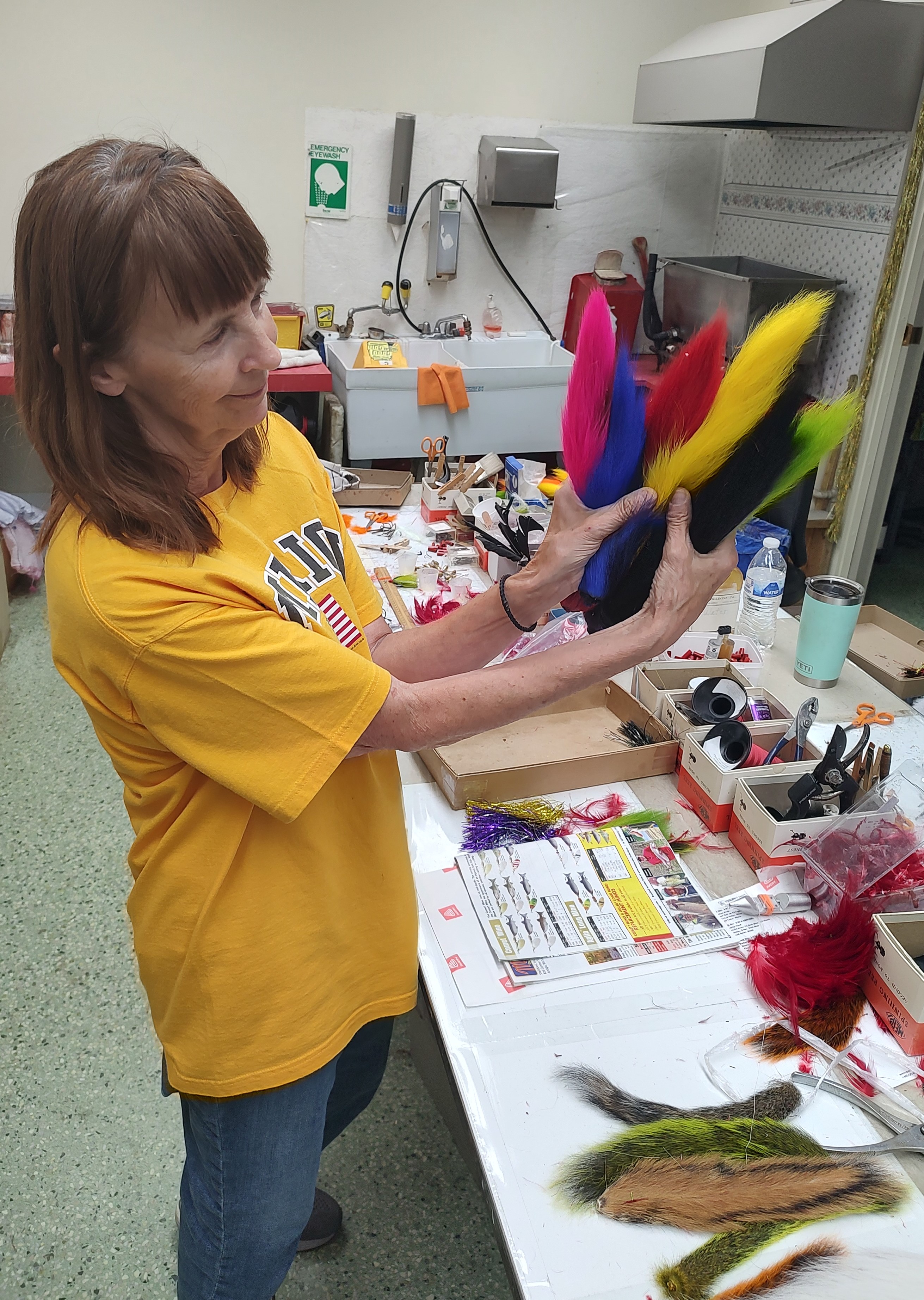
An Antigo business that makes world-renowned fishing lures “recycles” squirrel and deer tails to dress their spinners.
It was a lucky brush with World War II vet Frank Velek back in 1951 that turned Sheldons Inc. founder Todd Sheldon’s bad fishing day on the Wolf River into a life-changing one. Velek had returned from Europe two years earlier and gave Sheldon a French-made Mepps spinner. Sheldon tied the lure onto his line and in two hours had four trout weighing more than 12 pounds. Word soon spread about the amazing lure, and Sheldon began ordering them for his Antigo bait shop directly from the Mepps factory in France.
The imported lure, invented by French engineer Andre Muelnart in 1938, continued to grow in popularity with fishermen on the Wolf and far beyond, catching multiple fish species as it still does today. Sheldon sold his bait shop in 1956 and formed Sheldons’ Inc., which today is run by his son, Mike Sheldon. Todd Sheldon died in 1995 at the age of 81.
By 1960, United States sales of this bladed lure topped half a million, and the founder then set a goal of selling 3 million.
“My dad set that mark, because that was more than any lure had ever sold on this continent,” Mike Sheldon explained in a written history of the company available at www.mepps.com. “Our sales went sailing right past that goal.”
Another happy chance encounter with a young local angler turned a good lure into an even better one and created the demand for squirrel and deer tails.
The elder Sheldon had caught another creel of trout with his Mepps spinners in the early 1960s when he returned to his car. On the way, he chatted with a young boy who also caught a limit of trout, but his fish were much larger. The boy had added a small tuft of squirrel tail to the treble hook. Sheldon took the idea and ran with it, experimenting with both squirrel and deer tail dressings on his lures. Some are used in their natural colors, while others are dyed blue, black, yellow and other colors. You can still buy them today with or without the tail dressing.
Sheldons’ continues to experiment with lure designs and colors, launching new products each year that will catch fish and anglers alike. For example, they have added a plastic minnow body to the spinner that is offered in multiple minnow colors (called the Comet Mino, Aglia Long Mino and Black Fury Mino).
Their catalogs are full of tips on which colors and designs to use in varying types of water and habitat.
Can’t decide which lures to buy because of the overwhelming color and size options? Pick up or order “Killer Kits,” which offer convenient six-packs of the most popular lures for panfish, trout, bass, salmon, walleye and even specific fishing areas, such as Alaska and Canada.
Sheldons’ acquired the French Mepps operation in 1972, and added Louisiana-based plastic lure giant Mister Twister to the fold in 1982. Sales of the new Mister Twister Sassy Shad contributed greatly to the company’s skyrocketing growth, and Sheldons’ continues to remain a top lure manufacturer.
Although high-grade French components like metal blades and hooks are used for assembly, Mepps lures are all hand-assembled, packaged and shipped from Antigo by the company’s 30 employees in the 50,000-square-foot factory and world headquarters, explained communications director Nik Kolbeck.
Hunters from all 50 states contribute red, gray and fox squirrel tails as well as deer tails. The tails are sorted and graded by size and color, washed in bags inside a washing machine and then dyed or used in their natural state to dress the treble or single hooks. Hunters receive 12-25 cents per tail, depending on size and species. If you agree to trade for lures, you will receive double the value. Mepps will cover your normal shipping costs if you ship 50 or more at a time (go to www.mepps.com/squirrel-tail for full details).
Cindy Kielman, a 38-year employee who used to work from home for Sheldons’ before coming to the factory, is the default squirrel tail expert. She urges hunters not to wrap their tails in plastic because the moisture will rot them. She’s seen many nasty arrivals that included bugs and other issues. Freezing tails with the bones in (never strip the bones or they are worthless) is the best way to store them before shipping. Keep them straight and salt the cut end generously.
Feel free to call this friendly Langlade County business at 800-637-7700 if you have any questions about their world-renowned lures or the fine art of recycling tails.
Ross Bielema is a freelance writer from New London and owner of Wolf River Concealed Carry LLC. Readers can contact him at ross@wolfriverccw.com.
‘Recycled’ squirrel tails become fishing lures