
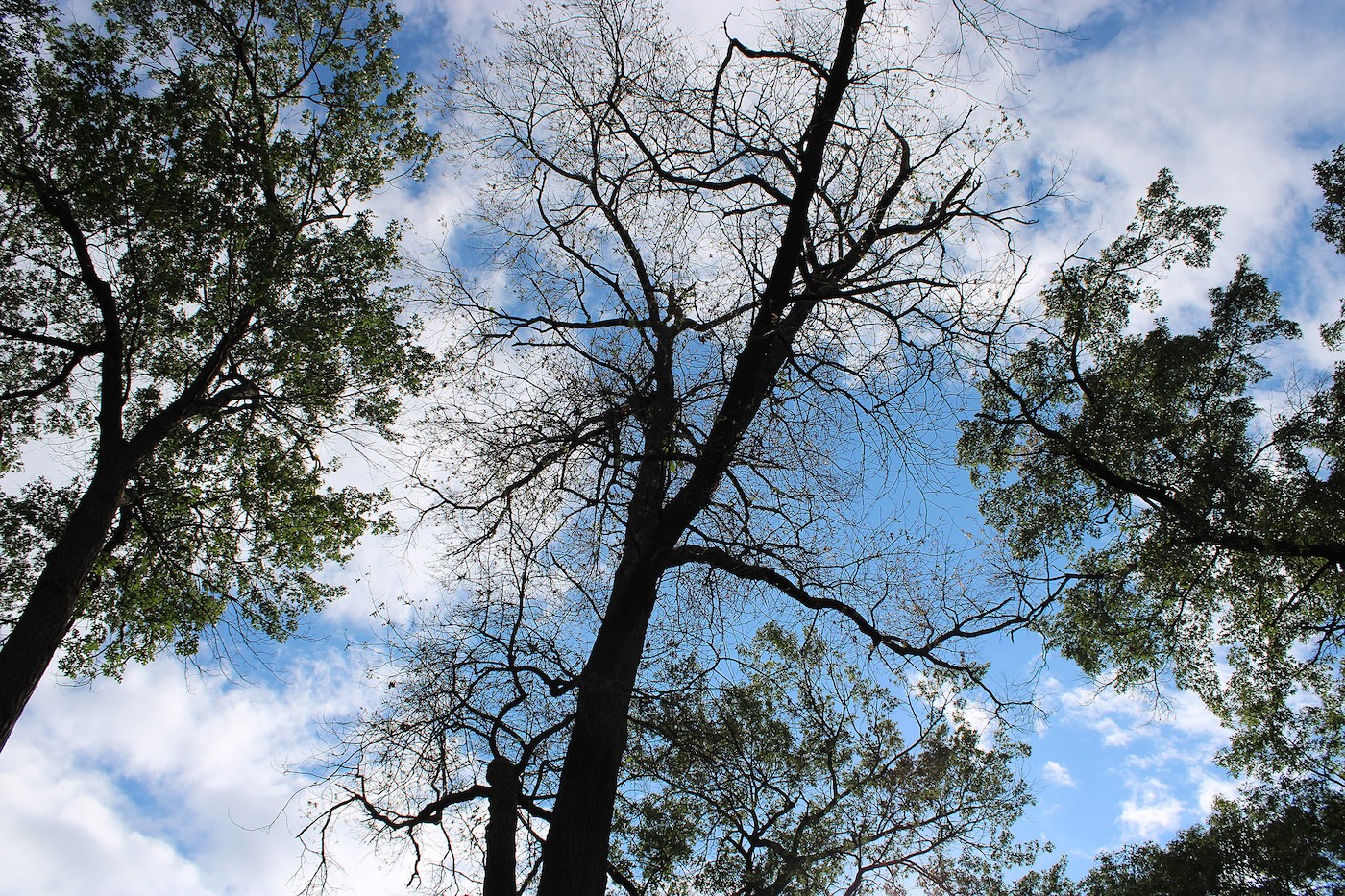
Shawano’s forester is sounding the alarm about oak wilt being present in Kuckuk Park among trees adjacent to the playground area.
Oak wilt is a fungus that attacks the water conducting system. The tree tries to block the fungus by producing gums and resins, which plug the tree’s water processing system. The fungus spreads quickly, and when the tree can no longer get water and nutrients through, it wilts and dies, according to the city of Shawano tree guide.
Oak wilt can be spread in two ways, either through root systems connecting infected trees with healthy trees or by insects. According to City Forester Mike Kroenke, it’s the proximity of the oak trees in Kuckuk that’s causing the current infection. Four trees died in the park last year, he said, and two more are in the process of dying.
Kuckuk has the largest gathering of oak trees in the city parks, according to Kroenke, so there are trees not showing any sign of infection currently. However, once the trees are infected, it can take less than two months to kill them.
“It’s going to be really difficult,” Kroenke said. “We still want to save as many of them as possible, and then we’ll be planting a lot of trees all over the place like bur oak, swamp oak and some white oak.”
Kroenke said the city might look at putting in trenches to limit the connectivity of the tree roots underground.
Jeremy Johnson, forester for the towns of Wescott and Menominee, was called in recently to look at a plan of attack to stop the spread of oak wilt. Johnson is recommending fungicide injections in the healthy trees in order to prevent further infection.
“I do a traditional gravity feed with fungicide injections,” Johnson said. “I also do arbor injections. The sooner you do it to protect them, if it could be done before October, that would be ideal before the trees shut down.”
Johnson said he buys generic fungicide treatments and applies them every other year. He recommended the city do the same until the trees have shown no sign of infection for at least five years.
“If you have no new oak wilt in the next five or six years, then you can stop,” Johnson said.
Oak wilt symptoms can show up within three weeks of infection, according to Johnson, but by then it could be too late. While fungicide injections can help slow the spread of oak wilt, it does not mean the trees are 100% safe from infection, he said.
“The tree is pretty much dead within four to six weeks,” Johnson said.
The exception is with white oaks, which can be therapeutically treated with injections that could prolong the life of the tree but won’t eradicate the oak wilt.
Funding to treat the oak trees could be problematic. Kroenke said the city is currently treating ash trees, removing dead ash trees and planting new trees to address the emerald ash borer, and that alone is costing $6,000. The forestry budget is part of the city’s public works department.
DID YOU KNOW?
Symptoms of oak wilt in red, black and northern pin oaks:
• Leaves at or near the top typically wilt first.
• Slight curling and dull paling of leaves appear at tips and edges.
• Leaves gradually turn brown with dramatic leaf drop over a 2-3 week period.
• Distinct line between the green and brown portions of the leaf.
• Lower branches are affected last.
Symptoms of oak wilt in white and bur oaks:
• Wilted and bronzed leaves appear only on scattered branches.
• May live for several years and some may compartmentalize the fungus.
• More branches dying each year.
Source: City of Shawano Tree Guide

These oak trees in Kuckuk Park have not been infected with oak wilt. The city forester is looking at options like trenching or injecting fungicides to prevent them from dying like several adjacent trees have. (Lee Pulaski | NEW Media)


