
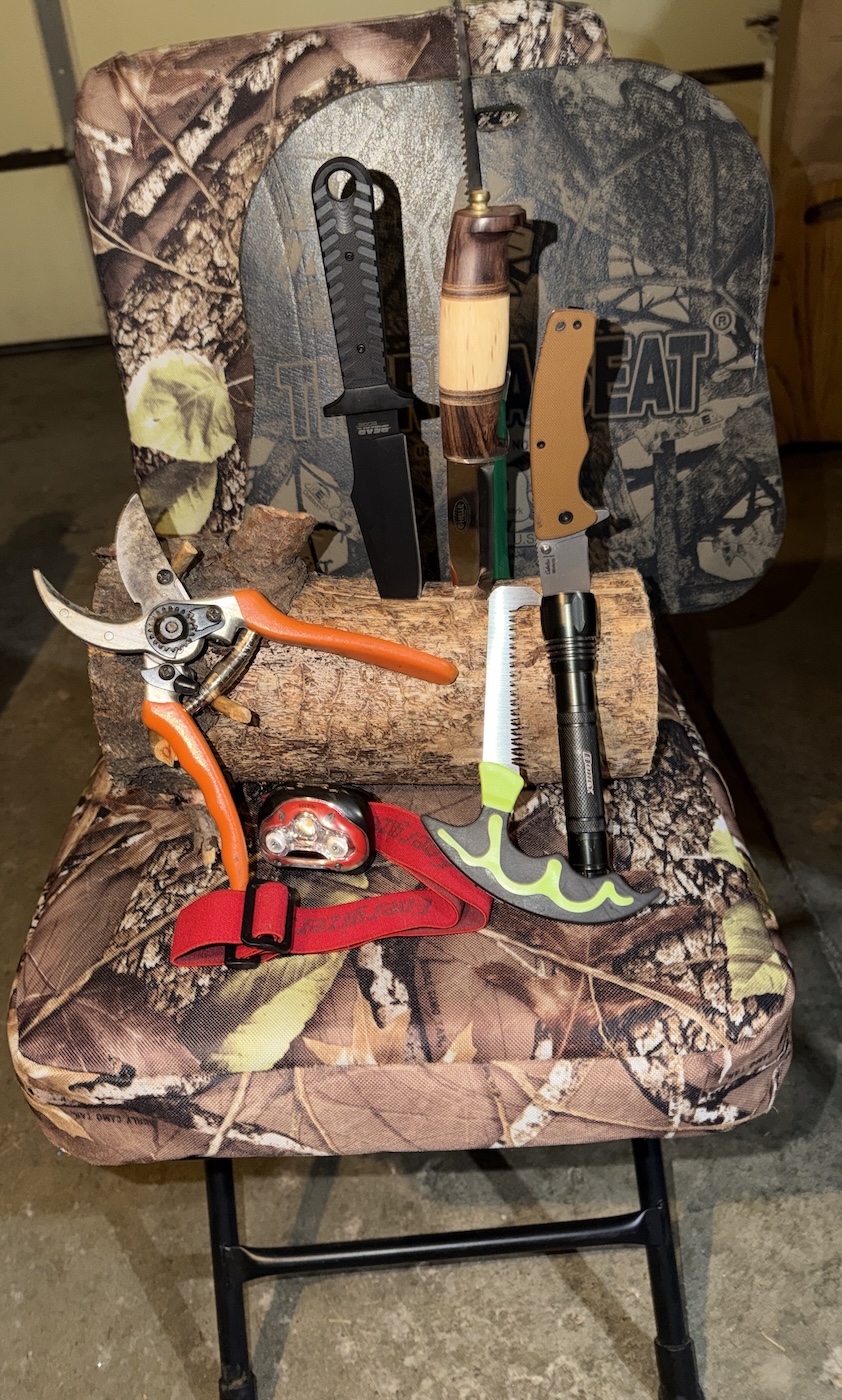
The saddest thing I can imagine is a kid without a pocketknife.
Next in line on my Sad List would be a young hunter in the woods without a decent hunting knife (or two or three).
Growing up in the non-PC world of the 1960s and 1970s, I carried a pocketknife everywhere, including school. What self-respecting Cub Scout or Webelo would be caught without his multiblade Scout knife?
Sacrilege. Nobody cared, least of all teachers. Kids, don’t try this now.
Once you are in the timber, it’s time to check and re-check that glorious blade your parent, grandpa, uncle or other hunting companion bought you. Whether you opted for a solid single-blade locking folder or a stealthy, gleaming sheath knife (leather sheath, please), it doesn’t matter. You will eventually own and carry both.
I love guns, but I have a passion for knives. Once you start carrying one, you’ll wonder why you ever lived without them. Did you ever try slicing bread with a table knife? Cut a piece of twine with a dull scissors? Not too sharp, eh? Well, let’s get with the program and evolve to the tool-using stage.
Parents will have to judge the maturity of their kids, as always, but in general, when you give kids a little responsibility, they seem to appreciate your confidence in them and take their newfound freedom seriously. Kids with toy guns learn what real guns can do at the shooting range, and the same holds true of knives.
A sharp knife can slice a finger but can also field dress and skin a rabbit, squirrel or deer. Start a kid with a small blade and when they grow in maturity, they can graduate to a hunting blade.
It’s been said that a sharp knife is safer than a dull one, because it cuts what needs to be cut without slipping, but I am terrible at sharpening knives. Today we have replaceable-blade knives made by Havalon called the Piranta line, which offer scalpel-sharp blades you toss instead of sharpening. Genius.
These are an option for older kids, but not a great idea for the grade-schoolers because an early mistake could become a long-lasting one. The Havalon blog is packed with great hunting and knife information for all ages at https://blog.havalon.com.
I prefer an American-made blade, but most trusted brands like Gerber, Buck, Kershaw and SOG offer both U.S.-made and foreign options to hit certain price points. One of my new favorites is Bear and Son, with most of its reasonably-priced blades made in Alabama. On a recent trip to Myrtle Beach, we made the mandatory stop in Sevierville, Tennessee for a 90-minute waltz through three stories of blades at world’s largest knife store, AKA Smokey Mountain Knife Works.
Many were Bear and Son blades. You can get a lot of knife from them for $30-$80.
Carbon-steel blades are easier to sharpen than stainless steel, but most hunters opt for the latter because they are rust-resistant (if you leave them in a leather sheath too long, they will start to rust).
Keep your knives clean (blood will etch steel) and lightly oiled.
Plan to spend at least $30 on a solid sheath knife and at least $40 on a folder. The latter are easier to carry in a pack or pocket, but when it comes time to clean your knife, it’s much harder to get the viscera out of the folding knife’s nooks and crannies. That’s why you need both.
Local sporting goods stores like Dunham’s, Fleet Farm, Scheels and Cabela’s/Bass Pro Shops are full of decent hunting knife choices. You can also go the online route (adults have to order knives) for a larger selection. Boker, Cold Steel, Morakniv and Helle (the last two mostly Finnish Puukko designs) are other favorites of mine. Some of these border on works of art, but for hunting, rugged utility is its own beauty.
Choose a blade shape that best fits the job. I prefer a strong tanto point for general carry, a 3- to 5-inch blade is handy for most cutting tasks.
This guide to a child’s first knife from knifemaker A.G. Russell offers great advice at https://agrussell.com/knife-articles/buying-your-childs-first-knife.
Now that we have a blade or two for field-dressing, skinning and general cutting, let’s look at a few other must-haves for young hunters:
• A comfy seat. Youth hunters get wiggly and cold. Comfort is key to their success (just like us grown-ups). A plastic bucket won’t cut it. A nice folding stool with a backrest is good but a heavy-duty hunting seat with a silent swivel is even better.
• A soft pad. A ThermaSeat or other cushion (even a boat cushion or old throw pillow) offers OK sitting on the ground or a bucket and adds an extra layer of cush for the tush on any chair.
• A great flashlight. Most lights today are super-bright LED bulbs. Rechargeable ones are OK but seem to go dead when you need them most. A headlamp is even better if you are carrying lots of gear (waterfowl or deer hunters, or me).
• A small folding or pelvic bone saw. The folding saw is great for trimming bigger limbs for shooting lanes. An alternative to the pelvic bone saw is a small hatchet, but this adds more weight to your backpack.
• A pruning shears. The greatest hunting tool next to the knife, a decent pruning shears will cut through grass and small limbs silently, and also works great for cutting joints when cleaning squirrels or rabbits, as well as turkey legs.
Ross Bielema is a freelance writer from New London and owner of Wolf River Concealed Carry LLC. Contact him at Ross@wolfriverccw.com.


