It’s one step forward and two steps back when it comes to staffing at the Shawano County Sheriff’s Department.
Sheriff George Lenzner told the public safety committee July 9 a correctional officer just resigned and took a job at the local paper mill for higher pay.
“For every two or three we hire, another three or four quit,” he said.
Even worse than staffing at the jail is the situation in the dispatch center.
There are still four vacancies among the 16 positions, down from six a month ago. That’s still creating havoc among the remaining staff — including Kasey Cross, communications supervisor.
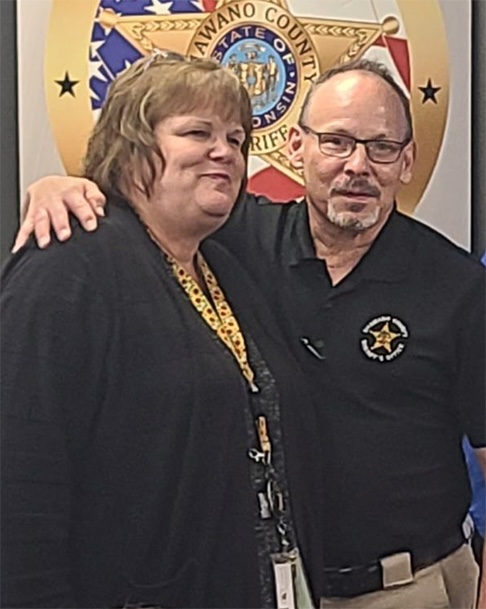
“Kasey is working today again,” Lenzner said. “She puts in 60-plus hours a week working in dispatch. She was working Fourth of July weekend when she was supposed to be off. She had to cancel PTO to work. She’s burning both ends of the candle. This week, besides working in there, she’s training a new person, too.”
Two dispatchers just completed their training and are now working on their own. Three more are in training, including one woman who transferred from the jail July 7.
Two more are in the background stage.
“We have a couple other ones that we want to get hired, but we can’t even hire them,” Lenzner said. “You just have to hope they don’t find jobs, because I have nobody to train them.
“With the shortage of senior staff and a few that do not want to be trainers, it makes it difficult to train people. There is only so much room and space in the dispatch center. We also want them to obtain good training to make their progress and career in dispatching successful.”
Lenzner said there are another half dozen applicants to interview and test.
The sheriff said he met with all dispatchers in the last month to see what they liked and did not like about their jobs.
“It all comes down to wages, shift differential,” he said. “They’re not dumb. We’re like the only county that doesn’t have shift differential.”
Working nights and weekends means more money in other places.
Julie Hasser, human resources manager, recently conducted a wage comparison with other counties.
“Our starting salary, not taking into account the fact that we don’t have the shift differential, telecommunications were at $1.60 on average below per hour,” she said.
The local starting wage is $23.40 per hour.
“Corrections is at $1.73 an hour less,” Hasser said.
Surrounding counties pay a shift differential of between 50 cents and $3 per hour.
“We’re at a lower wage, plus we don’t have the shift differential,” Lenzner said. “We can’t continue to lose these dispatchers. We’re going to be in trouble.”
He said that Cross and a sheriff’s lieutenant recently worked the weekend night shift in dispatch. The lieutenant had no training in the dispatch center, so his help was limited to answering phone calls, leaving Cross to handle all dispatching duties.
“If we have a major incident happen — all of a sudden we get three fatals at the same time and a fire — we’re setting ourselves up for something drastic where we can’t do our job,” Lenzner said.
Hasser said she is looking at other options, too, as shift differential pay is only one part of the solution.
“We are really going to be in trouble if we can’t keep that dispatch center going,” Lenzner said.
The sheriff said a patrol officer can temporarily fill in at the jail if necessary, but dispatch is a technical skill that can’t be filled by just anyone.
Last year, when department asked for 50 cents an hour for shift differential, the county board’s executive committee denied the request but allowed the department to hire an additional dispatcher to lessen the workload.
“We knew we weren’t going to fill that,” Lenzner said. “We told you we weren’t going to be able to fill that in today’s world. And now we’re still fighting this.”
Another concern centers on the length of a shift; most want a 12-hour shift instead of the nine hours currently in place. Lenzner said there aren’t enough employees to fill the slots of a 12-hour shift.
Jeremy Gretzinger said he and other supervisors aren’t doing anything to correct the looming crisis in the dispatch center.
“George is keeping us afloat by patching the holes,” he said, suggesting a joint meeting between the public safety and executive committees. “This can’t wait.”
He said the county needs a plan of action going forward to deal with the situation before a tragedy strikes.
“We just sit here and do nothing and watch this deteriorate in front of our eyes,” he said. “The dispatch is the brain the heart of the county. We gotta keep that beating strong, and right now, we’re on life support. We cannot put this off any longer.”
Gretzinger said reduced staffing levels means existing employees get stressed out and overworked. That, along with low morale, because they can’t take PTO or even their regular days off, will lead even more vacancies.
He said people are looking to county supervisors to take action to remedy the situation, and that isn’t happening.
“We just can’t keep talking about the problem,” he said. “We need to have some sort of solution.”
Jim Davel, county administrative coordinator, suggested the entire public safety committee appear before the executive committee in early August when 2026 budget discussions begin.
Any attempts to adjust the 2025 budget with shift differential pay will need to be approved by the county board.
Lenzner said the current budget allows for some temporary help for the remainder of 2025.
“Since we don’t have (a full slate of) dispatchers, we have a lot of money left in (budgeted) salaries and health benefits that we can use,” he said.
Supervisor Steve Natzke said it’s important the public safety committee, the sheriff and human resources put together some solid numbers to present to the executive committee, rather than just say something needs be done.
Davel cautioned them about the 2026 budget. He said not all departments have turned in their initial numbers, but for those that have, requests are a couple million dollars above the 2025 budget.
Also, every committee will push their requests, believing their priorities are most important.
On July 7, executive committee members were presented with information on 2026 salaries.
“They have the information, but they need other information to make an informed decision going forward,” Davel said. “To be frank, there’s going to have to be stuff taken off the table then. You only have so much money.”
Spending choices are exactly that — choices. Raising salaries means something else has to be given up, because there is no significant increase in revenue to cover millions of dollars in new expenses, Davel said.
Anyone interested in the dispatch or jail positions can apply at the county website, https://www.co.shawano.wi.us/.
kpasson@newmedia-wi.com
Crisis looming with county dispatch