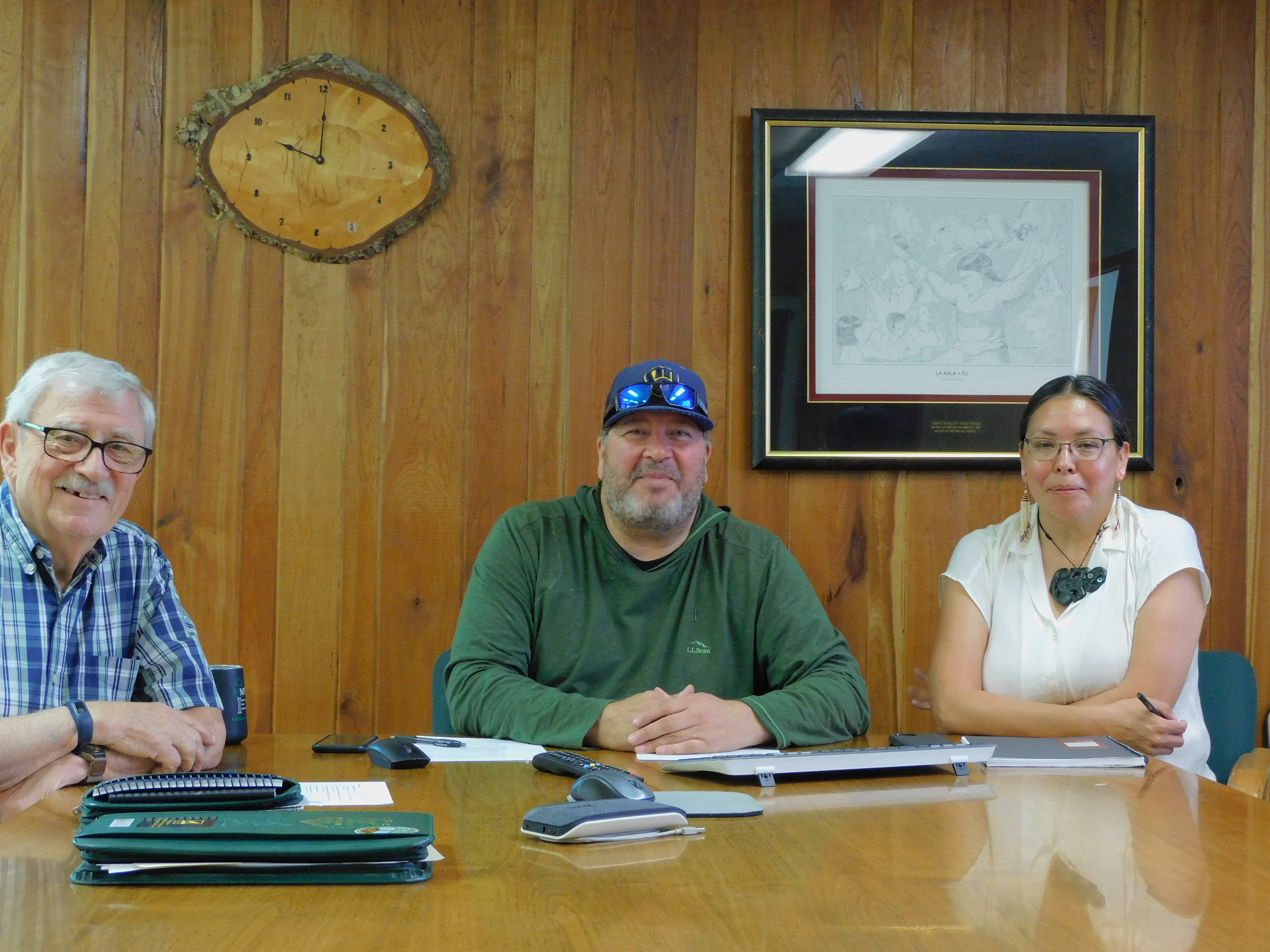
The Forest History Association of Wisconsin is partnering with the Menominee Tribe’s Historic Preservation Officer and its forest manager to tell the story of change in the lives of tribal members and their forest that began more than 200 years ago and continues even today.
The storytelling began in September with a pair of free webinars to be followed by a conference in Keshena, set for Oct. 11-12.
Registration for the conference is at www.foresthistoryassociationwi.com.
Dr. Carol Cornelius, a professor at UW-Green Bay, presented the first webinar Sept. 11. It was based on her 2023 book “A History in Indigenous Voices: Menominee, Ho-Chunk, Oneida, Stockbridge, and Brothertown Interactions in the Removal Era.”
Tribal Historic Preservation Officer David Grignon offered a second webinar a week later that told the Menominee story of the arrival of the New York tribes to Wisconsin Territory.
The conference itself will begin with a tour of the Menominee Cultural Center and Logging Museum, followed by a site visit to a stand of timber harvested within a design for natural regeneration of a new forest. The final stop for the day will be at the Sustainable Development Institute on the campus of the College of the Menominee Nation. There, students are engaged in the study of sustainable practices that served the tribe as they lived in harmony with the forest ecosystem in centuries past, as well as current science of renewable practice with applications for the future.
Three student projects will be featured in poster sessions at the conference itself.
The Oct. 12 slate of speakers will begin with a review of tribal life in the centuries before European contact, with a reminder that they were targeted for removal to what is now Crow Wing County, Minnesota, in the middle 1800s. Chief Oshkosh successfully made the argument that his people’s lives were intimately tied to the forested Wisconsin landscape and did not fit the prairie environment to which the government wanted them to relocate.
A talk on forest gardening will inform conferees of their practice in growing food and medicines to sustain a healthy lifestyle. The director of land management for the Menominee will cover the reality that the Menominee were terminated as a federally recognized tribe in 1954 and then restored as a tribe with a reservation in 1973, and the impacts on tribal life for this 19-year period.
The final speaker will address how Chief Oshkosh’s vision of sustainable practice continues to guide modern silvicultural practice in the present day.
The conference will close with audience question and answer engagement of a panel composed of the webinar presenters and the conference speakers. While the conference design has been tailored to fit educators, others — including researchers, students of sustainable forest practice and ordinary “history buffs” — will take value from this offering.
The Oct. 11 tour will be limited to 50 people, and the full conference will be limited to 125 people, Registration closes Sept. 27.
Menominee history, forest subject of statewide conference