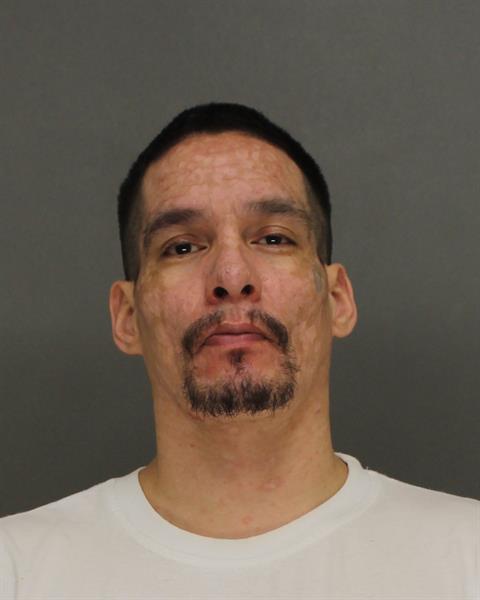
A Keshena man was sentenced Aug. 12 to two years in prison for the aggravated assault of his live-in girlfriend.
Arrelio R. Escalante, 37, faced an advisory guideline sentence of 30-37 months in prison after pleading guilty in May to assault by strangulation.
According to the plea agreement, the girlfriend, identified in court documents as “Jane Doe” and “SRM,” called Menominee Tribal Police on Feb. 8 and said that Escalante “beat me up bad” and “choked me out and almost killed me.”
A responding officer found the woman walking in the Warrington Addition of Keshena and notice bruises and swelling on her face, blood coming from her nose and mouth, and that she spoke with a raspy voice.
The woman was transported of ThedaCare Medical Center-Shawano, where she told tribal police that she was afraid for her life as Escalante had punched her in the face five times and squeezed her neck so hard that her vision had turned black, and she could barely breathe.
Escalante’s mother eventually convinced her son to stop hitting the woman. The woman left the residence, walked away and called the police.
She was diagnosed with a nondisplaced fractured nasal bone and multiple facial contusions.
Escalante has been in custody since his April 5 arrest.
In addition to the strangulation offense, Escalante was indicted for assault resulting in great bodily injury.
Escalante’s attorney, Steven Richards, asked for a sentence of a year and a day in prison. Richards noted that his client didn’t have any prior convictions and had pleaded guilty in a timely manner.
Stevens wrote the court that the woman had let herself into Escalante’s parents’ home and confronted him about seeing the name of his ex-girlfriend carved into a table.
The woman admitted to slapping Escalante in the face, and he reacted by punching and choking her, Stevens wrote.
Stevens argued in his letter to the court that in recent Wisconsin cases where the defendant was convicted of the same charge, they only received a prison sentence 23.79% of the time. Probation was utilized 63% of the time, and if jail was ordered as a condition of probation, it was only given 30.40% of the time.
In approximately 60% of similar cases, the felony offense was reduced to a misdemeanor, Stevens wrote.
However, District Judge William Griesbach doubled the amount of prison time Stevens requested, citing the severity of the injuries he inflicted and the need to protect the public from further harm.
Escalante gets 2 years in aggravated assault