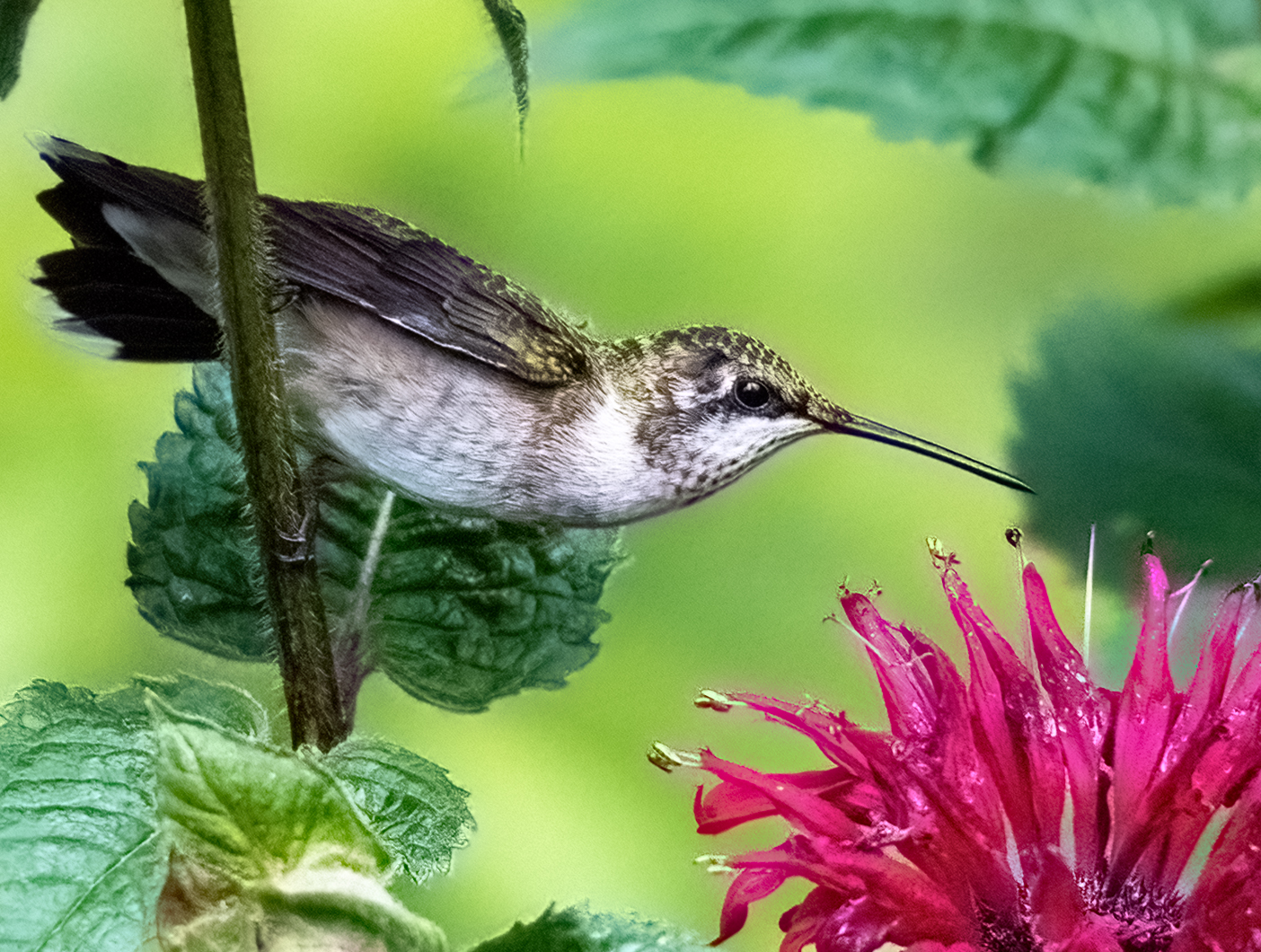
As summer approaches, I daydream of all the adventure it will bring. Fishing. Kayaking. Hiking. There are countless ways to enjoy the season, but my favorite is birdwatching, especially the beloved ruby-throated hummingbird.
Was there ever a bird so fun to watch? I sit on my deck and observe them as they hum past my ear, zipping toward the feeders. My heart fills as they dodge, dart and dash all around me displaying their unique antics. They love to show off as they fly in all directions — forward, up, down, sideways and, most impressively, backward.
Unlike other birds, a hummingbird’s wings attach to the body only at its shoulder joints. This enables a hummer to rotate its wings 180 degrees allowing them to move in all directions. Cornell Lab reports their wings beat an amazing 53 times every second. They can reach top speeds of 30 mph while moving forward but they can double that speed to 60 mph while diving.
The back and head of a ruby-throated hummingbird is iridescent green, the underparts are white, and the males sport the ruby-red throat for which they are named. The hummingbird part of their name comes from the humming sound their wings make as they fly.
Hummingbirds are typically no more than 3½ inches long with a wingspan between 3-4 inches. All birds are lightweight because of their hollow bones, but ruby-throated hummingbirds weigh just 0.11 ounce and their eggs are smaller than a jelly bean.
Hummingbirds may be small, but they are big eaters. They need to eat at least half their body weight in sugar daily. You can attract them with a feeder filled with sugar water. I make my own by boiling four cups of water, then dissolving one cup of sugar into it. Let it cool before putting it out for the birds. Keep any extra in your refrigerator. You should never add honey, fruit juice or red dye to your sugar water.
The sugar water in your hummingbird feeder should be replaced at least once a week and more often in hot weather. Clean your feeder with a mixture of vinegar and water. I purchased a brush kit specifically for cleaning hummingbird feeders that works very well.
Hummingbirds are very territorial. This aggressive behavior is ingrained in them to ensure they get the nourishment they need. They will go after each other and other birds, even large birds, to defend their food source. So, spread your hummingbird feeders out and away from other feeders.
Hummingbirds also like nectar from wildflowers. The tip of their grooved, w-shaped tongues have tiny hairs that help them lick up nectar 10-15 times each second. Their favorite flowers include cardinal flower, honeysuckle, bee balm and jewelweed. They can remember every feeder and flower they’ve ever been to and know just how long it takes for each flower to replenish its nectar.
The ruby-throated hummingbird holds a place in the Guinness Book of World Records.
During courtship, they can produce a wingbeat rate of a whopping 200 beats per second as opposed to the normal 90 beats per second produced by all other hummingbirds.
According to the National Audubon Society, “A hummingbird’s brilliant throat feathers are called its ‘gorget’ (pronounced gor-jit). The term comes from days of old, when a knight-in-armor wore a metallic collar, or gorget, to protect his throat.”
When the male hummer turns his head towards the sun it shimmers with color. This is the result of iridescence, rather than colored pigments. The throat feathers contain minutely thin, layers of “platelets,” that light waves reflect and refract off of creating color.
There are 325 species of hummingbirds in the world, 12 found regularly in the U.S. and Canada. Only the ruby-throated breeds in eastern North America, including Wisconsin.
Hummingbirds migrate alone to Mexico and other Central American countries. Some fly over the Gulf of Mexico while others follow the coastline to reach their wintering grounds. They often stop at the same locations for food, water and rest along their journey.
According to an April 12, 2023, article by Birds and Blooms, “Even young birds making their first southward migration fly solo, without any guidance from their parents. Instead they rely on instinct.”
Keeping your feeders up in the fall won’t stop your hummers from migrating. Pure instinct, as well as the length of day and change of seasons, tell them when to migrate. After your regular visitors leave, keep your feeders up to nourish those arriving from further north as they stop by on their journey south.
As you anticipate the magic of summer, think about the ruby-throated hummingbird and how remarkable this small bird is. It will make you fall in love with nature all over again.
Lisa Jansen is a Wisconsin master naturalist, nature writer and award-winning photographer. She specializes in raising awareness of birds and butterflies of the Midwest.
Ruby-throated hummingbird a summer delight