
Turtle Joe is still at it.
For more decades, Joe Skaleski and Bonnie Splitt have been helping preserve the turtle species in their own unique way.
“There are 11 species of turtles in Wisconsin,” Splitt said. “Our misison is to help preserve them.”
Each summer for the past 40 years or so, the couple has overseen the hatching of about 1,000 turtle eggs.
“Turtles come back to the same area to lay their eggs each year,” Skaleski said. “Many of them are devoured by predators like skunks, raccoons and birds.”
Skaleski and Splitt rescue the eggs until the hatch, hoping to give the live turtles a fighting chance at survival.
“Knowing where they lay their eggs in May and June, Joe relocates the nests to our yard,” Splitt said. “In about three months, they hatch.”
And within weeks of hatching, the turtles are returned to their natural habitat.
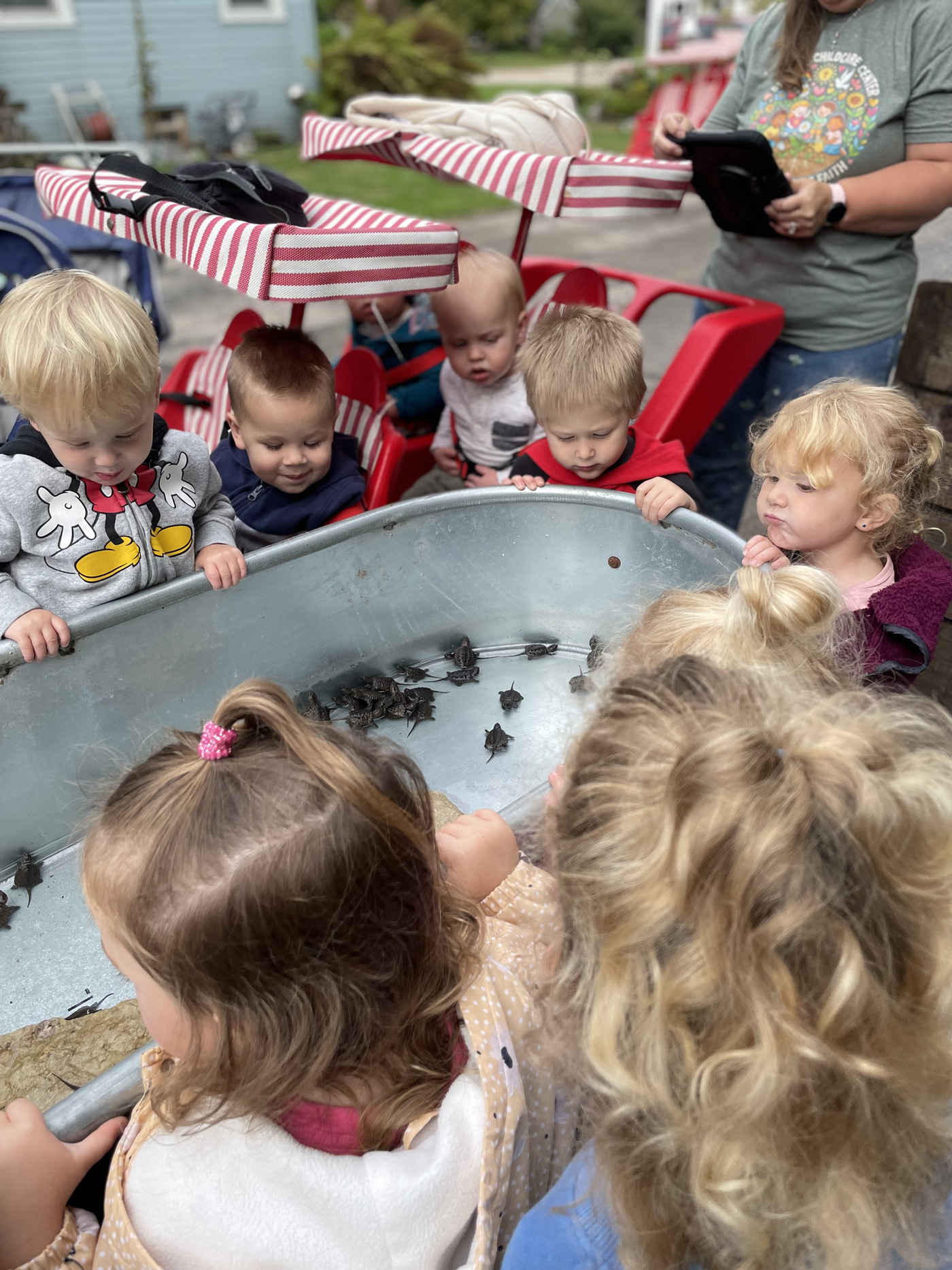
But before then, school children from the area flock to the couple’s home to see what 1,000 baby snapping turtles look like. That was the case last week with students from St. James Lutheran School.
Snapping turtles usually have about 30-40 eggs in a nest.
This summer, Skaleski and Splitt will watch over about 1,800 eggs, down from a high of 4,000 some years ago.
But just because the eggs hatch, there is no guarantee they’ll survive.
“They still have to survive the mink and other shoreline animals, and cars and people,” Skaleski said. “In the wild, they often have to walk half a mile to get back to the water. We put them right there when we release them.”
At least they have a fighting chance now.
Decades ago, the couple used to catch the turtles and eat them. They had enough for turtle feeds, sometimes with 30 pounds of turtle meat. Today, there is a regulated harvest season, with licenses and limits.
“At some point, we decided to help preserve the species instead,” Splitt said. “Now it’s a rescue misison.”
kpasson@newmedia-wi.com

Shawano’s Bonnie Splitt and Joe Skaleski have been catching, hatching and release turtles for about 40 years. During that time, they estimate they have helped catch and release about 35,000 turtles. (Greg Mellis | NEW Media)


