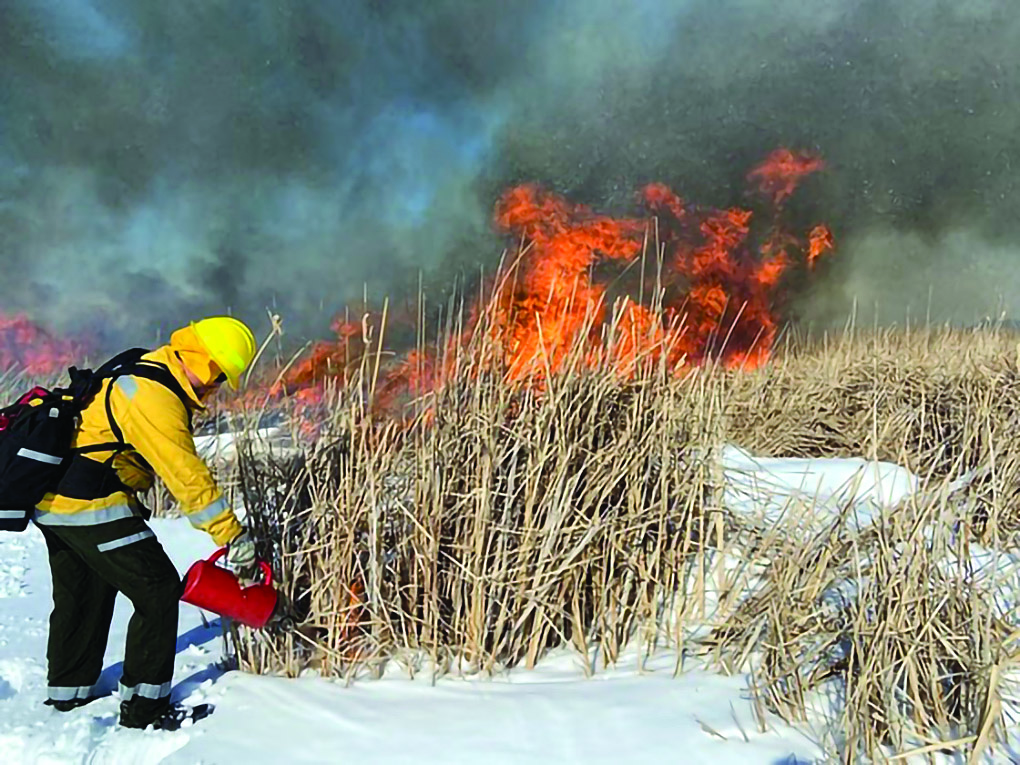
The Wisconsin Department of Natural Resources (DNR) announced that fire management crews will begin conducting prescribed burns on DNR properties throughout the state where local conditions can provide a safe and effective burn.
The recent, much-needed precipitation has created conditions that are ideal for burning in certain areas of the state.
Winter burns typically begin with cattail marshes, wetlands and wet prairies. Cattail wildfires can present a control challenge for suppression authorities during the warmer summer months when dead and live cattails are available to burn. By burning in winter, DNR staff take advantage of ideal ice and snow cover, which reduces the heat and intensity of cattail marsh and barrens burns.
Additional windows of opportunity for prescribed burning will continue through spring and open again in late summer and fall (mid-July through November).
Prescribed burns support healthy ecosystems for an abundance of plants and animals in Wisconsin. These burns mimic the benefits historic fire once provided but occur under a safer “prescription” range of weather and fuel conditions (compared to most wildfires). Throughout history, many ecosystems in Wisconsin experienced either periodic natural fire or were managed with cultural fire by Indigenous people. These “fire-dependent” plant communities — such as prairies, wetlands and oak or pine barrens, savannas or woodlands — developed a tolerance and eventual dependence on periodic fire; they would not be sustained today without prescribed burning.
Winter burns remove dead vegetation buildup and open waterways for migratory fowl and other wildlife. The dead vegetation is reduced to ash, transferring this natural fertilizer back into the soil.
Following the burn, hazardous fuels are reduced, foraging and nesting improve in the revitalized vegetation, and the stimulated growth of their root systems enhances their ability to store more carbon. Other benefits of prescribed burns include reducing non-native or invasive plant species and increasing regeneration of important native trees, like oak and pine.
When conducting prescribed burns near roads or recreational trails, the DNR will post signs to notify the public. For safety, avoid these areas while the burn is being conducted. The DNR also notifies local law enforcement and fire officials in advance about when and where DNR prescribed burns will take place.
Burns planned for the following day are displayed on the DNR Prescribed Burn Dashboard at https://dnrmaps.wi.gov/prescribedburndashboard/.
DNR conducting prescribed burns across the state