Reporting on an event is a weighty responsibility. As a monthly columnist, I’m thrilled to highlight some of the important stories that people from throughout Northeast Wisconsin may have missed. As an academic trained to scour media archives, I know all too well the truism that newspapers are the first draft of history. I appreciate what a single story can offer a community, recognizing that I best get it right.
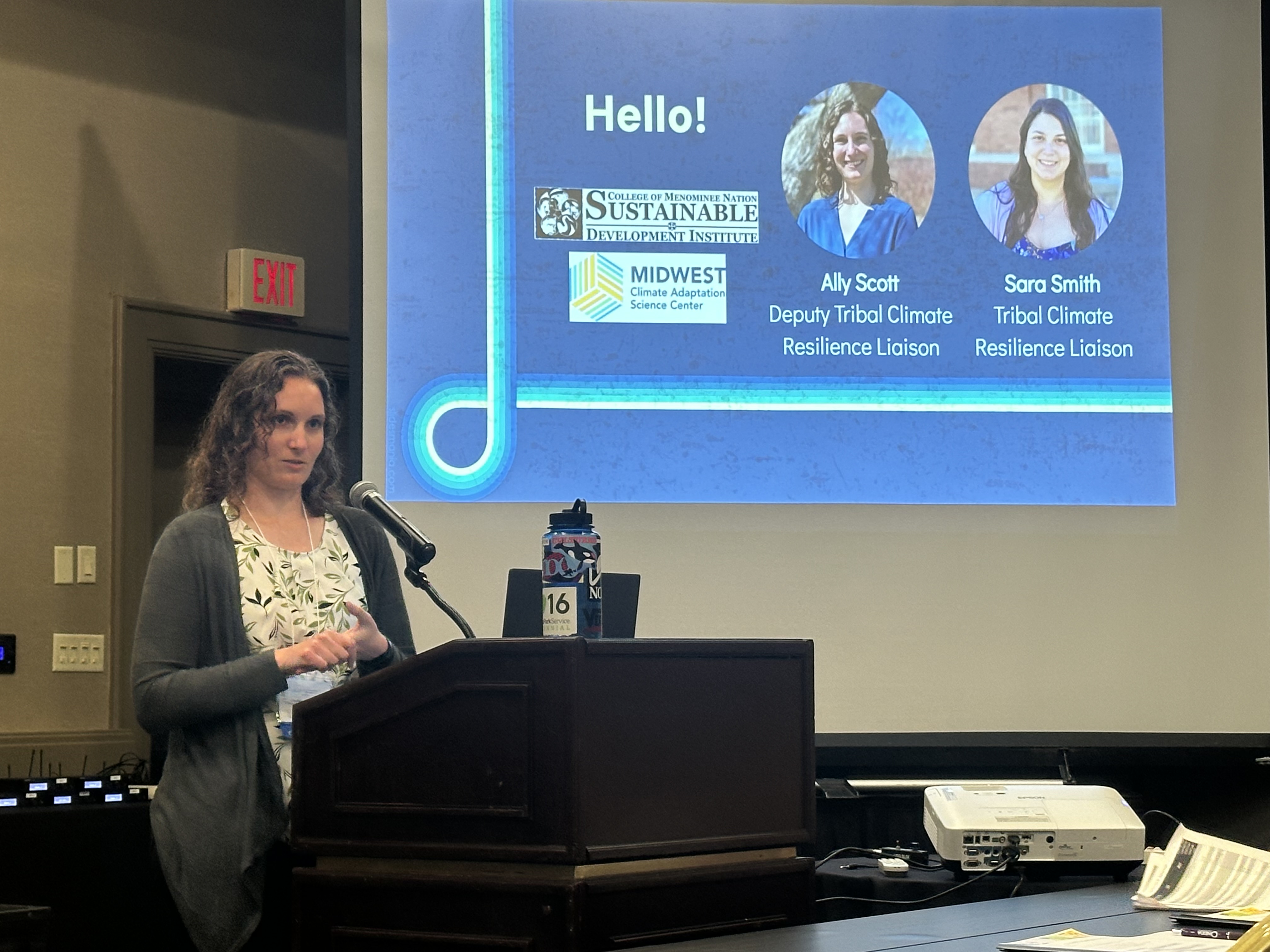
I typically begin my work by requesting an interview from the central figures being chronicled in the column. In the case of the Climate Adaptation for Tribal Nations in Wisconsin, my points of contact were Oneida Nation tribal member Sara Smith, tribal climate resilience liaison, and Ally Scott, deputy tribal climate resilience liaison. Both women fall under the umbrella of the Midwest Climate Adaption Science Center while working out of the Sustainable Development Institute at the College of Menominee Nation’s Keshena campus.
To my surprise, my interview solicitation was politely declined. A joint email thread noted that “The planning committee decided not to do interviews, in preference of people reporting back directly to their communities and leadership about their experiences.” So, off I went to the Radisson Hotel and Conference in Green Bay, equipped only with my trusty notepad and writer’s intuition.
Held on June 25-26, the conference gathered people from throughout the Midwest to hear speakers and partake in a training titled “Climate Adaptation 101.” The goal of the latter being, “to prepare tribal technical staff to engage in climate adaption work by gaining a basic understanding of fundamental concepts and available tools and resources.”
We opened with a request to share information with our fellow attendees that included who we are, our professional affiliations and responsibilities, and “one reason why you care about climate change.” The answers to the first two questions were as expected, including local tribal employees and those who had traveled from Lake Superior’s Wisconsin shoreline, Michigan’s Upper Peninsula, and Northern Illinois.
The answer to the latter question revealed the direness of the topic at hand. Those assembled revealed fears about flooding, invasive species, the dearth of snowfall, bird migration, early sugar maple camps, habitat loss, and the proliferation of extreme weather. The presenters appeared not to be surprised by the collective answers, with Scott acknowledging “Climate change is not primarily caused by tribal nations, but climate change is disproportionately impacting tribal nations.”
The conference’s participant workbook stated that climate adaptation is “the process of adjustment to actual or expected climate and its effects to moderate harm or exploit beneficial opportunities.” Smith said, “Adaption is not just about the land, it’s also about the people.”
In contrast, climate mitigation includes the “measures to reduce the amount and rate of future climate change by reducing admissions of heat-trapping gases or removing carbon dioxide from the atmosphere.” Scott shared the tip that “Mitigation can be controversial. Adaption work is more readily funded through grants across different federal administrations. So, when doing funded adaptation work, look for ways to mitigate, too.”
The presentation moved quickly, offering a “high-level overview” of how we each could maximize our roles as climate allies. The presenters shared best practices on conducting vulnerability assessments, which are “a tool to help identify what is at risk from climate change and why it is vulnerable,” as well as adaption planning, which “incorporates climate change as a consideration for planning, programs, operations, and/or management.”
Scott recognized the potential of participants being overwhelmed by their findings, wanting to do too much, and spreading themselves too thin. “Focus on who’s most vulnerable. Don’t focus on who’s most important but on who’s most at risk. It’s the difference between goals that need to happen versus what can be achieved.”
Smith reminded the assembled that it’s tribal members’ engagement which must be at the heart of all the work in their communities. “Ask questions that the community understands. Rather than asking, ‘Have you seen examples of climate change?’ Ask, ‘Have you seen any changes in the landscape?’ They’re seeing changes in the climate. They’re just not using that vocabulary.”
The vernacular of the climate adaptation for tribal nations in Wisconsin conveyed initiatives emphasized by urgency. Climate action is required of each and every one of us. We better get to it, and we best get it right.
Ryan Winn, Ph.D., teaches communications, English, history and theater at the College of Menominee Nation. Visit www.menominee.edu for more information about the school.
Climate action not optional in the world