
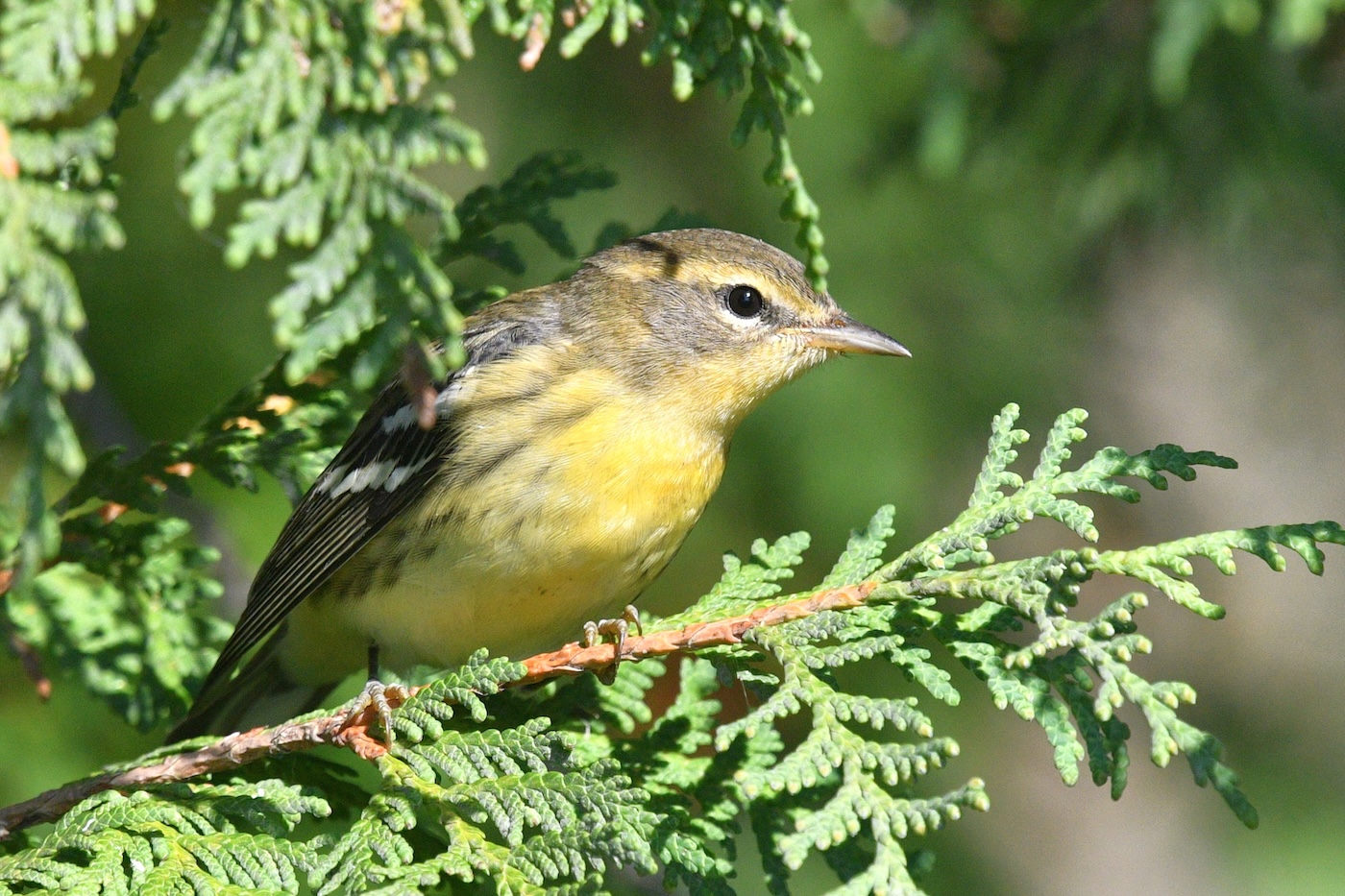
Fall is a great time for birding as many species are on the move, migrating from their northern breeding grounds to their wintering grounds in the south.
During a recent walk at the Oconto Marsh, I was greeted with what Merlin, a free birding app, identified as a Virginia rail. I did not see this secretive bird as it was well hidden in a dense cattail stand, but it was a thrill nonetheless knowing it was likely there, only yards from where I stood.
Both swamp sparrows and song sparrows were flitting about and occasionally perching in the dead shrubs along the trail allowing me glimpses of them before their nervous energy spirited them away.
Two great egrets and a small flock of mallards were dabbling about in a pond. Although I tried to be unobtrusive, the ducks took flight after my arrival while the egrets remained. As I watched, these beautiful white herons went stealthily about their business, stalking their prey, heads down and long pointed bills ready to spear their next meal.
Two bald eagles wheeled above making lazy circles in the sky, and another perched in a distant tree. It’s always inspiring to see these birds, considering, after a precipitous drop in their populations due to the use of DDT and other threats, they have made such a great come back. You can now see these majestic birds in every county in Wisconsin.
When I trained my binoculars on a suspicious brown figure in the top of a distance dead tree it resolved into an American bittern. Head up, and long spear-like bill pointing skyward, it was in one of its classic poses. As I watched, it moved its head slowly scanning its surroundings. I wondered if it spied me as I it.
According to the Cornell Lab All About Birds (AAB) website, the American bittern, a medium sized heron, is rarely out in the open, making my sighting unusual. They are considered stealth predators. Standing stock still in the marsh, they wait for prey to approach, or very, very slowly stalk it until within easy reach.
As I turned a corner on the trail, a few goldfinches whizzed by flashing yellow, and I saw a cedar waxwing flitting about in the shrubs, no doubt looking for some succulent fruits to enjoy.
Fall is a great opportunity to see some birds in greater numbers than usual like the red-winged blackbirds. They join other blackbirds such as grackles, cowbirds and starlings in the fall and winter forming flocks that number in the thousands and even up into the millions according to AAB. One night at the marsh around sunset, we watched for at least 10 minutes, amazed, as a continuous large trailing flock of blackbirds flew overhead before the last bird was swallowed up by the night.
One of our favorite birds to see at the marsh is the sandhill crane. From September through early November, the count of migrating cranes roosting at the marsh increases, eventually numbering well into the hundreds.
We love watching the cranes appear, flock after flock in the evening and hearing their loud exuberant trumpeting as they spiral down into the marsh, their legs and broad wings outstretched as they come in for a perfect landing. With sunset as a backdrop, this is one breathtaking sight.
Spotting warblers is difficult in the fall, so we joined an early morning bird walk at Barkhausen Waterfowl Preserve in Suamico (just north of Green Bay) led by an expert bird guide. With the leaves still on the trees and the males no longer in their bright breeding plumage, it is difficult to see and identify these birds. But with the help of our guide, we were delighted to observe about a dozen warbler species as they flitted amongst the trees.
The warbler’s colorful names evoke their showy spring plumage. We saw, among others, the blackburnian, bay-breasted, blackpoll, yellow-rumped, black-and-white, black-throated green and American redstart warblers. We also spied a yellow-bellied sapsucker, woodpeckers, swallows and a merlin, a small yet fierce bird of prey and namesake of the wonderful Merlin app.
It’s easier now than ever to learn about birds and fall is a good time to see many of them. The Merlin app offers three ways to identify birds; via a photo, a description and by their calls, and includes images of each bird and information on their habitat, calls and range. There are several field guides available if you prefer a book format.
You can also look for birding groups or events in your area to make the learning process more fun and informative. Of course, one can appreciate the beauty and songs of birds without knowing which species they are. All one needs to do is open their eyes and ears to include the company of birds.
Cathy Carnes is a retired biologist in Oconto who worked with the U.S. Fish and Wildlife Service Green Bay Field Office and prior to that with the U.S. Army Corps of Engineers Regulatory Branch in Buffalo, New York. As endangered species coordinator for the USFWS, she helped conserve and recover federally listed threatened and endangered species in Wisconsin.


