College of Menominee Nation President Christopher Caldwell said: “The charter for the college states that we are to serve Menominee people. It doesn’t just say to just educate those Menominee who live on the reservation.”
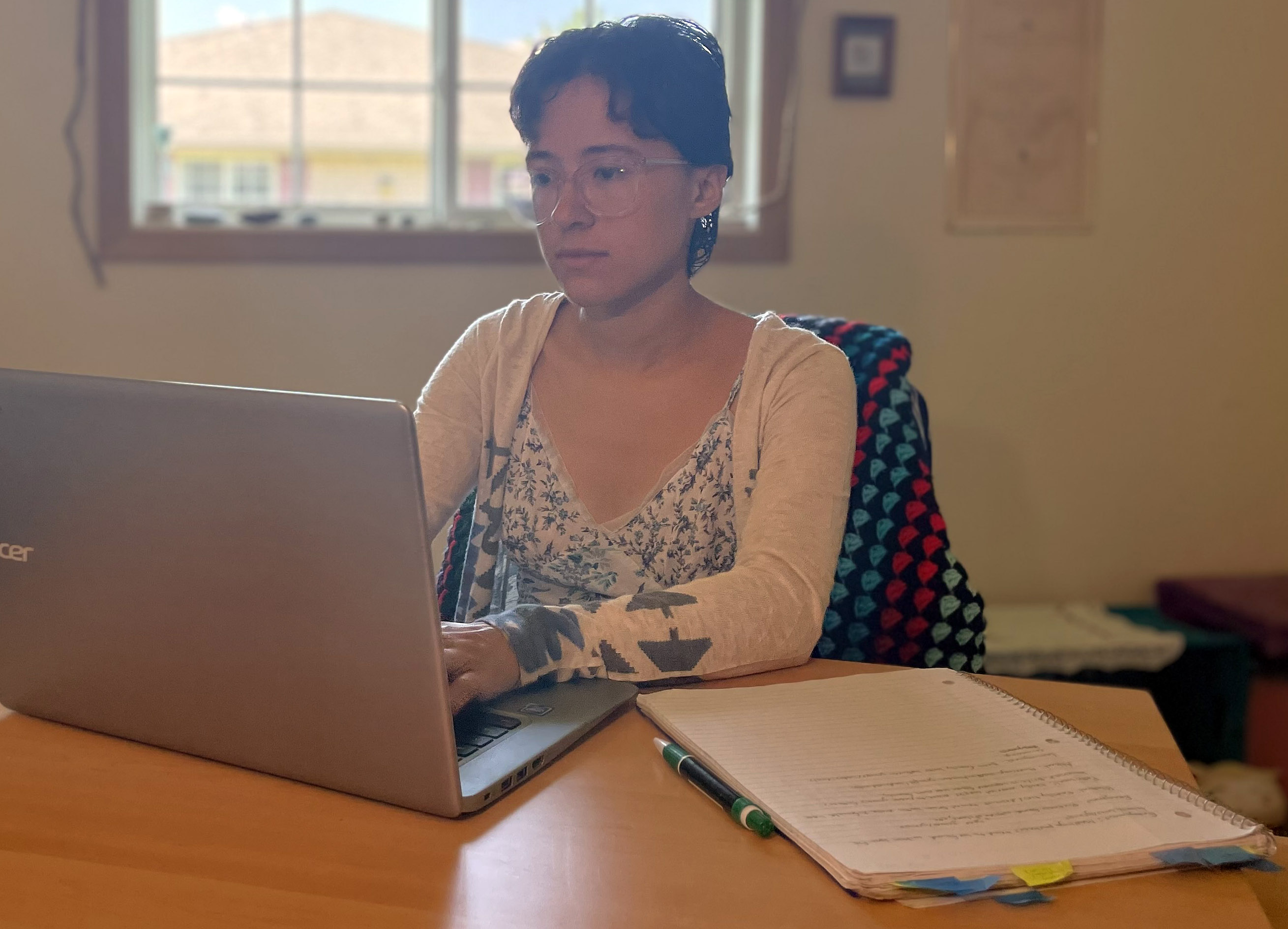
This fall, CMN furthers this mission by offering online courses to anyone who wishes to learn.
Part of the Navigating the Future Project, CMN Chief Academic Officer Geraldine Sanapaw said: “CMN wants to give students more of a selection for courses. We acknowledge that our current and perspective students are busy with work and life. We have to ask ourselves how can we work better with our students.
“The purpose of the Navigating the Future Project at CMN is to enhance educational accessibility by offering a diverse range of asynchronous online courses. In doing so, we aim to broaden the reach and availability of core, niche and grant-funded courses, empowering learners to engage in flexible and self-paced education.
“CMN gathered faculty and staff to discuss what courses to offer first for an asynchronous online experience. There were different ideas discussed with positives but possible hurdles for each. In the end, we felt it was a good decision to start with Core Requirements.”
The fall semester will witness the launch of courses in the disciplines of college prep, communication, English, education, math and sustainability, meaning that students can complete some credits or even their first full semester fully online. The spring semester will include the addition of further course offerings.
As a school fully accredited through the rigors of the Higher Learning Commission, CMN’s switch to online modality comes with a commitment to both technological innovation and faculty development. The school adopted the Canvas learning management system in 2020.
“Through Canvas, students can access course materials, submit assignments, participate in discussions, and track their progress,” CMN instructional designer Ann Walenski said. “Canvas includes various tools for communication, collaboration, grading and analytics, making it a comprehensive solution for educational institutions to enhance teaching and learning experiences.”
Walenski holds many certifications for academic excellence in course design and delivery, including through the nationally lauded Quality Matters (QM).
“I hold the QM teaching online certificate, which I earned through a rigorous certification program comprising seven workshops,” Walenski said. “These workshops are aligned with QM’s online instructor skill set and focus on essential competencies for effective online teaching.”
Additionally, Walenski completed coursework on applying the quality matters rubric facilitator certification and the higher ed QM coordinator training.
“These certifications have prepared me to facilitate the online APPQMR workshop, where I guide faculty members at the College of Menominee Nation in course preparation, navigation, management and assessment,” she said. “As a QM coordinator, I am trained to implement Quality Matters at CMN, reinforcing our commitment to providing high-quality online education.”
In June, Walenski led CMN’s online faculty through an intensive workshop that “delved into the fundamental principles of the QM rubric and the essential elements of the QM quality assurance process. This workshop focuses on the QM rubric and guides faculty in reviewing and improving the design of their online and hybrid courses.”
In July, three CMN faculty members joined Walenski at InstructureCon in Las Vegas, which showcased best practices and forthcoming innovations in using the Canvas platform.
“I am excited that CMN is offering online classes as it is another teaching method we can utilize to reach our students both near and far,” faculty member Sarah Vande Corput said. “Online learning offers flexibility in scheduling and learning methods while also providing technical growth and experience for our students.”
In the past two weeks, Walenski led online faculty through a training on the complementary component of quality course design — meaningful student feedback.
“At CMN, we recognize the importance of culturally relevant and effective training,” Walenski said. “That’s why our Regular and Substantive Interaction workshop was meticulously crafted by the instructional designer and faculty members who dedicated six months to researching, developing and deploying it. Built by faculty for faculty, this training reflects our commitment to providing high-quality, culturally sensitive professional development that addresses the unique needs of our educators and students."
“Watching faculty embrace this new endeavor and work diligently to change their course delivery was exciting," Sanapaw said. "They learned and adapted to ensure that the quality we’re known for stays in our courses. I am excited to hear the students’ perspectives on our online courses.”
CMN’s founding president, Verna Fowler, alluded to the Menominee Nation being internationally recognized for its forest management when she predicted: “The day is coming that the Menominee will be renowned for their educational initiative as they are for their sustainable forestry practice.”
By offering online courses, CMN is taking another step toward fulfilling the college’s charter and Fowler’s vision for Menominee education.
Ryan Winn, Ph.D., teaches courses in communication, English, history, and theater at College of Menominee Nation. For more information about the school, visit www.menominee.edu.
CMN launches online courses with purpose