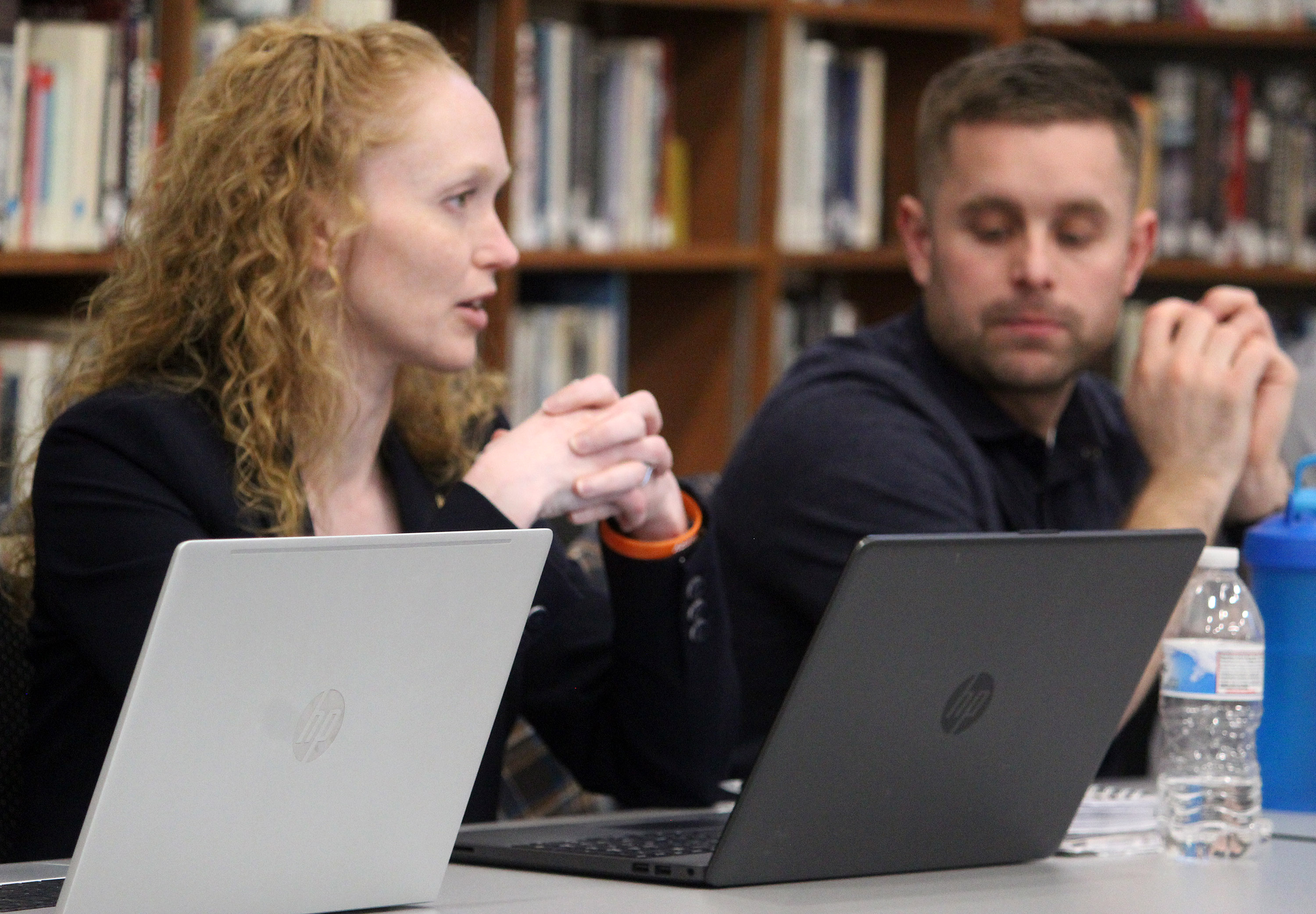
The Wittenberg-Birnamwood School District provides elective options to its high school students through the Rural Virtual Academy, but with some students using the academy excessively, it has decided to put limits on how many courses students can take through the online service.
The Wittenberg-Birnamwood School Board voted March 18 to limit students to two RVA courses per year in their junior and senior years. With the school district adopting a trimester grading format, that means at least one trimester would need to be filled with elective courses provided by the high school.
Megan Rothmeyer, principal at Wittenberg-Birnamwood High School, noted that the trimester system helps students to get their required courses for graduation out of the way, which allows them to explore options in their junior and senior years.
“They can take more classes over the course of their high school career,” Rothmeyer said. “One thing that that did is that students, by the time they were seniors, sometimes were like, ‘There’s not a class here that really fits my needs; I’m going to take an RVA class.’ Our district pays for those classes.”
Rothmeyer said RVA provides some excellent classes and programs, but when the school district integrated it into its learning system, there were no parameters set as to how much RVA could be utilized. However, with the classes costing $190 or more per student, it’s causing financial haywire for the district.
“We didn’t know how much use RVA was going to get,” Rothmeyer said.
For the electives that WBHS can provide, the school wants to keep its teachers that teach those classes, something that is proving difficult when enrollment in the in-person classes is dropping. Rothmeyer said she doesn’t want to prevent students from getting learning opportunities through RVA that might prompt families to enroll their students in outside school districts, but there needs to be a balance.
Freshmen and sophomores are not allowed to take RVA courses, a limit that was already in place, because most of their schedule focuses on core courses like English, math, social studies and science. The remainder is limited to the elective courses already in place at the school, which Rothmeyer said the administration wants students to focus on first.
To have the option to take RVA courses in the junior and senior years, Rothmeyer said students must have already taken an introductory course at WBHS in five of seven elective areas — agriculture, art, business, family and consumer sciences, foreign languages, music and career and technical education.
“What that does is it shows us they have explored the courses and the teachers we have here,” Rothmeyer said. “I don’t want to, down the road, see a loss of actual in-person staff because we’re paying RVA to teach our kids. I want our kids to have instruction from our instructors. This is a way to help with that.”
Rothmeyer noted that students wanting to pursue RVA’s foreign language courses would be required to take a full year of Spanish at WBHS if offered. She said that enrollment is down in Spanish classes, not only in Wittenberg but elsewhere.
“Foreign language is no longer required by a lot of colleges,” Rothmeyer said. “It’s highly recommended but not required.”
Rothmeyer added that the foreign language classes are pricy through RVA, so having students take an in-person course for Spanish would give them the opportunity to see if they’re ready for the rigor of learning a new language.
If students take a class that extends beyond one trimester, that would be the only class that they could take due to the two-class limit.
Another requirement is that, if a student flunks a RVA course, the family will have to reimburse the school district for the cost of the class, Rothmeyer said. If students are taking RVA courses for credit recovery because they failed the WBHS class, families will have to pay those class fees, as well, which might prompt students to retake in-person courses as a thriftier option.
“You may be a junior having to retake freshman English, and if you’re embarrassed to go back to that, you take the RVA course, but you pay for it,” Rothmeyer said.
School board member Dan Stewart suggested it might be better for the district to charge the family upfront for courses and then reimburse them if the student gets a passing grade.
“If they fail it, what’s the chances of you getting paid?” Stewart said.
Superintendent Garrett Rogowski pointed out that before students can walk across the stage at graduation time to get their diplomas, any outstanding debt from class fees, meal overages and other measures must be paid in full. Rothmeyer added that very few students have failed the RVA courses.
The limits were brought up when some students were taking up to three RVA courses in a single trimester, according to Rothmeyer, which greatly increases the costs for the district when it has to pay the class fees.
“It’s going to help them, but it’s a lot (cost wise),” she said.
lpulaski@newmedia-wi.com
Virtual course options get limits at WBHS