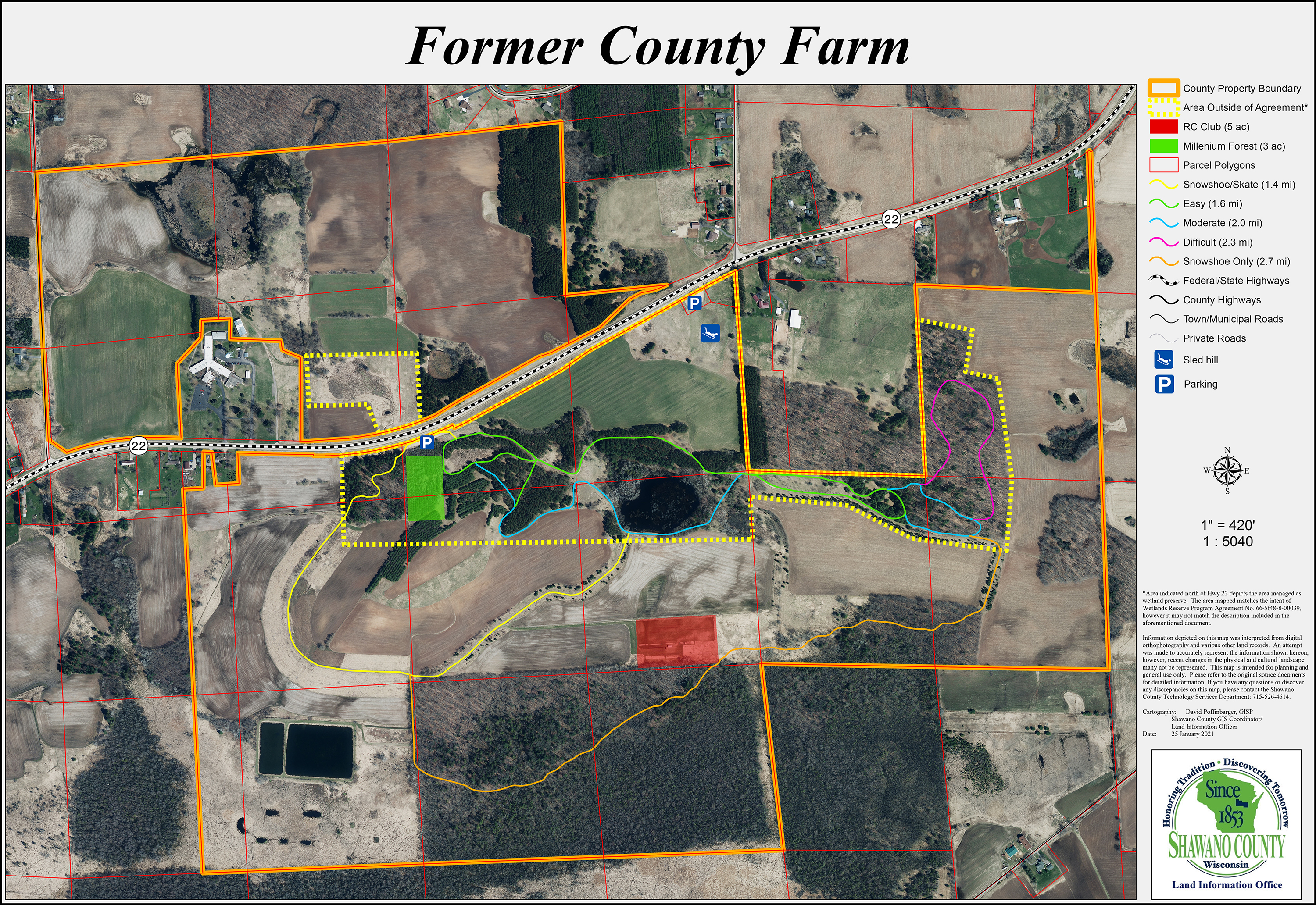
The Shawano County Board of Supervisors signed off Jan. 27 on a solar farm project expected to provide big dividends to the county in the future.
The proposed solar farm, expected to take up anywhere from 300 to 500 acres of the 630-acre county farm property and run by National Grid Renewables (formerly Geronimo Energy), will likely produce up to 50 megawatts of solar energy and potentially provide the county with over $8 million in revenue over the course of the lease. The lease is set up for up to five years of development, two years of construction and an extended term of 25 years, and there is an option for three extensions that could extend the lease up to 30 additional years.
Nitta Charnon, county finance director, said that the revenue from the agreement would be a minimum of $8,433,000 at a minimum of 300 acres, noting that there is an opportunity for that to increase if more acreage is used or the project goes over 50 megawatts. Charnon noted that leasing the land for agricultural pursuits during that same time period would only bring $1,136,000 to the county, although the county is expected to lease the land for agricultural use until the decision comes to begin construction.
According to Steve Dreher, county maintenance director, the proposed solar farm would not eliminate the ski trails, millennial forest, sledding hill or any of the other recreational amenities in place, but it’s possible some of the trails might need to be relocated.
“Right now, it’s a blank palette because they’re going to do their due diligence and figure out where they can and where they can’t (place solar panels),” Dreher said. “It’s going to take a couple of years of work for everybody to figure out things.”
Supervisor Jerry Erdmann noted that interest was expressed about a year ago in setting up a solar farm in Shawano County. He said the former county farm property was ideal because it’s close to American Transmission Company lines.
“Solar energy is, in my mind, the way to go in the future,” Erdmann said. “Really, there isn’t any harmful things with solar. We’re looking at enough to maintain at least 50 megawatts. That would give us a big enough rate in the long run.”
Supervisor Kathy Luebke expressed concern about the payments to the Shawano Area Agricultural Society, which have come from the leasing of the land. The society has received payments to operate the Shawano County Fairgrounds for the fair, Shawano Speedway races and other activities, but National Grid Renewables will only be paying $25 per acre per month during the development period.
‘We’re funding the fair about $35,000,” Luebke said. “If the farmer doesn’t re-lease and we’re going to be short, where are we going to find that money?”
Board Chairman Tom Kautza pointed out that the land will still be leased for agricultural crops until formal construction begins — even if current lessor Craig Rosenow decides not to re-sign to lease the farmland — and that additional revenue will cover what the county provides for the fairgrounds. He noted it might not take a full five years for the development planning to take place, saying it could possibly be done in two or three years.
Once the construction begins, National Grid Renewables will pay $825 per acre per month. Kautza noted that the county will also be receiving payments from the state for every megawatt produced, potentially giving the county additional revenue to pursue capital projects and handle other issues.
“If they never achieve 50 megawatts, and they make less than that, then we get paid … based on the value of the personal property,” Kautza said. “The town (Belle Plaine) would also receive a payment.”
Erdmann pointed out that revenue for counties has been drying up in recent years, and he expressed concern that, if the county doesn’t pursue the solar farm, there might come a point when it might have to borrow money to maintain its operations.
“With the levy limits, sooner or later the county’s going to be borrowing money to maintain their budget simply because everything is going up,” Erdmann said. “Revenue has been going down. We have staff we’ve been losing because they can go someplace else and get a big raise. We need to be looking at a sustainable revenue source, and this solar farm, in my mind, is an ideal situation for the county.”
Supervisor Deb Noffke, who cast the lone vote against the lease, feels the county should have a more realistic plan laid out on how to spend the money prior to moving forward.
“It’s green. It’s clean. It’s a good revenue stream,” Noffke said. “We can’t look at it as, let’s give away some more money to somebody, any group. We should have a more realistic plan laid out for what we would do with the potential, not just a free-for-all, spend like crazy.”
Noffke suggested paying off existing debt as a potential source for the funding.
Kautza pointed out that until the solar farm is designed and it’s determined how many megawatts can be generated from the property, there’s no way to figure out how to spend the money.
“We won’t know until we have a design done and all the permitting is done through the DNR,” Kautza said. “There is the potential for a fair amount more of revenue to come from this. We can always use the extra money.”
lpulaski@newmedia-wi.com
Solar farm gets green light from county board