For many families, the COVID-19 pandemic has meant that members are spending more time together.
Unfortunately, for some families this enforced togetherness has meant a greater likelihood of domestic violence, reports Stacey Cicero, director of Safe Haven, the Shawano-based shelter for domestic violence and sexual assault victims.
“In 2017, we started tracking the domestic violence calls that law enforcement goes out on,” Cicero said. “It’s called that ‘lethality assessment program.’ When officers go on a call, they speak to the victim and do an 11-question assessment of the situation. The science behind the assessment is to assess the dangerousness of the situation.”
In 2017, she said, law enforcement was averaging 12-13 calls a month.
“That was pretty consistent all the way up until May of 2020. This May, I don’t know what happened, but May through October, domestic violence/domestic partner calls have doubled. We are averaging about 24 calls per month, and August had 27, ” she said.
Nationally, only half of domestic violence incidents are reported, so Cicero said it is reasonable to double the number of calls to understand the actual scope of the problem locally.
“When I saw 27 in August, I thought, ‘That is just crazy.’” Cicero said.
“We know that our crisis lines are busy and our outreach participants numbers are high, so people are seeking services, but not in exactly the same way as before COVID,” she said.
Cicero said the pandemic — and, along with it, the need to avoid large gatherings — has had an impact.
“People are cooped up in their houses together. Kids aren’t going to school. We’ve got everybody underfoot all the time. There’s no relief. There’s no going to work, to Grandma’s house. You can’t go to a movie. Your friends might not want to come over, so you don’t have any of those natural releases,” she said.
One option for families is for the victim or victims to leave the home, including a stay at Safe Haven. The shelter shut down from March 20 to June 1, but it’s now open and currently hosting two families.
Even during the shutdown, Cicero said, the shelter provided outreach services and support groups. Those groups are now held remotely, she said. The impact of COVID-19 can be seen throughout the shelter and its programs.
“We have what we call our COVID policy,” she said. “There is one family per room, so there is no sharing rooms, and if we go over capacity, we have been using hotel vouchers. Families have assigned kitchen times; they have to wear masks when they are anywhere but their bedrooms.”
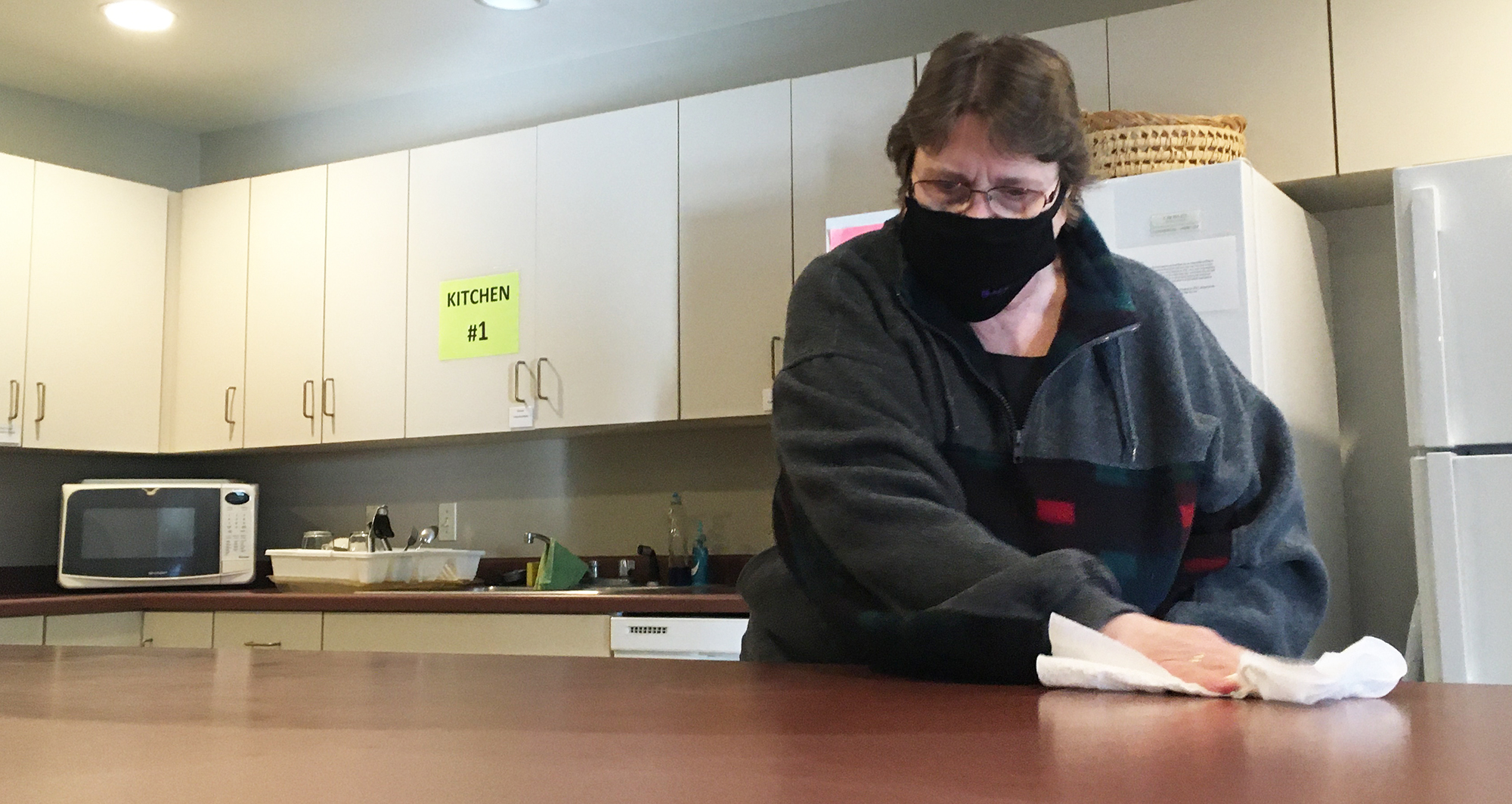
Common areas are cleaned after use, and the lobby and community areas sanitized on a schedule. Staff wear masks, and visitors have their temperatures taken before entering the building. A Plexiglas barrier helps protect the staff and victims from the virus, but it also has an impact on the work itself.
It is a very hands-off approach in a situation where personal interaction is often an important part of the transition process, Cicero said. Both clients and staff struggle to make it work.
“They miss the interaction, and our staff misses the interaction. It’s really hard to do crisis work and not hug somebody. It’s tough. It’s been tough. It’s been a tough way to go. Sometimes when you do crisis work, you touch an arm or you give them a hug,” Cicero said. “You need to get close to them, and you can’t do any of that right now.”
Cicero said they won’t know the impact of the changes for a while. Families are spending less time in the shelter, which also matches a statewide trend, she said. The average stay at the shelter is now 14 days and is normally closer to 30.
“That equates to people being fearful of leaving their home and coming into a residential environmental, where they are not sure who they will be living with and what that all entails,” she said. “That makes me really nervous for our victims out there, because we know domestic violence is increasing.”
One elderly woman who uses Safe Haven services now comes to the shelter but sits in her car in the parking lot.
“She wants to have some close proximity. That’s really sad, but people are doing what they can to make it work,” Cicero said.
In addition to shelter services, Safe Haven works with families to alleviate some of the financial and interpersonal stresses that can lead to violence, Cicero said.
“We have delivered a ton of food boxes, hygiene bags and diapers, gas cards, and family fun bags — family activities that they can do, with crafts or games or art projects. We are continuing our support groups so we have three support groups a week that people can Zoom into and have those connections,” she said.
Economics can be a big driver in violence, she said, which is why there is often an uptick in violence around the holidays. People are stressed about buying gifts or attending family gatherings.
Financial stress is also a concern of the shelter itself, Cicero said.
“Between canceled fundraisers in 2020 and the ones we are looking at canceling in 2021, we’re looking at $50,000 deficit,” she said, adding quickly that the shelter is not in danger of closing.
Obviously fundraisers are a very important part of their budget, “not only financially but for community awareness that we are open and the services we offer,” she said.
Cicero is asking the community to support the shelter with donations of paper towels, toilet paper, coffee, disinfectant sprays, $10 gas cards and grocery store cards.
She also said that this year, Safe Haven will be the recipient of donations from CoVantage Cares, a seasonal fundraiser which matches donations made at Shawano CoVantage location.
cryczek@newmedia-wi.com
Safe Haven copes with uptick in domestic violence