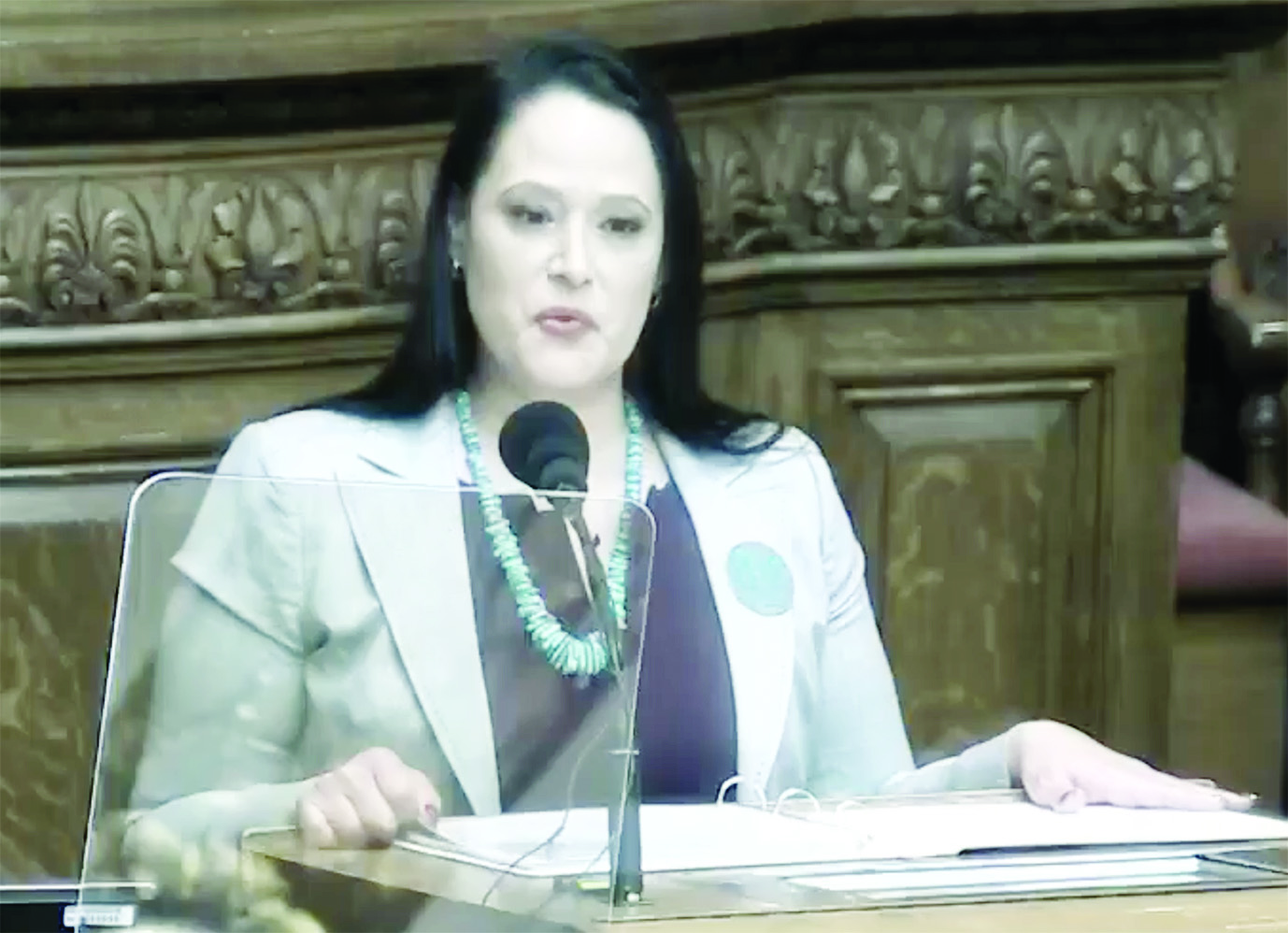
Resilience is a virtue of Native American tribes in the past and continues to ring true in the present and into the future, according to Shannon Holsey, president of the Stockbridge-Munsee Band of Mohican Indians.
Holsey addressed resilience constantly in her 50-minute address to the Wisconsin Assembly on Feb. 22 as she gave the 18th annual State of the Tribes address. She talked of the tribes’ resilience as they faced assimilation and extinction in centuries past, and she told of the continued resilience today as they lead the way in combatting the coronavirus pandemic.
“In spite of the many determined efforts to extinguish our people, we are still here,” Holsey said.
Holsey noted that addressing the treatment of Native Americans throughout history is not an easy thing for anyone to hear, let alone acknowledge. She said the country has a history of “genocide, ethnic cleansing, forced removals and brutal assimilationist policies” that make it hard, even today, to give Indigenous peoples the respect and honor they deserve.
“Our discomfort in sharing this painful, collective history pales in comparison to the lived experience that so many Native people endured in the past 530 years,” Holsey said.
That history is being threatened, she added, because of a bill going through the Wisconsin Legislature that prohibits critical race theory. Holsey pointed out that accurately teaching history is essential to showing what happened to tribes and should not be removed “for fear of hurting students’ feelings.”
“It is our view and response as tribal nations that perhaps what is needed is not critical theory but more critical thinking,” Holsey said. “To have critical thinking, you have to face the full, natural history head on. As you can see from the many tribal members here today, American Indians are not a people of the past.”
Holsey took a shot at sports, cartooning and mascots for being detrimental and degrading to Native Americans. Having native mascots like the Atlanta Braves continues to showcase tribal people as caricatures instead of decent human beings, she said, and it’s affecting the health of tribal youth.
“Low self-esteem factors prominently in suicides, and our teen suicide has been at or near the highest level in the United States for more than a century,” Holsey said. “This is a matter of life and death for most Native peoples. It is also the main reason so many of us devote time and energy to ridding sports of these dehumanizing, belittling, objectifying behaviors.”
She noted that tribes did not get a religious freedom act from the U.S. government until the 1970s, and action was not taken to allow tribes to recover ancestral remains and cultural artifacts from museums until the 1990s.
“We are still the only segment of society that cannot use the First Amendment to protect our sacred places,” Holsey said. “Far too long, Indigenous people have faced discrimination, disrespect, violence and oppressive use of words and imagery. As long as we can be treated badly in this very public way, Native people will continue to be persistently mistreated, and our collective and individual rights will be at risk.”
Holsey also related the hard road tribes have in retaining their traditional languages, noting that those languages link their people to all of their relatives and to the creatures of the world.
“When a language becomes extinct, just like the gray wolf, it can take with it much of our history and the culture of our people who spoke it and continue to revere it,” Holsey said. “I cannot stress enough the importance of retaining our tribal languages.”
Holsey told the Assembly of some of the positive things going on with tribes. She praised the 11 federally recognized tribes in Wisconsin for “leading the way” in mitigation efforts to curb the coronavirus pandemic and getting their people vaccinated.
“As we struggle with the COVID-19 pandemic and the economic revitalization, Indigenous communities are no longer content to wait for others to make decisions for us. These days are gone,” Holsey said. “Given the tribes’ leadership and forward movement during the pandemic to protect not only our communities but the communities around us, I believe there were lessons to be learned from the tribes’ responses to the pandemic.”
From the beginning, tribal leaders were clear in what needed to be done to protect their communities from the coronavirus, Holsey said, because tribes have had a history with epidemics and pathogens. Tribes organized task forces, developed plans for keeping people safe during societal shutdowns and worked with Gov. Tony Evers to get help from the National Guard to administer virus testing and vaccinations.
“In our small tribal communities, the loss of any citizen is too high of a price,” Holsey said.”Losing a single elder … is like a library burning down, and with it, the loss of our culture, our traditions and our teachings.”
lpulaski@newmedia-wi.com
Resilience key to tribes thriving, says Holsey