An upcoming habitat improvement project is good news for trout anglers in Oconto County.
Chris Collier, Great Lakes stream restoration manager for Trout Unlimited, said the project affects the South Branch of the Oconto River, a popular trout fishing stream.
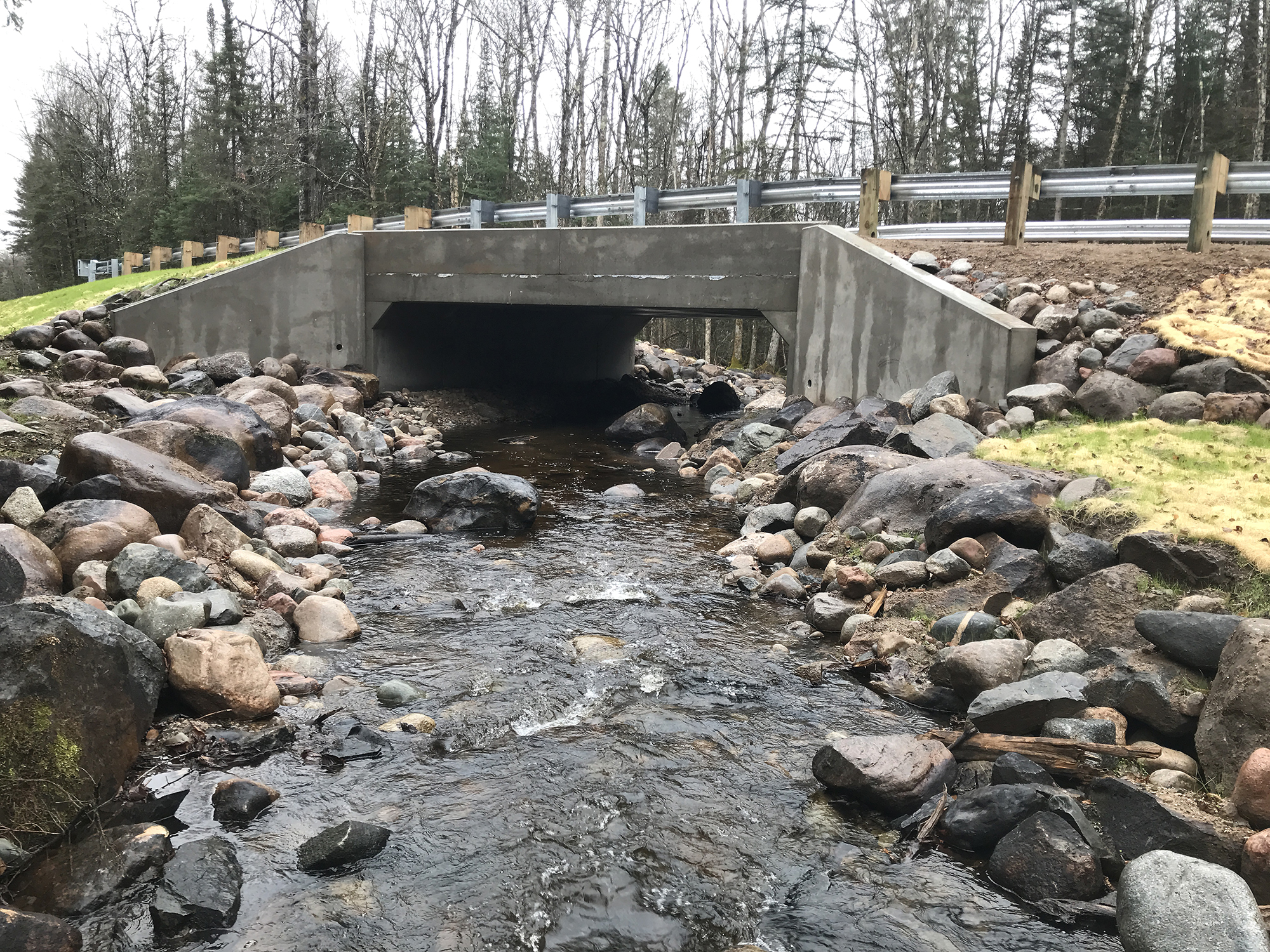
“We have a big project replacing a crossing on the South Branch this coming year,” he said. “We’re going to replace an undersized structure that’s limiting fish movement. It’s going to reconnect over nine miles of Class 1 trout stream. It’s a slam-dunk project on a fantastic watershed.”
The river crossing is just north of state Highway 64 between Mountain and Langlade.
“There are two culverts at the site that are causing conditions that increase flow velocity so fish can’t move,” Collier said. “We’re putting in a single-span structure that’s going to allow those flows to slow down and maintain the depth needed for fish to move upstream and downstream. The South Branch actually stays quite cold because there’s a lot of groundwater coming in there compared to lower parts of the river. You can get fish that don’t need to get into the super-small spring-fed tributaries because the South Branch stays so cold.
“These culvert projects aren’t cheap,” he added. “There have been studies that show that in the end, you save money because a bigger culvert is going to last longer and be less susceptible to damage during floods. Bigger culverts also tend to not inspire the level of beaver activity we see around other road crossings where they could use culverts as foundations. That’s a huge thing. Instead of spending money on beaver control, the larger structure does it for you.”
Rural towns may not be willing to spend money on stream improvements, but Collier said Trout Unlimited, or TU, is able to help.
“We come into the room as a partner,” he said. “When we do these projects, we come in and say, ‘We think you should do this project, thinking about fish and better infrastructure.’ We also say, ‘We think we can find money for you to help through these different funding agencies.’ If they support it, the town puts in a little money that it would be using on road repair. There are programs that care about this, and we can get money into the community through these programs so that we can get a better crossing and not rely on the town to pay for all of it.”
Wisconsin’s trout species – including brook, brown, rainbow and lake – often need help, Collier said.
“There are issues of pollution, temperature change, loss of habitat,” he said. “The nice thing in the Northwoods is we have really good habitat compared to other parts of the state, thanks in large part to healthy forest practices and protected public lands.
“The big issue here is: Can (trout) get to those areas of really cold water when it does get hot?” he said. “Can they get to spawning areas when it’s time to spawn? What we find is undersized road stream crossings a lot of times will inhibit their movement. Being a migratory fish, that is a huge issue. The big thing we’ve been doing, along with some habitat projects, is replacing those crossings with crossings that allow fish to move freely through a system.”
Fish often take advantage of Trout Unlimited-backed habitat improvements as soon as they’re completed, according to Collier.
“It depends site to site,” he said. “What we’re starting to find is they can access it right away; it’s a matter of if they need it. My colleagues in Michigan installed a brand new structure on a tributary to Lake Michigan. A king salmon swam up and through the structure within a day of it being installed.”
Collier is one of Trout Unlimited’s on-the-ground faces in northern Wisconsin’s Great Lakes basin.
“I basically cover the Green Bay watershed, streams in and around the Chequamegon-Nicolet (National Forest) and also the south shore of Lake Superior,” he said. “I do everything from managing on-the-ground projects from stream crossing replacements to habitat work to organizing outreach and education events to being a representative for TU in communities.”
Besides the South Branch of the Oconto River, northeastern Wisconsin is home to some of the state’s top trout streams, including the Oconto, Wolf and Peshtigo rivers.
“We love the Wolf, a gorgeous river with a lot of historic importance,” Collier said. “We’re looking at how temperatures are fluctuating on the river so we can identify future projects and do some of the work that we’ve been doing on the Oconto and the Peshtigo.”
Collier spends a lot of his time in the Peshtigo River watershed in Marinette County.
“We’ve done a lot of work on the Peshtigo,” he said. “It is a river that can get too warm in the summer, but there are so many really good coldwater tributaries that come in. If you look at some of those streams, brook trout and wild brown trout will hang out in those areas. You can have fish that grow and get bigger in the Peshtigo, but they rely on some of these very small streams that you could never cast a line into because it’s so narrow,” he said. “When it gets hot, that’s where the cold water is. Making sure they can move up there is critical as we deal with rising water temperatures.”
Collier compared the Wolf, Oconto and Peshtigo to southwestern Wisconsin’s Driftless Area.
“They’re two very different areas,” he said. “The Driftless Area is popular and pretty well-known across the country and probably the world. What I like about being in northern Wisconsin is you have to work a little. Not that the fish aren’t there, but you’re in a rugged landscape. You have to hack through tag alder in some cases or go through some pretty intense high-flowing rivers to access some of these areas.”
Trout Unlimited’s work is important to Wisconsin’s trout fishery, Collier said.
“Catching a wild fish is always a really cool thing for people,” he said. “It’s something we love to support because we want to create systems that support wild trout. We have a lot of cold water and healthy fisheries. These are migratory fish that need to be able to move. If we want to keep seeing those fish now and have our children and grandchildren see these fish, we have to make sure they can access different areas.
“We are seeing some issues with stream temperature,” Collier continued. “If they can move, they’re more likely to survive and that means we’ll still be catching wild trout 20, 30, 50 years from now and won’t be relying on hatchery-raised stocking. It’s important that we give these fish every fighting chance we can.”
TU has more than 20 chapters across the state.
“Beyond doing the work, I think one of the coolest things our chapters do is the outreach to people who aren’t Trout Unlimited members,” Collier said. “They run a program called Trout in the Classroom, where they provide materials to local schools to help their science classes teach kids about trout. They’ll raise trout and release these trout into local streams. Getting the next generation of people to care about this stuff is so important.”
Trout project coming to Oconto River