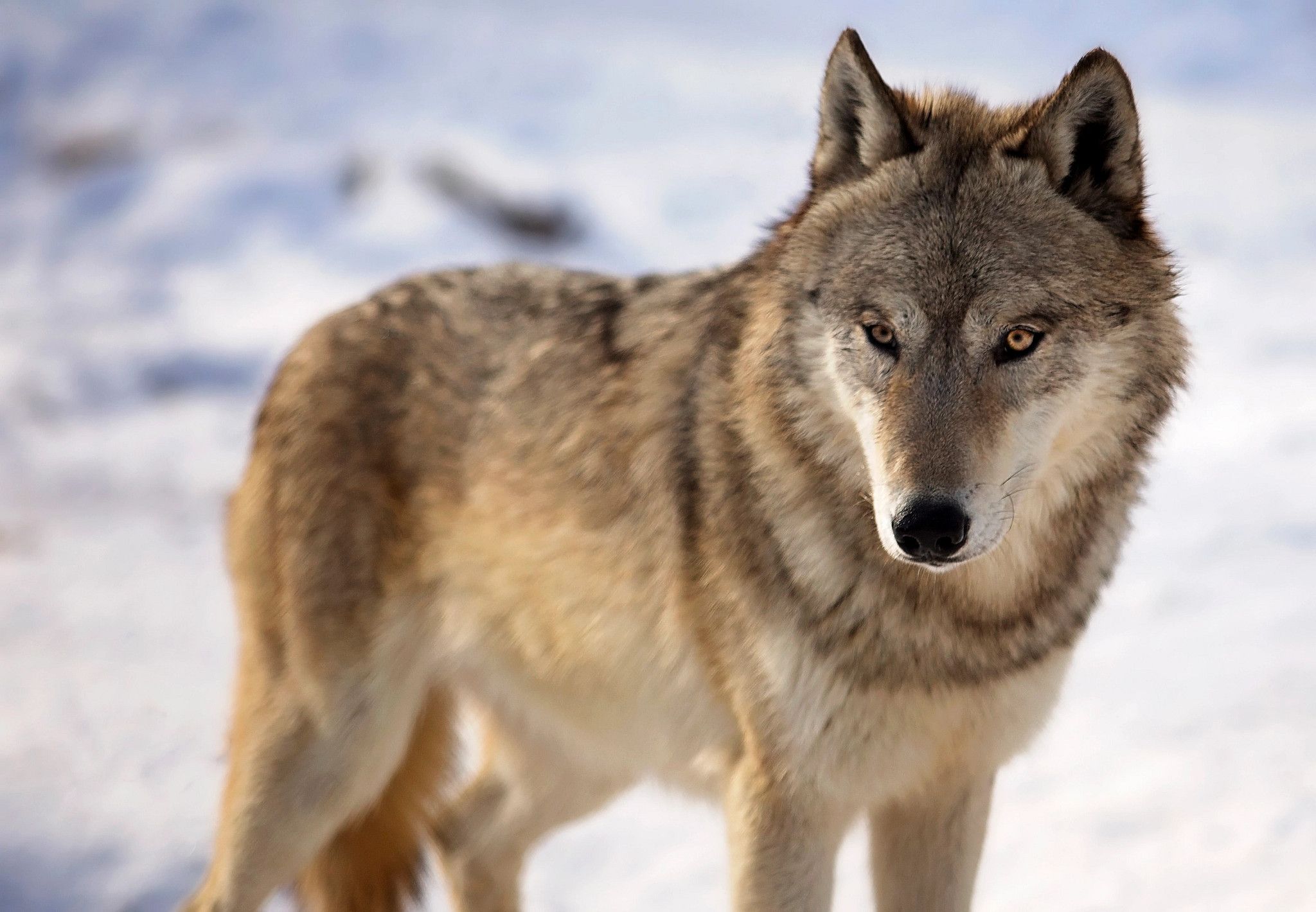
Wolf hunters anxious to resume a brief fall tradition are waiting for the state or some other governmental agency to make a decision after a judge suspended the hunt.
In October, just a few days before the Wisconsin Department of Natural Resources was scheduled to contact successful wolf permit holders, Dane County Circuit Court Judge Jacob Frost sided with animal rights groups seeking to overturn the 2012 state law that authorized and required an annual wolf hunt. His decision was based on those hunts operating under an emergency rule, even though he believes those seasons are no longer an emergency and therefore unconstitutional.
Frost agreed with an attorney for Animal and Earth Advocates of Seattle that the DNR has never made a permanent rule to regulate the wolf hunt.
The state attorney general’s office argued that it is not the legislature’s role to order the DNR to have a wolf hunt, and the animal rights-based lawsuit is only about how the DNR is implementing the law.
In response to a September lawsuit filed by six Ojibwe tribes to stop the hunt, a federal judge on Oct. 29 heard arguments but refused to take any action while the state court ruling was pending. Thus all hunters and the state seem to be in limbo pending any further state legislation or DNR action.
Brian “Ratt” Nicks, a Medford-area hunting guide who runs treeing Walker hounds for bear, bobcat and wolf hunting, said one fact seems lost on the judges and their decisions: The management goal for the total statewide wolf population is 350 animals, and there are an estimated 1,200 now.
“I’m bent about the fact that they totally avoid that fact,” he said. “I’m upset that they can drop an animal in your yard and say ‘Enjoy it.’”
He believes the overall annual wolf harvest goal should be 1,000, not 200.
The other problem with the current wolf management approach is that Indian tribes are generally allocated about half the harvest quota, but their spiritual beliefs oppose killing of any wolf.
“If the Indians want wolves on the reservation, go ahead, and if they (wolves) come off the reservation, we should be able to shoot them,” Nicks said.
This fall’s wolf quota was set at 130 wolves, including 56 permits for the Ojibwe tribes, who do not hunt wolves, and the remaining 74 for statewide hunters and trappers. The Natural Resources Board initially approved a 300-wolf quota, but the DNR rejected it.
Nicks has at least 10 hunters interested in a fall hunt with him. He and his dogs were able to help hunters harvest nine wolves in 2½ days in February, when Hunter Nation Inc., a Kansas-based hunter advocacy group, used the courts to force a hunt. Jefferson County Judge Bennett Brantmeier ruled in February that the DNR failed to meet its legal obligation to hold a wolf hunt, sending the DNR scrambling to issue permits and otherwise manage a hunt that was by state law supposed to begin in November and end on the last day of February.
Statewide, hunters and trappers harvested 218 wolves in less than 72 hours, suggesting that wolves may be more plentiful than biologists believe. Although the February harvest exceeded the state quota, it’s just 18% of the 1,195 wolves the DNR believes populate the state.
The Natural Resources Board had set the February quota outside the Indian reservations at 200, with 119 allocated for the state and 81 to the Ojibwe tribes to comply with treaty rights. There were 2,380 permits made available for chosen hunters/trappers.
Wisconsin started its modern wolf hunting in 2012, after wolves were federally delisted from the threatened species list on Jan. 27, 2012. The Midwestern wolf population has exceeded recovery goals for many years, according to the DNR website. Gray wolves were moved from endangered to threatened status in 2003 by the U.S. Fish and Wildlife Service.
In the 2012-13 season, hunters and trappers harvested 117 wolves. The following year, the harvest was up 119% to 257 wolves, including 180 trapped and 77 shot. In 2014-15, 154 wolves were taken, a 60% decrease from the previous year.
A federal spending bill in 2015 failed to include a plan to remove the wolf from federal protection, thus maintaining federal court decisions that ruled state management plans in Wisconsin and three other states did not protect wolves enough.
There was no wolf hunt in Wisconsin from 2015 through 2020, and livestock and pet owners have seen the growing population prey upon their cattle, sheep, horses and dogs. In the first seven months of 2020, the DNR reported 34 confirmed and 64 reported wolf conflicts, according to the Milwaukee Journal-Sentinel. By comparison, the same conflict totals for the same period in 2019 were 16 confirmed and 37 reported; 18 and 39, respectively, in 2018; and 20 and 37, respectively, in 2017.
In addition, there were five reports of wolves threatening humans in 2020, equaling the total number of human threats in the three previous years. The state has paid out $2.7 million between 1985 and 2020 for lost livestock and pets killed by wolves, according to Wisconsin State Farmer.
For more information on the impacts of wolves on farmers and dog owners, visit www.wisconsinwolffacts.com.
Fall wolf hunt on hold after judge’s ruling