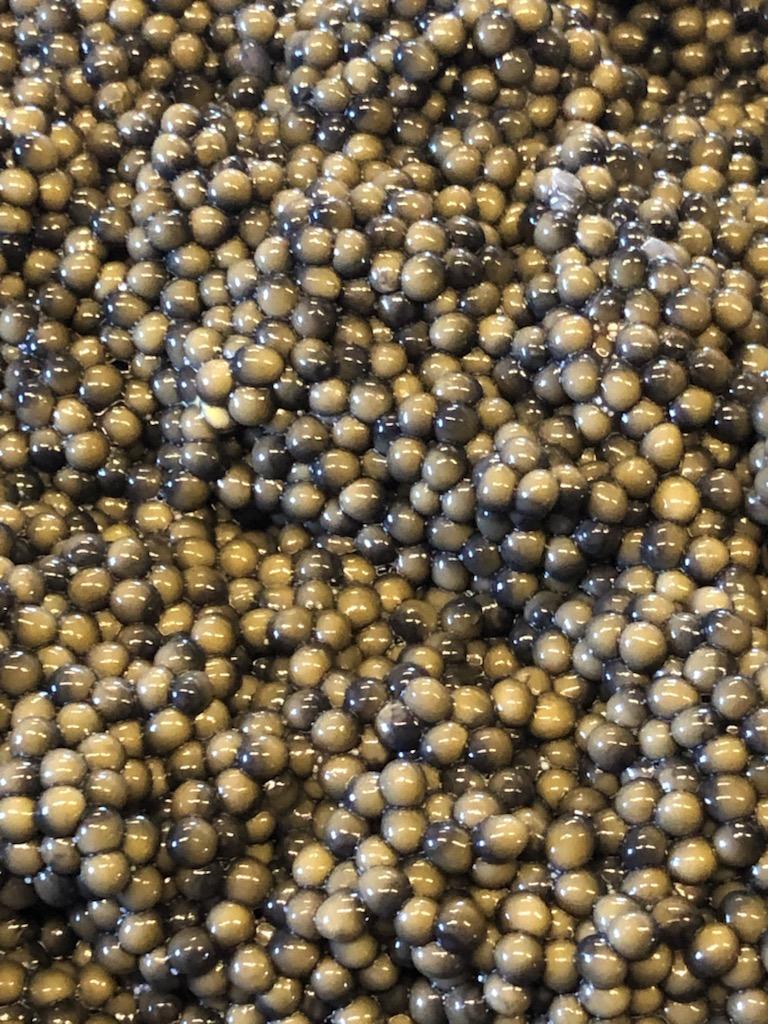
Sturgeon spearers on the Lake Winnebago system have worked for decades to protect the lake sturgeon, a prehistoric species that is rare in most of the world but plentiful here in Wisconsin.
Wisconsin Department of Natural Resources fisheries biologists also have worked tirelessly to protect the resource, until a sting into the barter of valuable sturgeon caviar has put the state’s lead sturgeon biologist on ice.
Ryan Koenigs, senior fisheries biologist at the Oshkosh DNR office, is facing a charge that he used some sturgeon eggs collected from successful spearers and pledged for research to instead be used to eat, sometimes even at DNR staff meetings, according to court records. He also faces an obstruction charge for allegedly lying about his phone contacts with caviar processors.
The sting, orchestrated by the U.S. Fish and Wildlife Service and DNR, apparently brought to a head practices that were routinely done by many DNR staff and readily admitted to by most of those questioned, court records show.
“The investigation revealed that a number of citizens were making caviar for others, and were accepting sturgeon roe or finished caviar in exchange for their services, which is an illegal barter,” the court case states. “The investigation further revealed a concerted effort to funnel sturgeon roe to particular processors for caviar production by DNR staff.” Some of the eggs had been collected from spearers for research, but diverted for caviar.
The criminal complaint against Koenigs and three others indicates no money changed hands in the barter of raw eggs for processed caviar. Spearers on the Winnebago watershed say the defendants did nothing differently than thousands of anglers and deer hunters have done for decades in exchanging fillets or venison sausage for drinks or help with a car.
“I think it’s a big deal about nothing,” said Don Herman, vice president of the Otter Street Fishing Club in Oshkosh, one of the clubs who help plow the roads on Lake Winnebago to help the thousands of February spearers drive to and from their fishing shanties each season. “Everybody thinks it’s just a crock. Everyone who fishes or hunts — we’re all guilty. You can’t tell me nobody gave away fish or venison.”
Herman, a volunteer who has shared the sturgeon-shocking boats and waded in the Wolf River waters around Shawano Dam alongside Koenigs, predecessor Ron Bruch and other DNR staff, said he and other sturgeon lovers “back Ryan (Koenigs) 1,000%.”
“Ryan’s a dedicated person,” Herman said. “They (spearers) think it’s just bogus. Ninety percent are for Ryan. They don’t want him to lose his job. He didn’t make any profit from it. It’s like a police officer losing his job over a speeding ticket. If they do it, it will be the biggest mistake the DNR ever made.”
According to the nine-page Class A misdemeanor theft charge filed in Winnebago County Circuit Court against Koenigs on Feb. 11 (two days before the 2011 sturgeon season opener), the joint Fish and Wildlife Service/DNR investigation began in 2017 and continued through January 2020.
“Why bring this up right before the season?” Herman asked. “They wanted to make the story bigger.”
According to the complaint, Ryan allowed a former DNR employee to retrieve raw sturgeon eggs from the DNR Service Center in Oshkosh after hours with the intention of processing them for caviar. Based on the DNR’s value estimate of $100 per ounce for the caviar, this former employee (who has not been charged) obtained 65 pounds or about $100,000 worth of roe from the center in 2015. He also told wardens that he gave 36 jars (about $20,000 worth) of finished caviar to Koenigs in 2017.
The arrangement to take some of the eggs gathered from spearers for research and use them for caviar, with the processor keeping a third to a half of the finished product as an illegal barter payment, existed under Bruch, who was the previous sturgeon biologist and is one of the nation’s foremost sturgeon experts. Bruch’s research and efforts are credited with helping to bring back lake sturgeon numbers to an estimated 60,000 fish on the Lake Winnebago system — the largest population in the world.
Wardens had warned fisheries staff in 2011 that they should dispose of the eggs or return them to the spearer after research was complete, if surplus eggs remained.
Another charged in the sting was Shawn M. Wendt, 52, of Oakfield, an employee of Wendt’s on the Lake restaurant, who has processed caviar and served it at the restaurant for 15 years, he told a warden.
Wendt, who faces two misdemeanor charges of unlawful sale of game fish, told a game warden he uses a dual-screening process to filter the blood and membrane from the eggs, then salts them and lets them dry. They are served at the restaurant for free, and he never takes any money for the processing, but only finished caviar. State law prohibits any sale or barter of any fish or game.
Victor and Mary Schneider of Fond du Lac are also charged with illegally processing sturgeon eggs and keeping some of the caviar.
Game laws also prevent what is called “wanton waste,” or wasting meat or other portions of game or fish. Herman said at least two spearers he knows who speared adult female fish that were full of eggs dumped their eggs, rather than risking similar hassles. The sting likely will prompt other spearers to waste this valuable delicacy, he said.
Another avid spearer, Steve Klein, of North Fond du Lac, agrees with Herman’s assessment of the caviar caper.
“I think the arrests are uncalled for and blown out of proportion,” said Klein, a board member and former president of the Westshore Fishing Club, one of the Lake Winnebago clubs that plow the roads for spearers. “They are not profiting off the eggs as far as I know. There are bigger problems around to deal with.”
Spearing community rallies around Koenigs