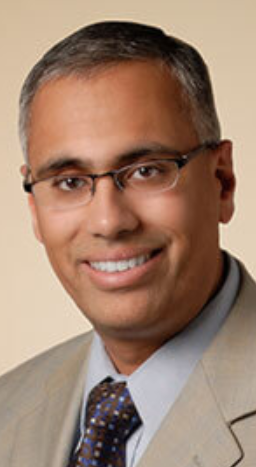
There’s a light at the end of the tunnel regarding the coronavirus pandemic, said Dr. Ashok Rai with Prevea during a Dec. 14 forum with business leaders in northeast Wisconsin, but the world is not out of that tunnel yet.
“This has been a hard 10 months for everybody,” said Rai, Prevea’s chief executive officer. “Somebody just lit the candle at the end of the tunnel for us, with the vaccine arriving Tuesday. I can’t tell you how emotional this is for us. I deal with the most vulnerable, so this is something we’ve been looking forward to for a long time. It only works if we can control our current spread, and if we get everybody to take it.”
Rai noted that positive case numbers are down in recent weeks, but so are testing numbers overall, and he suspects the effect for Thanksgiving get-togethers should show itself this week. Hospitalizations are still very high, he said, which raises the question about whether a third surge could be nigh.
“We need testing to be robust but the total number of positives to be low,” Rai said. “We’re not quite in that position, but we look like we could be in that downward trend in that leading indicator.”
Rai noted that maintaining safety measures like social distancing, wearing masks and good hand hygiene should be expected to continue for at least the next six months, even as the news of the Pfizer COVID-19 vaccine getting Food and Drug Administration approval has been giving everyone hope that the pandemic is coming to a close.
“Everyone’s focus is on the vaccine. But in order for the vaccine to work, we want people to vaccinate, and we want people to stay alive during this time period,” Rai said. “For at least the next six months, we need to be very vigorous about controlling the virus as we vaccinate people.”
The Pfizer vaccine will be going to eight sites in Wisconsin that have the cold storage suitable for preserving it before being shipped to clinics, long-term care facilities and hospitals to treat health care workers and the most vulnerable population. Rai noted that the Moderna vaccine, once it gets FDA approval, will be delivered directly to health care officials because the storage requirements do not need extreme cold to preserve it.
Even with the vaccine coming out, reducing the number of positive cases is paramount, according to Rai.
“The vaccine is a fire hose,” Rai said. “We have a forest fire; a single fire hose is not to solve that. We need to reduce the size of the fire to make the vaccine have a greater impact on society.”
Rai recommended more robust testing over the next six months to give a better indication of whether the virus is getting under control. In response to a question about whether there should be COVID-19 testing at schools, he recommended that it should definitely happen.
“I think we should be taking the testing resources that we’ve dedicated toward health care and move that to education,” Rai said, noting that the antigen testing, which produces quicker results, is far from perfect but should improve reaction time for treatment. “I’m advocating for that at the state level.”
He said that the testing is one mitigation tool, and using that in concert with wearing a mask allows better efforts at suppression. Rai pointed out that there is the capacity to test people not showing any symptoms of the coronavirus.
There is no form of the COVID-19 virus in the vaccine, according to Rai, so it cannot give you the disease. However, there are symptoms in the 48 hours following the first shot that might make it seem like someone might have it such as tiredness, headache, fever and chills.
“We call it reactogenicity. It’s a fancy way of saying that your immune system is going to react to those proteins,” Rai said. “Your immune response is that you’re going to feel tired. You’re going to get a headache, and you may get a fever or chills. It’s short lived. It’s your body ramping up its furnace to learn how to kill COVID-19, if it ever sees it.”
He added that the symptoms will likely be stronger with the second shot.
Rai recommended that employers vaccinate later in the week to give their workers time to get through the symptoms. He also recommended getting employees vaccinated in waves to avoid temporary losses in workforce.
“We’re going to set that example in health care,” Rai said. “We’re not going to vaccinate the entire ICU or the entire Urgent Care in a single day. We’re going to do it in waves to get everybody through that couple of days.”
While the vaccine is touted to be safe for most people by Rai and other health officials, he recommended that those who are HIV-positive or who are treating cancer through chemotherapy to consult their doctors before getting it. He said those immunocompromised individuals might not be able generate enough of a response to fight off any future exposure to COVID-19.
“Everyone should get it from that perspective of being immunocompromised or having a chronic illness, but will you have full effects? It’ll depend on your clinical situation around your immune system,” Rai said.
Rai noted that there is no research on how the vaccine will impact pregnant women. Also, he pointed out that the vaccine was tested on people ages 16 and older, so it could be six months or more for testing to be finished on children to see if they can receive it.
lpulaski@newmedia-wi.com
Rai: There’s light at end of COVID-19 tunnel