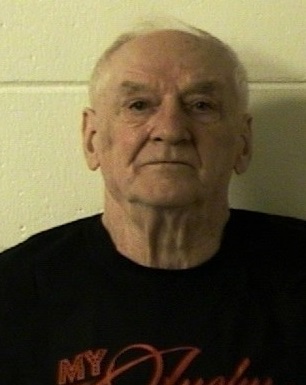
Attorneys for the Lakewood man accused of a 1976 double murder hope to present evidence at his trial that one of two other men could have committed the crime.
Raymand L. Vannieuwenhoven, 83, is charged with two counts of first-degree murder in connection with the shooting deaths of David Schuldes, 25, and Ellen Matheys, 24, at the McClintock Park campground in the Marinette County Town of Silver Cliff in July 1976.
The case went unsolved for more than 40 years until, investigators say, DNA found with Matheys’ body was positively matched to Vannieuwenhoven in early 2019. The defendant originally was also charged with sexual assault, but that count was dismissed because the statute of limitations had expired.
He is scheduled to stand trial in Marinette County Circuit Court next July, and a motions hearing is scheduled for Jan. 29. Prosecutors and defense attorneys had a Dec. 2 deadline to submit motions and briefs, and they now have until Dec. 16 to submit written responses to the other side’s motions in advance of the January hearing.
The defense is offering motions regarding two different suspects who were on the Marinette County Sheriff’s Department’s radar during the first two decades after the bodies were found. Both were employees of the Marinette County Parks Department at the time of the murders and therefore were familiar with McClintock Park.
According to one defense motion, one of the men was convicted of rape in 1954, and his ex-wife told investigators in 1985 that he acted “scared s—-less” and showed an “undue interest” in the 1976 murders at the time, even listening to a radio scanner to learn as much as possible. At one point, he fixed sandwiches and coffee and brought them to personnel at the scene in order to reportedly get a closer look.
Matheys’ body was found in the underbrush the morning after her boyfriend’s body was found outside the park restrooms, and the suspect made comments about finding a woman’s body before it was actually found, an acquaintance said during a 1997 interview.
The man also shaved off his mustache after authorities released a composite sketch of a possible suspect seen near McClintock Park on the day of the murders, the defense motion said. A 1997 DNA analysis was inconclusive but also said the man “could not be excluded as a source” of the DNA found on Matheys.
Another defense motion makes an argument about a second suspect in the case who suffered from mental illness during the mid-1970s. That man’s ex-wife theorized he could have mistaken Matheys for her and flew into a rage upon discovering the woman he thought was his wife in the company of a strange male.
The second suspect also bore a resemblance to the composite sketch, according to the defense motion. Neither man has an alibi for July 9, 1976.
A third defense motion asks Judge James Morrison to suppress Vannieuwenhoven’s DNA sample on grounds it was unconstitutional because the state obtained it “using trickery and misrepresentation.”
According to court records, a contractor using the most updated DNA technology was able to pinpoint Matheys’ attacker as a male member of the Vannieuwenhoven family in northeast Wisconsin, and two of Raymand’s brothers had already been tested and eliminated.
Acting on behalf of Marinette County investigators, Oconto County Chief Deputy Darren Laskowski visited Vannieuwenhoven in March 2019, claiming to be conducting a survey of elderly northern Oconto County residents.
Laskowski went through several questions with the suspect, writing down his answers, and finally asked him to seal the envelope. Authorities allege that saliva from the envelope was an exact match to the DNA preserved from Matheys’ body.
For the prosecution’s case, the state has filed a motion to permit testimony from a woman who was 17 years old in 1957, when Vannieuwenhoven was convicted of dragging her into a cemetery in Suamico. She broke loose and ran away before he could physically harm her, and the motion argues that prior act suggests he was capable of the assault and murders 19 years later.
The prosecution also filed a motion to prohibit testimony about the earlier suspects unless, as the defense argues, it can be shown they meet three legal criteria: that the suspects had a motive, opportunity and a direct connection to the circumstances of the crime.
Two weeks have been set aside for the trial, beginning July 19, with a final pre-trial conference scheduled for June 22.
Motions filed in 1976 double murder case