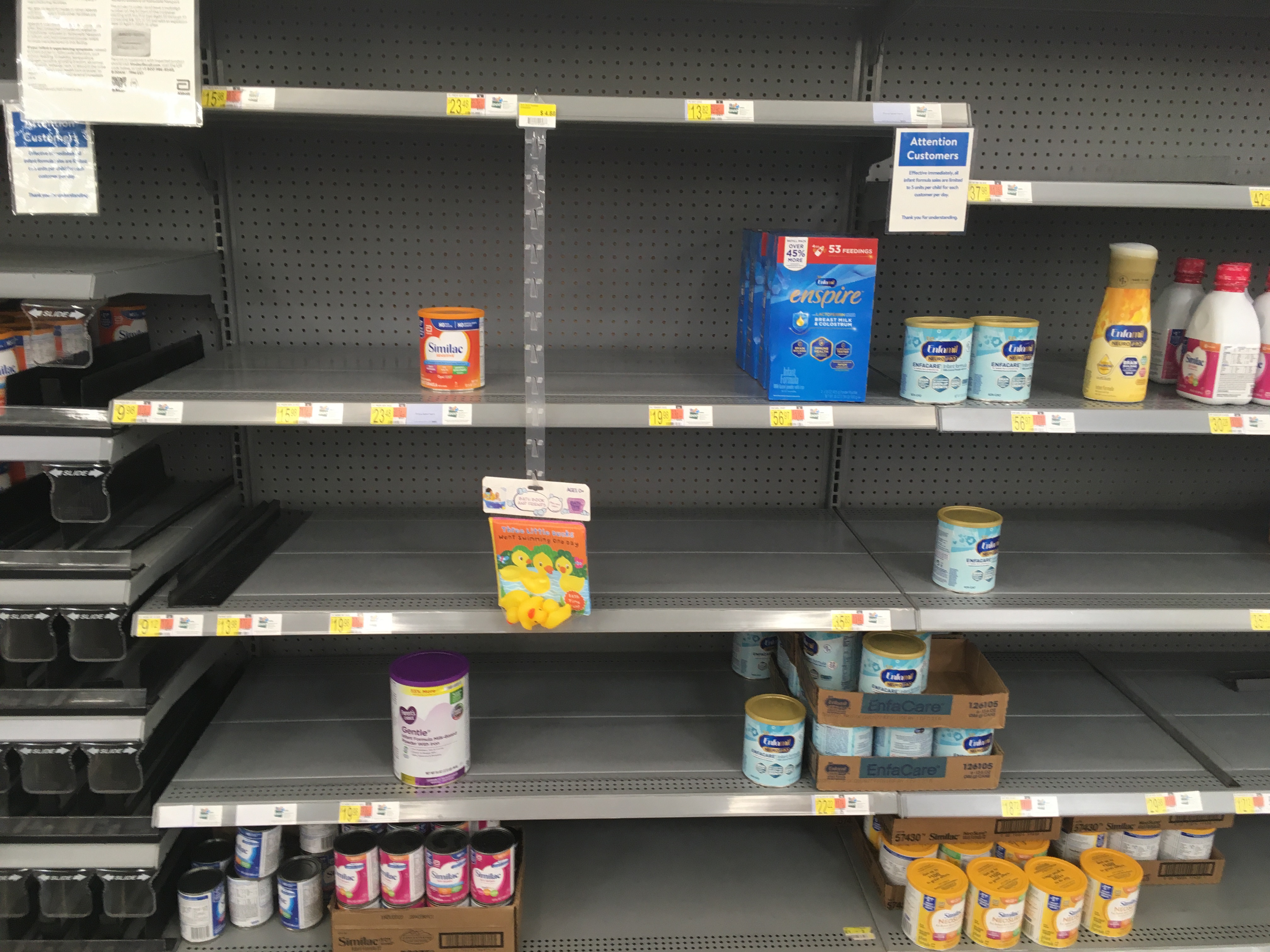
A national baby formula shortage is creating challenges for many families with more than 40-70% of top-selling brands reported to be out of stock in many locations throughout the country.
“It’s terrifying to imagine running out of formula to feed your baby,” said Dr. Bentley Thomason, a family medicine physician at ThedaCare Medical Center-Shawano. “The first thing I would recommended to parents or caregivers is that if you are having difficulty finding the formula you need for your baby, check several stores in your area — including grocery stores, supermarkets, big box stores, convenience stores and warehouse stores. I would go so far as to ask the store manager when their store typically receives their formula shipments and, if possible, plan to be at the store that day.”
Dr. Nicole Ruske, another family medicine physician at ThedaCare-Shawano, agreed and added that asking family and friends to look for formula in their areas is another option.
“This is a time to seek help wherever you can to have a safe supply on hand,” said Ruske. “If at all possible, I would recommend having a two-week supply to help give you time to secure additional formula before running out. However, we do understand at times that may not be possible, and our hearts go out to those families who are struggling to find the formula they need.”
Ruske noted that many parents also are using social media platforms like Facebook to connect with other parents to learn where formula might be available and sometimes even share formula supplies.
The formula shortage developed because of pandemic-related supply chain issues and the closing of a production facility in February because of contamination. That factory was slated to reopen in early June. U.S. Food and Drug Administration officials recently publicly stated they believe formula supplies will return to normal by the end of July.
Thomason, herself a mom with a baby needing formula, encouraged parents to reach out to their baby’s health care provider with any questions.
“We’re here to help in any way we can,” she said. “Many of our providers are parents and we understand the challenges our patients are facing. While we may not be able to provide the formula supply, we are here to listen to concerns, and offer support when possible. Sometimes talking about what we are experiencing can help us all navigate the situation.”
Thomason and Ruske offered suggestions for coping with the supply shortage, like if possible, be flexible with formula brands.
“If parents are using Enfamil, Similac or any other name brand, it’s OK to switch to a store brand from Costco, CVS, Walmart, Target or reputable online sites such as Amazon,” said Thomason. “The store brands are regulated by the FDA and are just as safe to use and often less expensive. The important thing is to stay within the type of formula you’ve been feeding; that is, stick with a milk-based or soy-based formula.”
Formula should not be diluted, according to Thomason.
“Under no circumstances should caregivers dilute formula,” Thomason said. “Diluting infant formula can be dangerous and even life threatening for babies, leading to a serious nutritional deficit and health issues. If you are having extreme difficulty finding the formula you need, please reach out to your provider. We can come up with a specialized diet for your infant based on local availability. I’m regularly keeping track of supplies in our area,” she said.
Parents should also not make their own formula, according to Ruske.
“Commercially available baby formula is heavily regulated by the FDA to be a safe breast milk alternative/supplement to provide babies the nutrition they need,” Ruske said. “Babies who have been fed homemade infant formula have suffered from hypocalcaemia (low calcium).”
Parents should also avoid substituting with regular whole cow’s milk from the store.
“Regular cow’s milk does not have the iron and other nutrients that babies need to thrive and grow,” Ruske said. “That’s why we generally don’t recommend cow’s milk before the age of 12 months.”
Thomason added that families should check with their baby’s provider if you are considering substituting with cow’s milk.
The formula shortage may be particularly difficult for parents of babies who need specialty formulas. Both doctors stressed that parents should not wait until they are down to their last bottles of formula before making a change in formula brands or seeking help.
“It’s always better to make changes to a baby’s diet slowly,” Thomason said. “If you must switch between formula brands, interchange one brand with the other and gradually introduce the new brand to your baby. That will be easier on his or her digestive system.
The doctors also noted that the U.S. government is now receiving shipments of formula from overseas and said parents should have no concerns about using formulas received from European countries, especially the United Kingdom and Australia. Ruske said that formulas from the U.K. are actually more regulated than those in the United States.
Doctors, moms share experiences, support