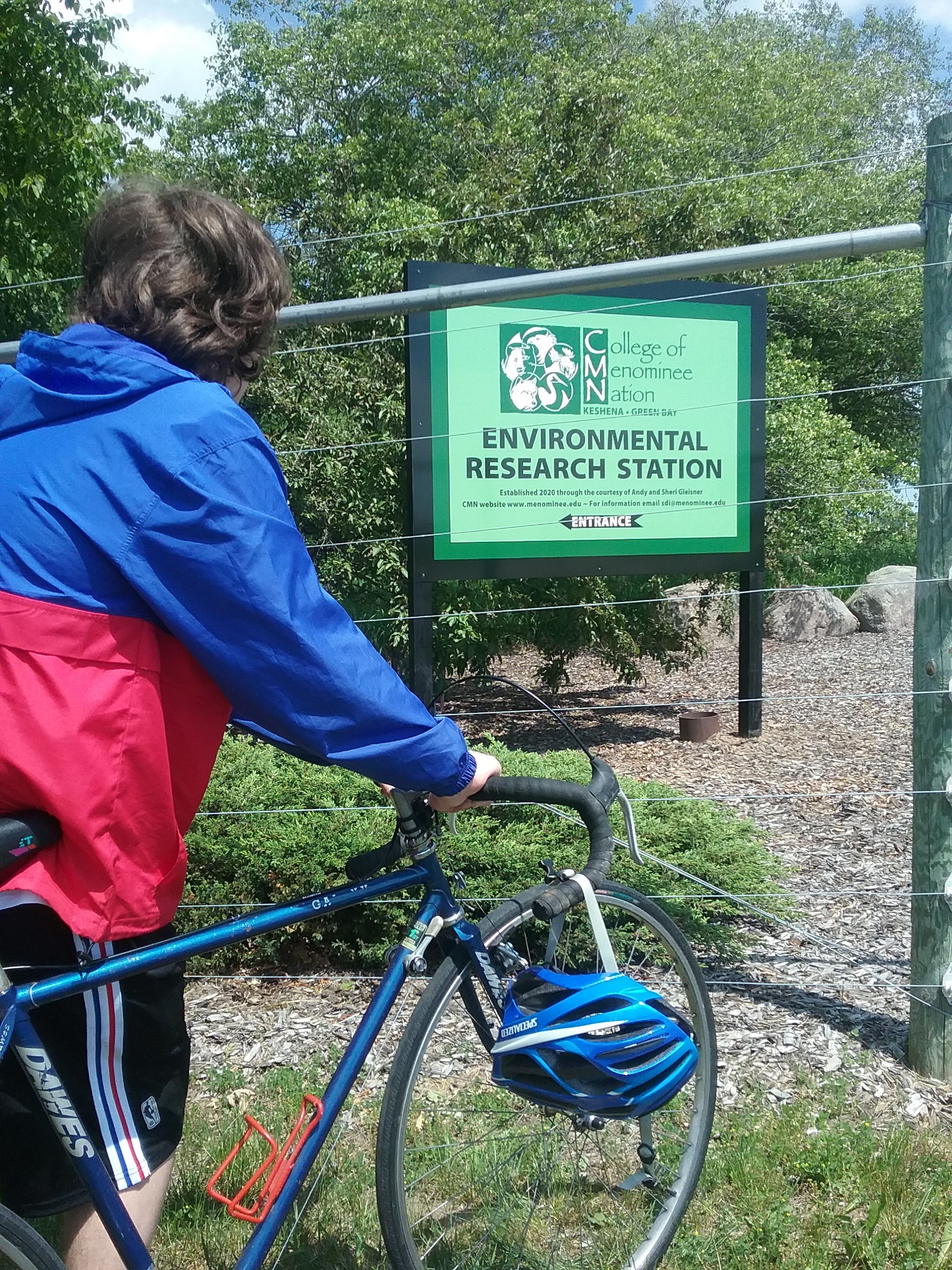
An interest in horticulture and the region’s natural environment inspired Andy and Sheri Gleisner of rural Waupaca County to devote more than two decades to developing a unique botanical garden for area residents and visitors.
As retirement approached, their commitment to the land itself and the broader topic of environmental education moved them to donate 35 acres of their property to the College of Menominee Nation.
Beginning around 1975, the couple did extensive restoration and planting on the former farm land and, in 2000, opened it to the public as Arbor View Gardens. The botanical array now there features many varieties of wildflowers and other flowering plants, the state’s largest collection of woody plants, outdoor art installations and facilities for educational and social events.
The area has been occupied by European settlers since an 1830s treaty ceded more than 4 million acres of ancestral Menominee land to the U.S. government. In choosing to donate their property to the college, the Gleisners noted their desire to see it return to the trust of an American Indian community and to continue its educational purpose. CMN checked both boxes.
While the public gardens chapter in the land’s life ended with the transfer of deed to CMN, its role as a place for environmental, conservation and biodiversity education will continue. CMN President Christopher Caldwell says planning has begun on ways members of the college faculty and staff of CMN’s Sustainable Development Institute can make use of the property’s special characteristics.
“We are grateful for the careful stewardship the Gleisners have given to this piece of Mother Earth,” Caldwell said, “and for their thoughtfulness in placing it in the care of an American Indian tribal college.
“We can envision any number of valuable environmental research station projects happening there that will reflect our relationship to the earth and respect the care it received from Mr. and Mrs. Gleisner. It has already been mentioned in relation to our continuing academic work on the impact of climate change, phenomenology in this region, sustainable agriculture and ancient gardens of the Menominee people, and for classes such as natural resources, geoscience and soil microbiology.”
Having access to a large area that is fenced and cleared of invasive species adds to its research potential, Caldwell added.
“We have demonstration gardens adjacent to the college’s Keshena campus, but having additional space a few miles distant offers control sites that can extend knowledge gained in projects,” Caldwell said.
The development of Arbor View Gardens benefited from Sheri Gleisner’s professional teaching background in public schools and Andy Gleisner’s expertise in horticulture. Aiding in their project was Andy Gleisner’s mentor and horticulture professor at the University of Wisconsin-Madison, Dr. Edward Hasselkus.
A former curator of the UW Arboretum’s Longenecker Horticultural Gardens, Hasselkus offered professional advice to the Gleisners and provided nearly 20% of the woody species for the Arbor View collection. Other plantings on the property include many non-invasive plants from around the world that are acclimated to Wisconsin conditions.
The new CMN Environmental Research Station is located at the County Road C and Palmer Road intersection in the village of Embarrass.
Arbor View Gardens donated to CMN