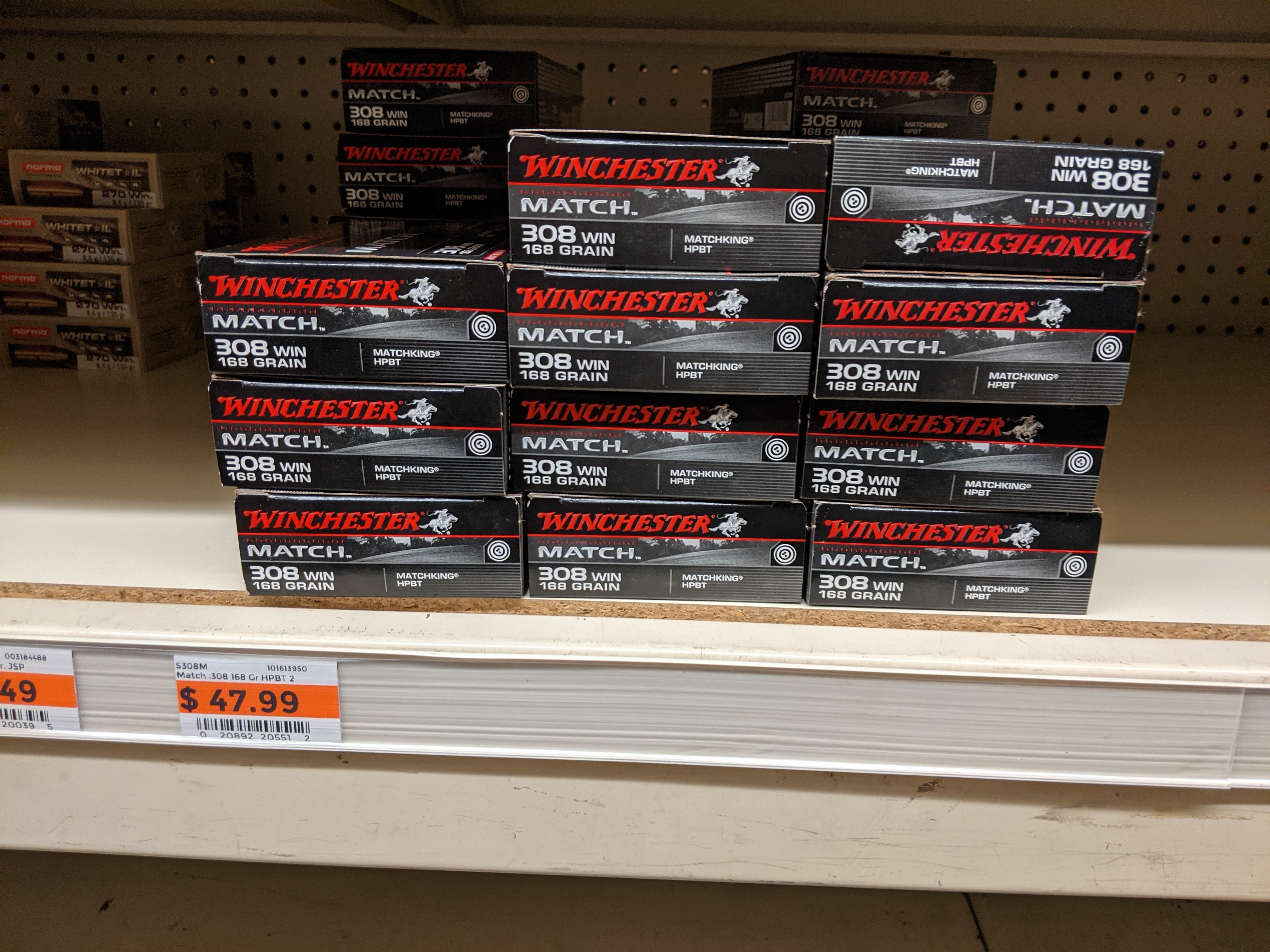
You’ve purchased a top-notch deer rifle with a scope to match. You have the best clothing, knife, backpack, ATV and pickup truck that money can buy. Leave out one important item and your hunt is done.
If you’ll been looking for ammo the past few years, you’ve probably been frustrated and angry. We all faced this problem at least once or twice before, but since the pandemic began, rounds of hunting ammo have been as scarce as the elusive Turdy Point Buck.
If you need a reason, there are plenty to choose from. Ammunition factory workers were sent home for a few months at the height of the pandemic in 2020, but most are back to work now and those plants are cranking out cartridges around the clock, according to industry sources.
Yes, Remington went bankrupt, filing for Chapter 11 protection for the second time on July 27, 2020, and a few months later, a judge divvied up the legendary company’s assets. Vista Outdoor Inc. paid $81.4 million for the ammunition portion of the business, and has been cranking out ammo almost from the start.
Record numbers of newcomers bought their first firearms in 2020 and 2021, fearing both the spontaneous rioting we saw in towns from Seattle to Kenosha, and the promised gun control laws from President Joe Biden and his allies.
Local sporting goods store managers explained some of the ramifications of ammo shortages for deer hunters this fall as well as some of the other impacts it has had on other shooting sports. It’s also affected how they order ammo.
“The hunting ammo is very, very sparce right now,” said Seth Gyldenvand, general manager at Dunham’s in Shawano. “I get a little and it’s gone almost immediately,” noting he had a small amount of .30-06 and .243 that flew off the shelves quickly. “We’ve had no 30-30 ammo in a year and no .270 in forever.”
His store, like so many chain stores in the state and country, have no real say in what’s coming in and simply take what they can get and sell it fast, often for two to four times the price it was prior to the pandemic.
At Butch’s Archery in rural Embarrass, which also sells new and used guns and ammo, manager Justin Steinke said he ordered about 10 times the normal amount of hunting ammo back in February and March, expecting to receive a fraction of his wholesale orders.
“I have not received 30-30 ammo for a year,” Steinke said. “I have more orders than I can pay for. We all know we are not going to get all we ordered. They are just not arriving.”
Some of his wholesalers will call him and say they can offer him a box of .30-06 here or three boxes of .308 there, when he would normally receive multiple 10-box cases of ammo.
One major contributor of the ammo shortage, according to Steinke and many other experts in national firearms magazines, is hoarding. Whenever hunters and other shooters find ammo, they’ll buy it, even if they already have a good supply at home, Steinke noted.
“The consumers right now are their own worst enemies,” he said. “People need to stop buying it.”
Those who manage to find ammo they don’t really need immediately also sell it on national online sites like Gun Broker or Guns America, often making 300 or 400 percent profits. This has happened in past years with .22 Long Rifle and .223 ammo, which ironically now seem to be in relatively good supply.
Some small retailers have even bought ammo from customers to stock their shelves, and Steinke noted that rarely seen brands from foreign lands are now showing up, too. For example, he has some imported ammo called PPU in .308 soft point for about $24 per box of 20, which he says is similar in quality to Remington’s Core-Lokt, an extremely popular hunting round.
“We are trying our best to hold our integrity with our prices,” he said.
Wholesalers continue to raise prices and retailers must follow suit to maintain profit margins. A box of Core-Lokt .300 Winchester Magnum loads that sold for $31 last year now wholesales for the same price, so he must charge $41.
Ammo shortage means making every shot count