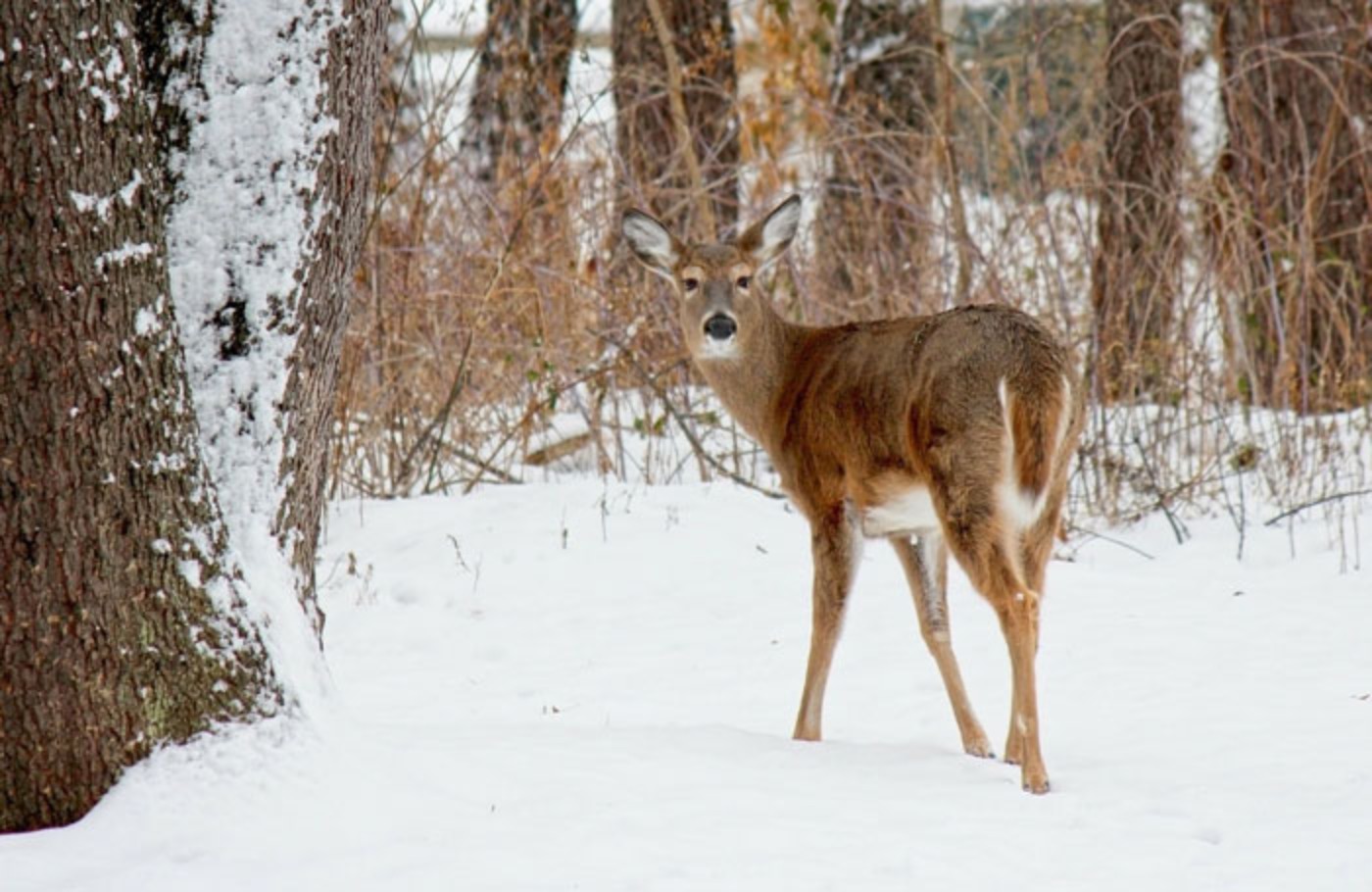
In cooperation with local businesses, Wisconsin Department of Natural Resources (DNR) staff will collect samples across northern Wisconsin for chronic wasting disease (CWD) testing during the 2020 deer hunting seasons.
Managing CWD begins with knowing where the disease exists on the landscape, and having this knowledge is only possible with robust sample numbers provided by hunters. Make plans to visit a sampling station to have your deer tested for CWD.
To kick off heightened CWD sampling in the region, hunters who harvest an adult deer in Marinette and Oconto counties are strongly encouraged to have their deer tested for CWD. To date, CWD has not been detected in wild deer in these counties, and this increased sampling effort is being done to provide current, more detailed information on deer herd health across the state.
Additionally, this year the DNR is offering property-specific CWD surveillance permits on both private and public land within the Marinette and Oconto counties surveillance areas. In 2018, a wild deer tested positive for CWD in the Upper Peninsula within 10 miles of the Wisconsin border, and in 2019, a farm-raised deer tested positive for CWD on a deer farm in northwest Marinette County. Those interested in surveillance permits should contact David Halfmann at 715-927-2735.
CWD testing is free of charge. A sample consists of the deer head with 3-5 inches of neck attached. Hunters will also need to have their harvest authorization number, harvest location and contact information when submitting a sample. New this year, hunters may submit this information online rather than using a paper form. Hunters can find a link to the new digital form in their registration confirmation email and in their harvest history in Go Wild.
During an average year, results are typically available 10-14 days after the deer is brought to a sampling station. This year, hunters will likely experience delays due to complications from COVID-19. To protect the health of department staff, the DNR has reduced the number of staff per shift at our sample processing center. Despite adding shifts, the daily volume of processed samples will be reduced from previous years.
“We estimate that results will be available 2-3 weeks after the deer head or tissue sample is received unless unforeseen circumstances cause further delay in either our field operations or at the CWD processing center,” said Tami Ryan, DNR wildlife health section chief. “We thank hunters for their patience as we seek to provide our services during these unprecedented times.”
To view CWD results for a harvested deer, visit the DNR’s website (https://dnr.wisconsin.gov/topic/WildlifeHabitat/results.html). Hunters will need to enter a customer ID or CWD sample bar code number to view test results. If test results come back positive for CWD, advice from the Centers for Disease Control and Prevention, Wisconsin’s Department of Health Services (DHS) and the World Health Organization is for hunters not to consume venison from that deer.
“We’re grateful for hunters making that extra effort to have their deer sampled for CWD, and to support them, we continue to make access to sampling options easier each year,” Ryan said. “Each deer sample is important because it contributes to an overall understanding of the health of Wisconsin’s deer herd and the distribution of CWD across the state.”
CWD sampling locations
Hunters have several options available to have their deer sampled for CWD, and all locations can be found on the DNR website (https://dnr.wisconsin.gov/topic/WildlifeHabitat/registersample.html). Details about locations may be modified throughout the season, so make sure to check the location nearest you before your hunt.
In addition to a network of 24/7 self-service sampling stations around the state, many meat processors and businesses offer in-person sampling assistance.
Hunters should contact in-person sampling stations in advance to verify hours of operation. For an interactive map with sampling locations available in your area, visit the DNR website. There is also a searchable database available (https://dnr.wi.gov/wmcwd/RegStation/Search) as an alternative to the map view. Lastly, there is also a link available on the menu in the Hunt Wild app.
Deer carcass disposal
Hunters are encouraged to dispose of deer carcass waste in a licensed landfill or transfer station that accepts this waste or in a dumpster designated for deer carcass waste. If a municipality allows deer disposal curbside or at a transfer station, the carcass should be double bagged. If these options are not available and the deer was harvested on private land, burying the deer carcass waste or returning it to the location of kill are the next best options.
Hunters can find a map with the CWD sampling locations and deer carcass disposal locations on the DNR website as well as in the Hunt Wild app.
Baiting and feeding
Hunters are reminded that baiting and feeding are prohibited in some counties. Check the DNR’s baiting and feeding webpage for updates (https://dnr.wisconsin.gov/topic/hunt/bait.html).
No counties in the state will be removed from the ban during the 2020 deer hunting seasons.
Prevent the spread of CWD
Voluntarily following recommended practices (https://dnr.wi.gov/topic/wildlifehabitat/documents/transmission.pdf) can reduce and prevent the spread of CWD. Those include proper carcass transportation, handling and disposal, reporting sick deer, following baiting and feeding regulations, cleaning and disinfecting equipment and following urine-based scent recommendations.
Sick deer reports
DNR staff members are interested in reports of sick deer. To report a sick deer, contact local wildlife staff or call DNR Customer Service at 888-936-7463 (https://dnr.wisconsin.gov/topic/WildlifeHabitat/sickdeer.html).
More information on CWD is available on the DNR website (https://dnr.wisconsin.gov/topic/wildlifehabitat/cwd.html).
DNR encourages hunters to test for CWD