
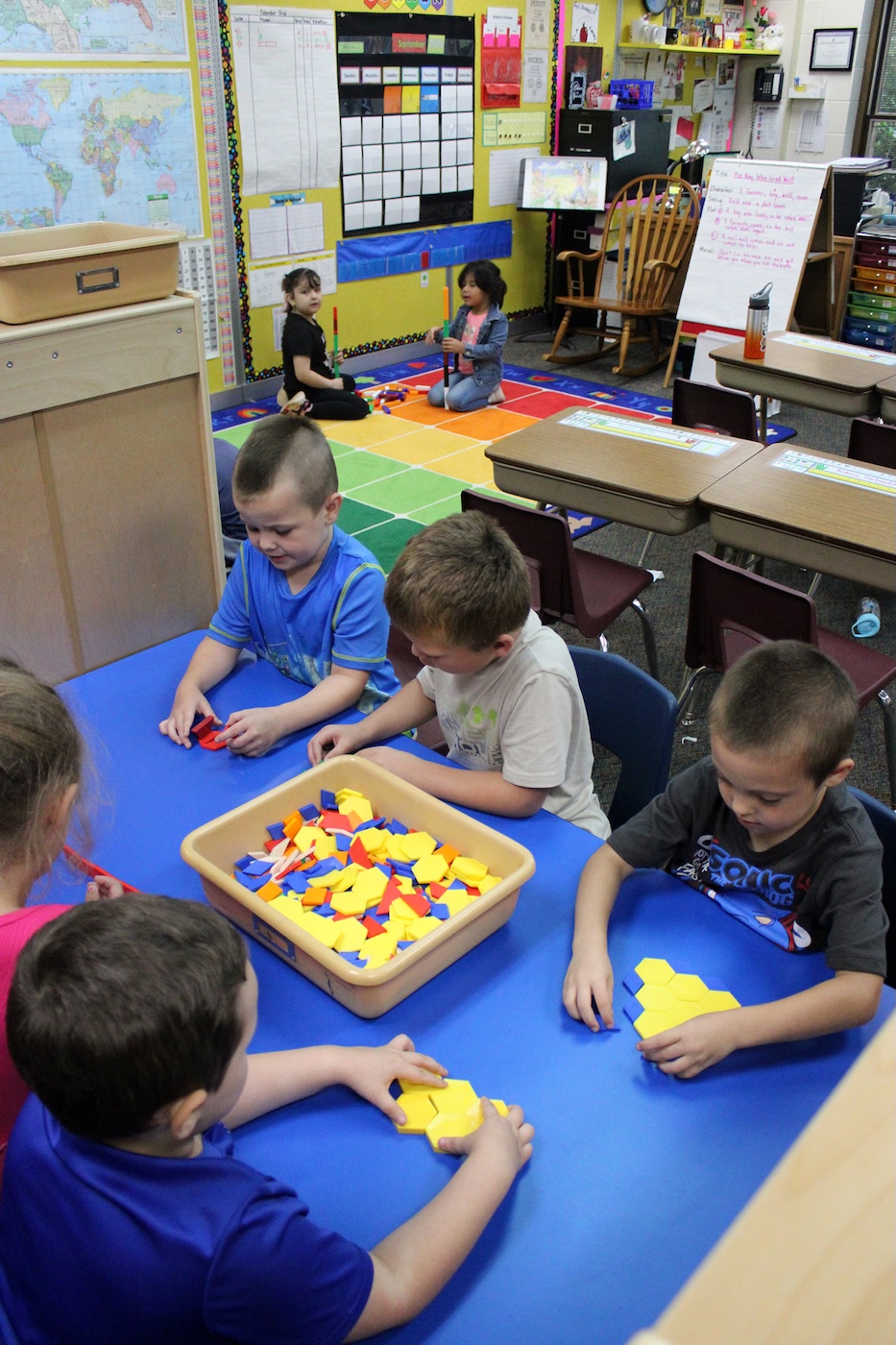
The Gillett School District has learned lessons from a failed operational referendum in April and made some adjustments to ask for smaller bites when it asks voters to approve overriding state-mandated funding caps this November.
The previous referendum was for five years, with the district’s ask starting at $2 million in the first year but more than doubling by the 2030-31 school to $4.3 million. The funding for the first two years was expected to bring teacher pay up from the bottom in the region and the bottom 15 of the state’s 421 school districts.
This time around, the district is seeking a three-year override that asks for $1.9 million each of the next three years, starting with the current one that started in July. The projections by the district indicate there will be a hike in the tax levy this year, followed by a decrease for the following two years.
A lot of the additional money would be used for increasing teacher pay. Superintendent Nathan Hanson said the money would not be enough to bring Gillett to the 50th percentile, but it should cut down on the number of good teachers leaving the district for higher pay.
“We had four different teachers leave this year for $10,000 raises,” Hanson said. “All of our other staff who have left have reported they went and got a bigger increase in wage.”
Gillett School Board President Robin Banaszynski said the board looked at the feedback from the community, and one of the criticisms of the last referendum was that the amount of money changed from year to year, while another was the five-year term. Banaszynski said the board decided to simplify and limit the time of the override even though it means having to ask voters for another referendum in three years.
“It’s hard, especially here,” Banaszynski said. “It’s hard to ask the voters for money.”
Hanson noted the three-year term would allow the district to project more conservatively what expenses will be in that amount of time versus five years, as well as see what the state does with education funding in the future. However, he said a demerit is the smaller referendum will result in spending deficits for the second and third years, whereas the five-year referendum kept Gillett afloat for all five years.
Failure of the referendum would end up putting the district in a deficit of $1.4 million in 2026-27 and escalating to almost $2.3 million in the 2028-29 school year. The district would have to look at other measures to balance the budget each year, including increased class sizes, struggles with staff retention, and elimination of programs and electives.
Cutting the electives would be a bad thing for students, because many of those electives help steer students toward a particular career path, in Banaszynski’s view. Even though the state considers it optional to have agriculture and technical education classes, she feels eliminating them would result in Gillett students enrolling in other school districts that offer the opportunity.
“If we had to do those kind of things — that’s what we talked about as a board — what kind of school would we have left?” Banaszynski said.
The same is true for athletic programs, she added. Many athletic programs bring in additional money that can be used for improving schools that would go away if programs were cut completely. Gillett Secondary School had to cancel its varsity football season due to lack of participation, and Banaszynski said she was uncertain how that would impact the school’s homecoming this fall.
“There’s a lot of very generous businesses and people,” Banaszynski said. “Those are the types of things that the community goes all in on. We don’t want to not have those things.”
Before the Gillett School Board approved a new referendum, other actions have taken place to tighten the belt, which has yielded $695,000 in savings. Among them have been to share a physical therapist with the Bonduel School District, which was part of reducing support staff for physical and occupational therapy to the tune of $100,000. Also, administrative contracts have been reduced, and the district has collaborated with Northeast Wisconsin Technical College for free and low-cost technology resources.
The district has restructured its staff, eliminating a 4-year-old kindergarten teaching position and eliminating two paraprofessional positions, saving the district $170,000. A full-time custodian was reduced to part-time, saving $50,000, and a dean of students was replaced with a behavioral interventionist that cut costs for the district by $40,000.
The 3-year-old kindergarten program is becoming a parent-funded program instead of Gillett schools taking in the cost, which should cut $100,000 out of the budget. Staff health insurance plans were adjusted to provide another $90,000 in savings, while the district also stopped offering non-required college credit courses, which trimmed the budget by $40,000.
Other budget efficiencies include reorganizing the budget to maximize the state special education reimbursement, which reduced the local tax impact by $65,000, along with securing a grant to purchase a district van to the tune of $40,000, which is expected to cut daily bussing costs.
For board member Nicole Blaskowski, the school district is inextricably linked with the community, whether it’s the city of Gillett or the outlying towns, so passing the referendum is a way to keep the rural section of Oconto County alive.
“Our community is so involved with the school and vice versa,” Blaskowski said. “We want our kids to come back here and have jobs. We want their kids to come and go to school here. That’s something that I dream of for my whole family.”
It’s because of that positive symbiosis that she hopes people will see their way to voting yes on the $5.7 million referendum.
“Just because we live in a lower-income community doesn’t mean that our kids don’t deserve the world,” Blaskowski said. “They don’t deserve less than. Even though there are some people who don’t have kids in the school, as a part of being in the community, it means being together. That togetherness comes with it. In order for our kids to feel good by the people in our area, we need to show that we’re willing to make that investment.”
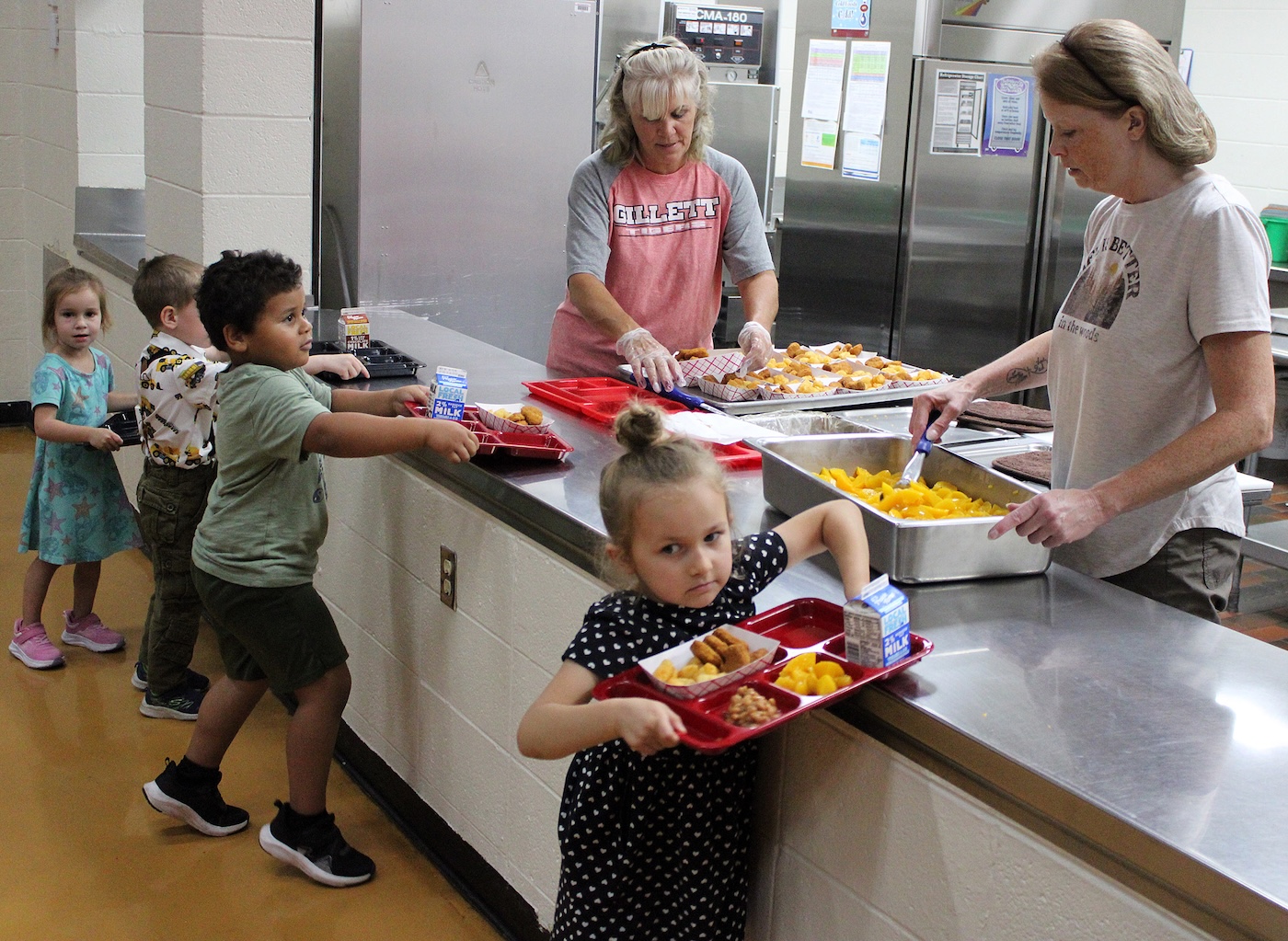
Students line up and grab lunch for the day Sept. 3 at Gillett Elementary School. The school has already experienced deep cuts and more could be on the way if the Gillett School District can’t convince voters to allow it to spend $1.9 million above the state-mandated revenue cap for the next three years. (Lee Pulaski | NEW Media)
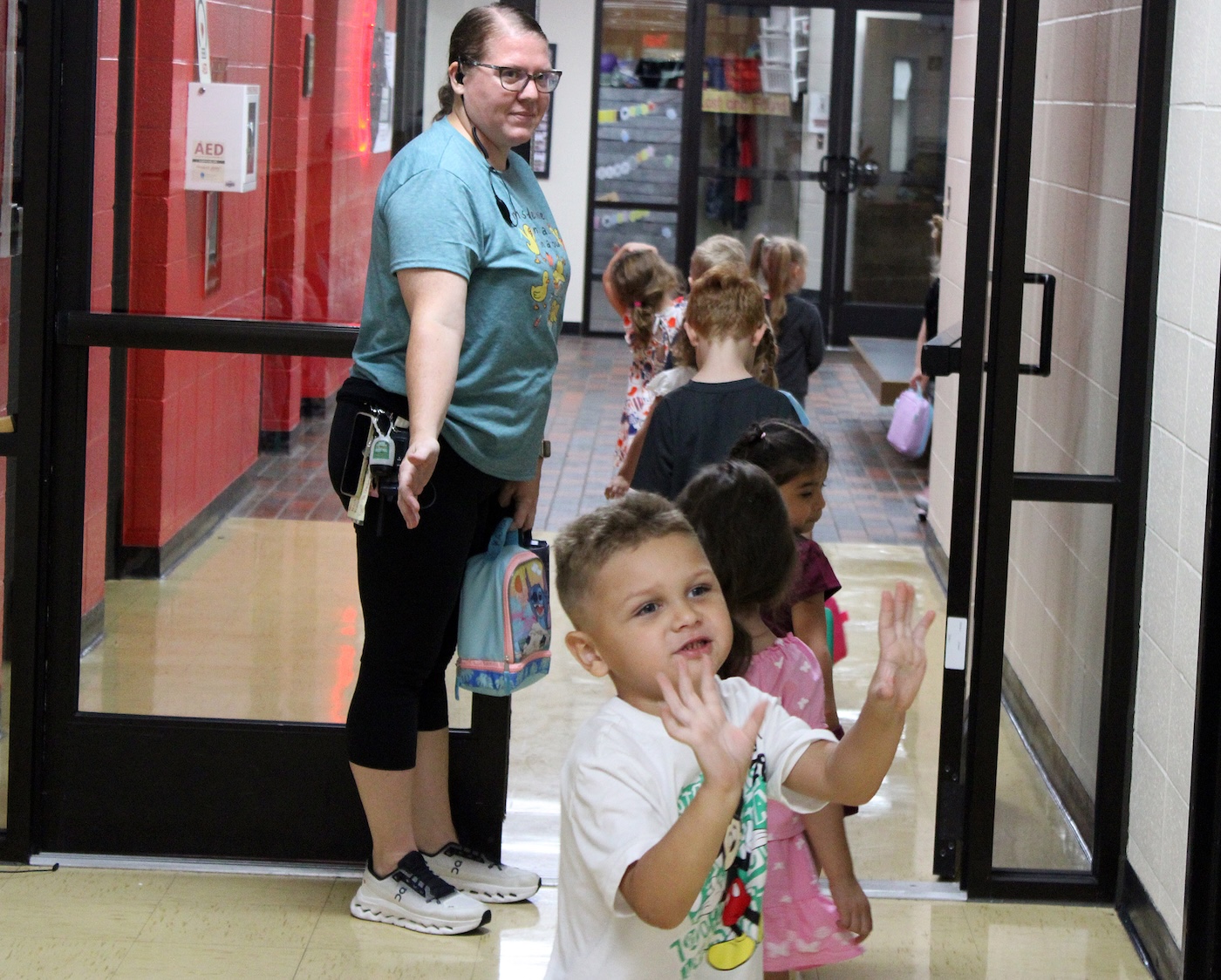
A brand new school year means children filling the hallways of Gillett Elementary School, along with the classrooms. The Gillett School Board seeks a $5.7 million referendum to keep quality education in Gillett. (Lee Pulaski | NEW Media)
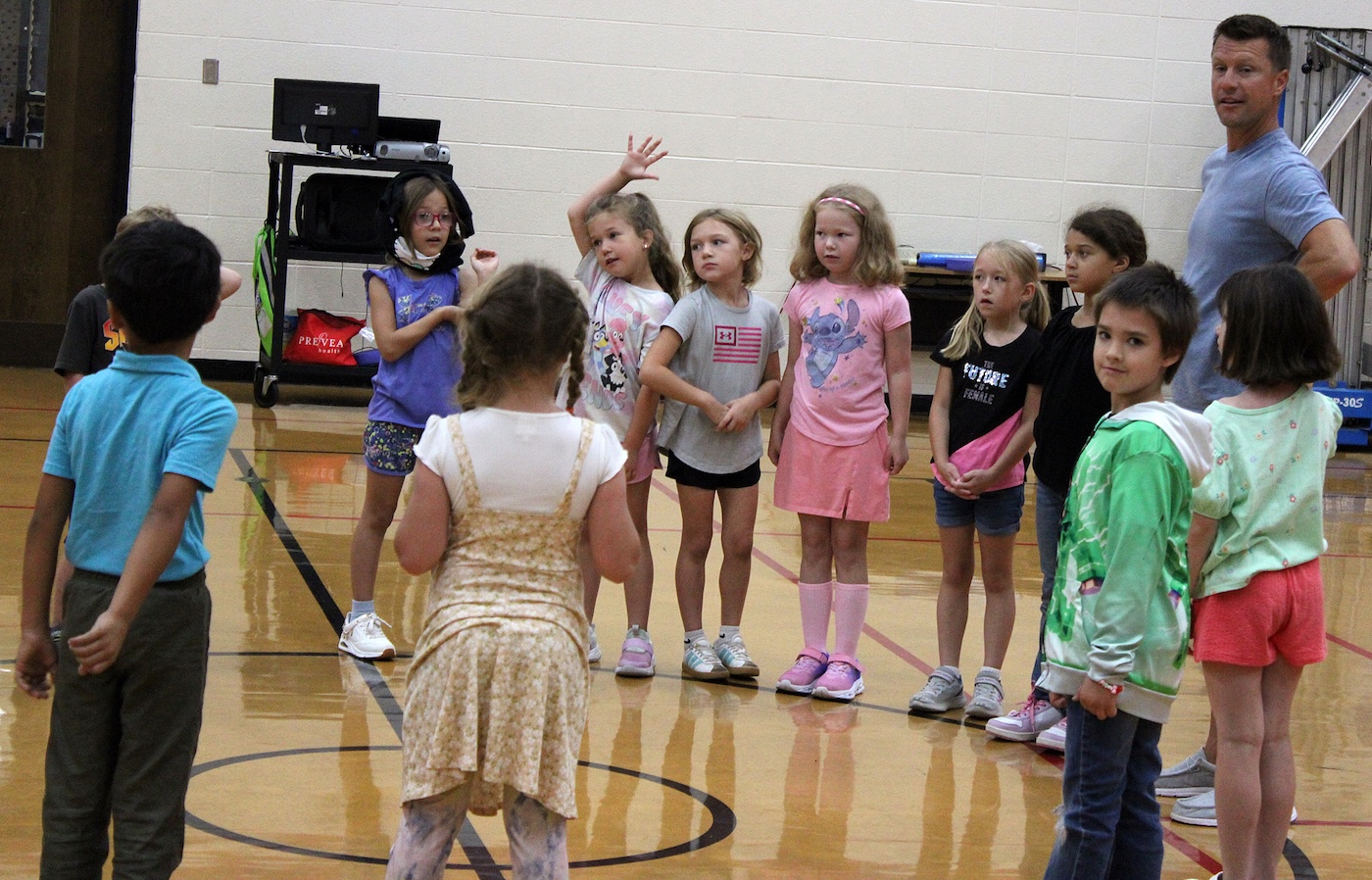
A physical education class at Gillett Elementary School keeps children active and motivated. With the proposed $5.7 million referendum, the Gillett School District is hoping to stave off cutting elective programs. (Lee Pulaski | NEW Media)


